
Otaru Unga and the stone warehouses of Otaru
Published on 09/12/2026 at 17:14 | Editorial responsibility: Rafael Müller, Editor-in-Chief AD HOC NEWS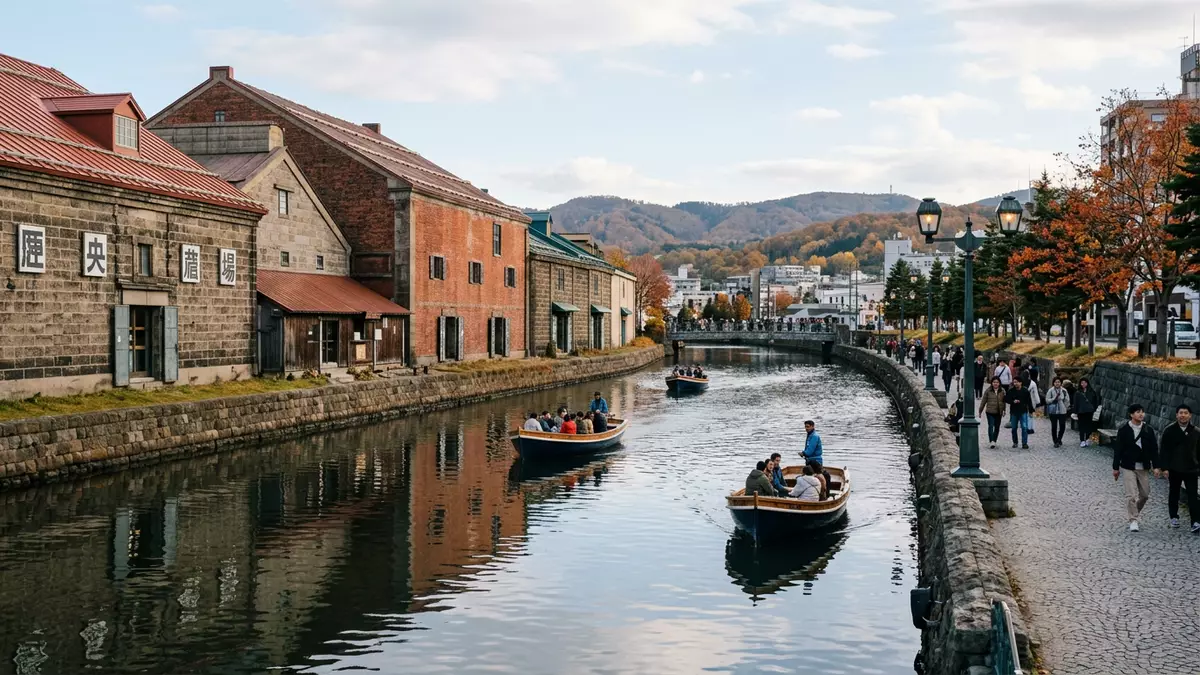
Otaru Unga, known in English as the Otaru Canal, runs through the harbour district of Otaru on Hokkaido and threads water between historic stone warehouses and the town streets. Completed in 1923 in the early twentieth century, it preserves the layout of a working port while functioning as an open public waterfront in northern Japan.
A curved harbour canal beside the port
Otaru Unga is a gently curving harbour waterway in the city of Otaru on the western coast of Hokkaido, Japan, running close to the harbour and the central railway station. The canal forms a sheltered ribbon of water parallel to streets such as Minatomachi, with warehouses and other port buildings facing the water on one side and city streets running behind them.harbour district of Otaru The preserved section of the canal extends for about 1,140 m (3,740 ft) through the harbour area, creating a continuous axis of water and quayside that visitors can follow from bridge to bridge.stretching 1,140 metres
The waterway follows a gentle curve rather than a strict straight line, reflecting its origin along reclaimed coastline where the quay once met the harbour waters. Instead of being an inland trench cut across fields, Otaru Unga traces the line of the historic quay between the town and the bay, keeping the relationship between port and city legible in its alignment.water surface between quay and artificial island Standing on one of the canal bridges, the curve of the waterway, the stone embankments and the rows of buildings on either side give a clear sense of how the harbour once operated.
Stone warehouses and an early twentieth?century waterfront
Construction of Otaru Unga began in 1914 as part of a coastal land?reclamation project and was completed in 1923, during the period when Otaru was a major shipping and trading centre in Hokkaido.completed in 1923 after nearly a decade of reclamation The canal was built to serve small ships carrying cargo between larger vessels moored in Otaru’s harbour and the warehouses that lined the shore, giving barges a sheltered inland route parallel to the coastline.constructed in the early twentieth century to serve small ships In the first half of the twentieth century it was a central part of the city’s busy port, an artery for goods moving between ocean?going ships and storage buildings.
One of the defining features of Otaru Unga is the sequence of stone and brick warehouses along its banks, some built by merchant families and shipping firms on reclaimed land after the canal took shape.warehouses lining Otaru Canal Their robust masonry walls face the water, and many retain simple rooflines and industrial details that recall their origin as storage buildings. Some warehouses have been renovated and repurposed as restaurants, shops, museums and other venues, while preserving their external appearance, so the canal’s waterfront now combines historic facades with contemporary uses.warehouses transformed into museums, shops and restaurants
Walking the promenade and bridges of Otaru Unga
The inland side of Otaru Unga is lined with a paved promenade that runs for over a kilometre along the canal, offering a clear walking route beside the water.stone-paved promenade along the inland side Along this path, a sequence of bridges crosses the canal, linking the waterfront to the streets behind the warehouses and giving varied vantage points over the water and masonry. Retro?style gas lamps stand along parts of the canal, contributing to a historic streetscape that recalls Otaru’s maritime heyday.retro gas lamps on the banks
Walking beside Otaru Unga, the combination of water, stone embankments, converted warehouses and lighting creates a continuous scene that changes with shifts in weather and season. The canal’s length and the alignment of its promenade form a walkable axis that links the harbour area to central Otaru, with buildings from the former financial district visible in streets between the station and the water, including bank buildings that once gave Otaru the nickname “Wall Street of the North”.Wall Street of the North
Visiting Otaru Unga: what travellers from Western Europe should know
- Otaru Unga runs through central Otaru on the western side of Hokkaido, with the waterfront reached on foot from JR Otaru Station on the Hakodate Main Line that serves the city.
- The canal is bordered by stone embankments, paved promenades and bridges; walking the full canal section involves covering more than a kilometre on level surfaces with occasional steps.
- In winter, snow falls across Otaru and the canal district, so the waterfront promenade and nearby streets can be covered in snow and ice during colder months.
- The official language is Japanese and the currency is the yen.
Searching for Otaru Unga on social platforms
These links open searches for Otaru Unga on each platform.
Frequently asked questions about Otaru Unga
Where is Otaru Unga located in Japan?
Otaru Unga is in the port city of Otaru on the western coast of Hokkaido, Japan, running close to the harbour and within walking distance of JR Otaru Station.
What can visitors expect when walking along the canal?
Visitors encounter a gently curving waterway lined with stone embankments, historic warehouses, a paved promenade and bridges, with retro?style lamps and converted buildings providing a distinct historic streetscape.
What makes Otaru Unga distinctive among Japanese port districts?
The canal preserves an early twentieth?century harbour layout, with its 1,140 m length, curved alignment and continuous row of warehouses keeping the working past of Otaru’s port visible in the centre of the city.


