
Khan el-Khalili and the lanes of Islamic Cairo
Published on 09/12/2026 at 21:34 | Editorial responsibility: Rafael Müller, Editor-in-Chief AD HOC NEWS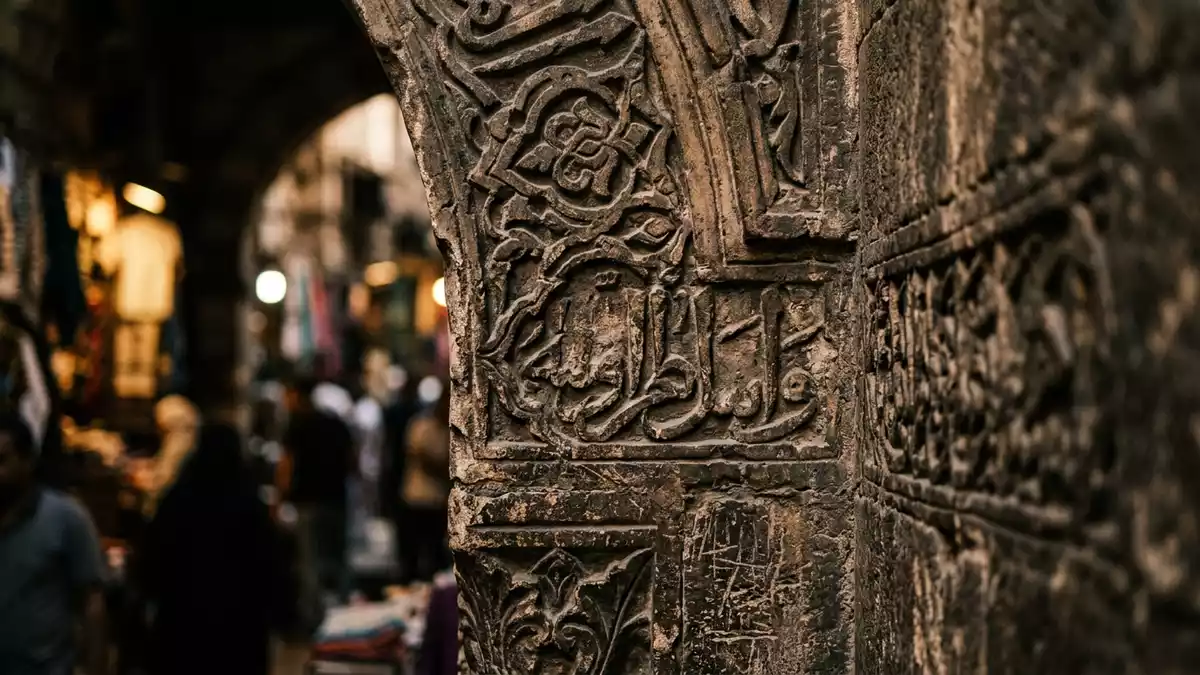
Khan el-Khalili in Kairo is a bazaar quarter of narrow lanes, stone gates and caravanserais in Islamic Cairo. It was established in the Mamluk period under Sultan Barquq, and the market still carries the name of Jaharkas al-Khalili.
Khan el-Khalili’s Mamluk foundation
The market’s origins lie in the late fourteenth century, when Jaharkas al-Khalili, the amir akhur under Barquq, established a khan here. The district took its name from that building, and the name later came to cover the wider quarter. The area became part of Historic Cairo, a UNESCO World Heritage site designated in 1979.
The site also sits within the older city founded in 969, on land that once belonged to the Fatimid palace zone and burial ground. That earlier urban layer gives the bazaar a setting that links Fatimid Cairo with Mamluk commercial life. The quarter remains tied to al-Muizz Street, al-Hussein and al-Azhar, three of the best-known reference points in Islamic Cairo.Historic Cairo
Stone gateways and market streets
The district is not a single hall or enclosed arcade. It is a network of alleys, shopfronts, upper floors and former caravanserai structures, with some passages roofed and others open to the sky. Medieval gateways such as Bab al-Ghuri remain part of the streetscape, and the architecture is grounded in Mamluk and wider Islamic forms.Mamluk and later Ottoman
Carved stone façades, pointed arches and wooden mashrabiya screens appear across the quarter. The market is also linked with the history of Ottoman-era rebuilding, which left further caravanserais and covered streets in the district. Its value lies in the visible layering of those forms rather than in any single monument.wooden mashrabiya screens
Trading life in a historic quarter
Khan el-Khalili still functions as a market district, with shops, workshops, cafés and restaurants spread through the lanes. Crafts and trade remain central to its character, and many of the buildings keep a commercial ground floor with activity above or behind the street frontage.
The quarter developed as Cairo’s commercial centre during the Mamluk period and stayed linked to later networks of trade. That long commercial use explains the mixture of storage, retail and small-scale craft space visible throughout the area. The result is a district that reads as urban fabric as much as as a shopping street.commercial centre
Visiting Khan el-Khalili: what travellers from Western Europe should know
- The bazaar lies in Islamic Cairo, near al-Hussein Mosque and al-Azhar Mosque, and it is reached through the streets of the old city.
- The quarter has narrow alleys, uneven paving and changes of level, so movement through it means walking on hard stone surfaces.
- Bab al-Ghuri and other historic gateways mark the lanes, while the surrounding district contains mosques, madrasas and caravanserais.
- The official language is Arabic and the currency is the Egyptian pound.
Searching for Khan el-Khalili on social platforms
These links open searches for Khan el-Khalili on each platform.
Frequently asked questions about Khan el-Khalili
Where is Khan el-Khalili?
It is in Islamic Cairo, in the historic centre of Kairo, close to al-Hussein and al-Azhar. The quarter is part of the older urban fabric of the city.
What does a visit involve?
The market is a dense street district with shopfronts, craft spaces and cafés. Its lanes are narrow and its surfaces are uneven stone.
What makes Khan el-Khalili distinctive?
Its identity combines a Mamluk foundation, later Ottoman layers and a street pattern that still reflects a long commercial past. The result is a market quarter with a strong historical fabric.


