
Khan el-Khalili and Cairo’s medieval trading lanes
Published on 09/24/2026 at 00:14 | Editorial responsibility: Rafael Müller, Editor-in-Chief AD HOC NEWS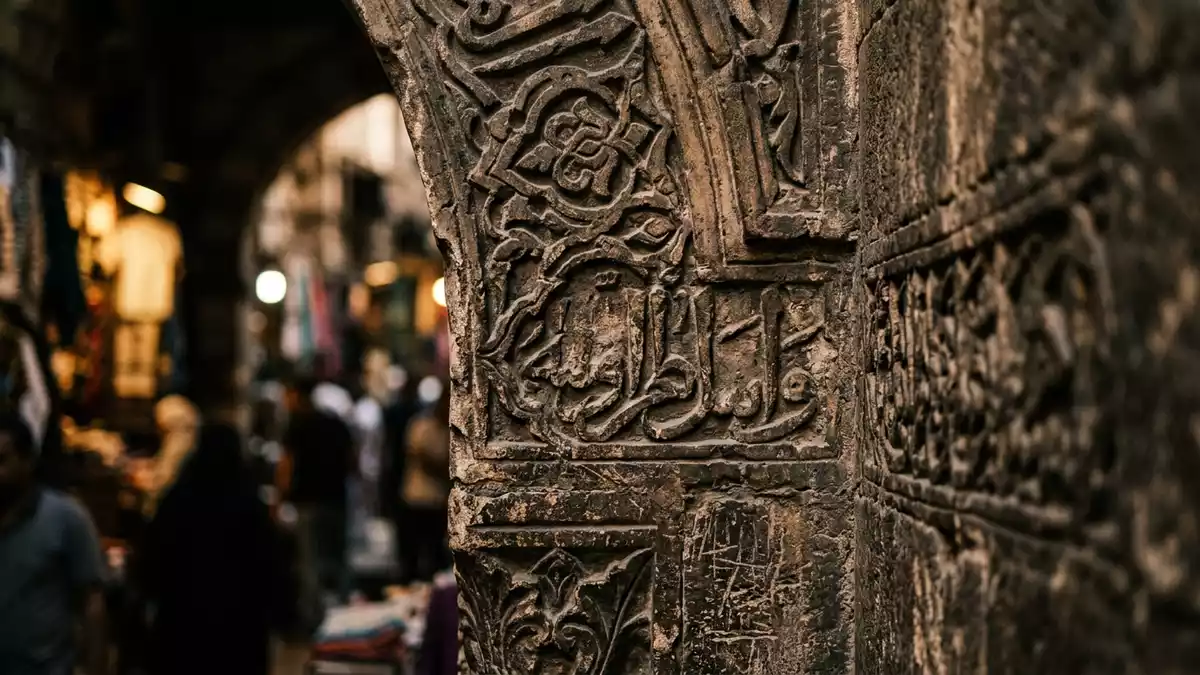
Khan el-Khalili is a historic bazaar quarter in Kairo, where narrow commercial lanes occupy the medieval centre of the Egyptian capital. Its visible character comes from the combination of covered passages, carved stone façades, small workshops and cafés. The district began in the Mamluk period, when Emir Jaharkas al-Khalili established a khan between 1382 and 1389.
Khan el-Khalili grew from a Mamluk khan
The name originally referred to a single caravanserai, or khan, rather than the entire market district. A khan was a commercial inn with rooms, storage areas and a courtyard for travelling merchants and their goods. The name Khan el-Khalili later came to describe the surrounding network of market streets.
The foundation belongs to the reign of Sultan Barquq, the first ruler of the Burji Mamluk line. Cairo’s historic market forms part of Al-Hussein, a district containing religious buildings, commercial lanes and long-established urban quarters.
Stone, arches and enclosed market streets
The built character of Khan el-Khalili belongs to Islamic Cairo’s layered architectural history. Mamluk and Ottoman details appear across the quarter, including carved stone entrances, pointed arches, vaulted passages and wooden mashrabiya screens.
The market is not a single hall with one façade. It is a dense urban district whose lanes connect shops, courtyards, workshops and religious landmarks. Copperware, jewellery, spices, perfumes, textiles, leather goods and lanterns occupy many of the small commercial spaces. Mamluk and Islamic architecture remains visible in the stonework, arcades and screened upper rooms.
Between Al-Azhar and Al-Hussein
Khan el-Khalili lies in the historic quarter of Kairo, close to Al-Azhar Mosque and the Mosque of Sayyidna al-Hussein. These landmarks place the bazaar within a compact area where commerce, worship, education and domestic life developed beside one another.
The surrounding district is part of Historic Cairo, a UNESCO World Heritage Site inscribed in 1979. Its urban fabric includes mosques, madrasas, fountains, gates, houses and markets from several periods. Historic Cairo’s 1979 inscription places Khan el-Khalili within a wider protected landscape of Islamic architecture.
Visiting Khan el-Khalili: what travellers from Western Europe should know
- Khan el-Khalili is in Al-Hussein, within historic Kairo. The bazaar is reached through the city’s central Islamic quarter, near Al-Azhar Mosque and the Mosque of Sayyidna al-Hussein.
- The district is explored on foot through narrow lanes, covered passages, courtyards and stepped thresholds. Comfortable footwear suits the uneven surfaces and compact shopfronts.
- The official language is Arabic and the currency is the Egyptian pound.
- Entry requirements depend on your nationality; UK travellers can check the FCDO travel advice at gov.uk/foreign-travel-advice, Irish travellers the Department of Foreign Affairs at ireland.ie.
Searching for Khan el-Khalili on social platforms
These links open searches for Khan el-Khalili on each platform.
Frequently asked questions about Khan el-Khalili
Where is Khan el-Khalili?
Khan el-Khalili is in Al-Hussein, within the historic Islamic quarter of Kairo. Al-Azhar Mosque and the Mosque of Sayyidna al-Hussein are nearby landmarks.
What can visitors expect in the bazaar?
The district contains narrow lanes, covered passages, courtyards, workshops and small shops. Goods include copperware, jewellery, spices, perfumes, textiles, leather products and lanterns.
What makes Khan el-Khalili distinctive?
Its identity combines a late-fourteenth-century Mamluk origin with a larger market district shaped by Islamic architecture and centuries of commercial use. The original khan gave its name to the surrounding bazaar.


