
Grotta Azzurra on Capri and its luminous sea chamber
Published on 09/14/2026 at 15:25 | Editorial responsibility: Rafael Müller, Editor-in-Chief AD HOC NEWS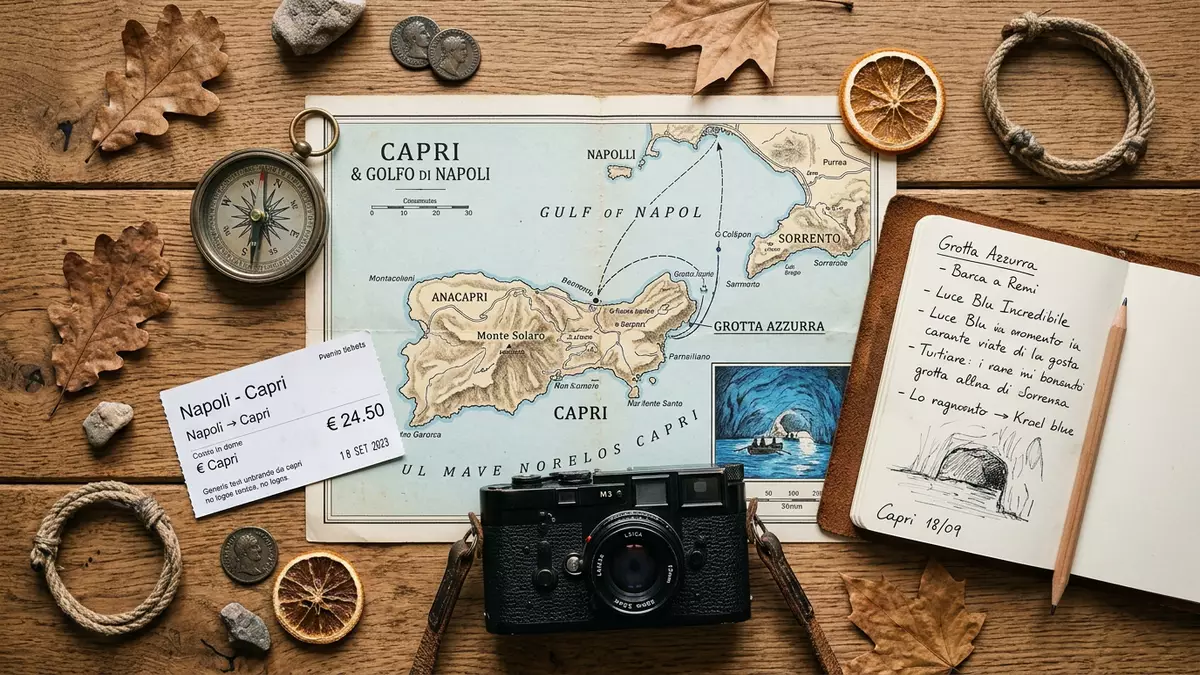
Grotta Azzurra on the island of Capri in southern Italy is a sea cave where daylight and seawater combine to produce a deep blue glow across a flooded rock chamber. The cave lies off Anacapri on the north-western coast of Capri, part of Campania, and has been associated with the Roman emperor Tiberius, who spent part of the first century AD on the island.sea cave on Capri
The blue light and the scale of the cave
Grotta Azzurra is known for the intense blue light that fills its interior, created as daylight enters through underwater openings and reflects off the seawater onto the stone surfaces.blue light of Capri Inside, the main chamber has a hall-like scale for a natural sea cave, with published measurements giving a length in the region of 54 to about 60 m (177 to 197 ft) and a width of roughly 25 to 30 m (82 to 98 ft).overall dimensions of the grotto
The height of the chamber reaches several metres above the water, so the ceiling rises over the boats that enter, while the rock walls show areas of light and shadow as the glow shifts across them.cavity dimensions and height Below, the water reaches depths in the region of just over 10 m to around 20 m (33 to 66 ft), with a sandy seabed recorded beneath the flooded chamber.length and sandy floor
Roman remains and nineteenth-century rediscovery
Archaeological work has shown that Grotta Azzurra formed part of a Roman maritime nymphaeum, an ornamental waterside grotto connected to a villa on the cliffs above during the first century AD.Roman nymphaeum above Statues and fragments from the Roman imperial period, including marine figures, have been recovered from the cave floor and conserved in Anacapri, underlining the link between the rock chamber and the villa of Tiberius on this stretch of shoreline.Roman statues and fragments
For many centuries after antiquity the cave appears to have been avoided, and in local usage it carried the name Grotta di Gradola from the nearby coastal area.Grotta di Gradola name Grotta Azzurra gained its present name in 1826, when the German writer August Kopisch visited the sea cave with the painter Ernst Fries and reported its blue light in print, helping to draw nineteenth-century travellers to Capri.August Kopisch in 1826
Approach routes and the entrance chamber
Grotta Azzurra stands within the municipality of Anacapri, and can be reached either from the sea or from the clifftop road network on the island.northwest coast of Capri Boats depart from Marina Grande on Capri and make their way along the coastline to the cave, where small rowing boats pass through the low entrance that connects the open sea to the flooded interior chamber.access from Marina Grande
Grotta Azzurra can also be approached from land via Anacapri, where a road leads towards the coastal area above the cave and paths and stairways descend from the clifftop to a landing place beside the entrance.road and descent from Anacapri At the mouth of the cave, the opening between the sea outside and the water-filled interior is low relative to the chamber behind it, so the transition from daylight to the blue-lit space takes place within the first short stretch of the route inside.reduced entrance dimensions
Visiting Grotta Azzurra: what travellers from Western Europe should know
- Grotta Azzurra lies off Anacapri on the north-western coast of Capri in southern Italy, reached either by boat from Marina Grande or by road and paths from Anacapri.
- The approach from land involves stairways and a descent from the clifftop down to the water’s edge, with access to the cave itself via small boats through a low opening.
- The official language is Italian and the currency is the euro.
Searching for Grotta Azzurra on social platforms
These links open searches for Grotta Azzurra on each platform.Frequently asked questions about Grotta Azzurra
Where is Grotta Azzurra located?
Grotta Azzurra is a sea cave off the coast of Anacapri on the island of Capri in southern Italy, facing the Bay of Naples.
What should visitors expect inside the cave?
Visitors encounter a flooded rock chamber with a low entrance leading into a taller interior, where daylight and seawater produce an intense blue glow.
What makes Grotta Azzurra distinctive among sea caves?
Grotta Azzurra combines Roman archaeological remains with a sizable hall-like sea chamber and a characteristic blue illumination that has drawn travellers since the nineteenth century.


