
Grotta Azzurra on Capri and its otherworldly blue light
Published on 08/18/2026 at 14:21 | Editorial responsibility: Rafael Müller, Editor-in-Chief AD HOC NEWS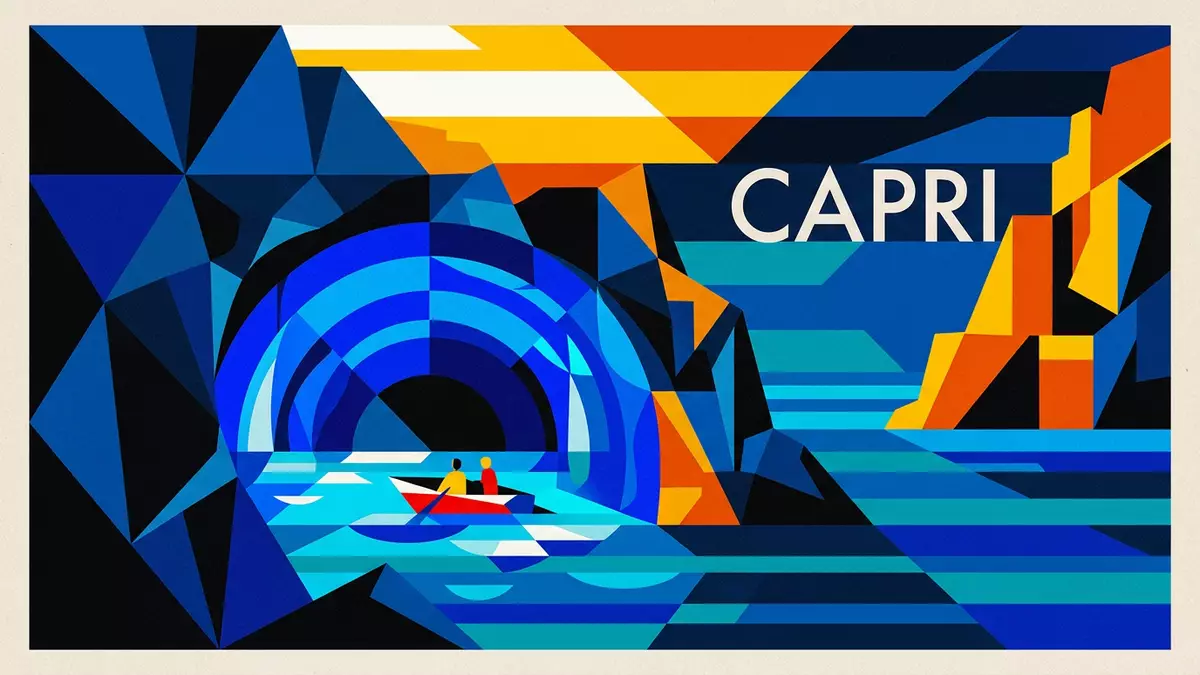
Grotta Azzurra on the island of Capri in Italy is a sea cave where sunlight, seawater and dark rock combine into an intense blue shimmer that defines the whole experience of the place. Set on the north-west coast near Anacapri and known in English as the Blue Grotto, it has been a recognised attraction since at least the nineteenth century and is rooted in much older Roman awareness of the cave.
The sea cave of Capri’s north-west coast
Grotta Azzurra is a natural sea cave cut into the cliffs on the north-western side of Capri, in the commune of Anacapri above the waterline. The cave opens directly to the Tyrrhenian Sea through a low entrance that is partially submerged, so the chamber is only reached from the water in small boats that can pass through the opening.A natural sea cave Inside, a single main chamber extends back into the rock with walls that rise steeply above the water.
The overall dimensions of the grotto are substantial for a sea cave, with a length of around 54 to 60 m (177 to 197 ft) and a width of roughly 25 to 30 m (82 to 98 ft), giving the interior a hall-like scale.Measurements of the grotto The water in the cave reaches depths in the region of 13 to just over 20 m (43 to 66 ft), with a sandy bottom beneath.Depth and sandy floor Above, the roof rises several metres, so the main chamber feels enclosed yet high, with rock surfaces catching light in places and falling into shadow in others.
The blue light that gives Grotta Azzurra its name
The defining experience of Grotta Azzurra is the intense blue light that fills the water and reflects onto the rock, giving the cave its name. Sunlight enters mainly through the underwater portion of the entrance and diffuses through the clear seawater, which filters out certain wavelengths so the light that emerges into the chamber appears vividly blue. The darker walls and roof of the cave contrast with this glow, making the water itself appear illuminated from below.
Visitors arrive in small rowboats that pass through the low entrance and then move into the wider interior, where the blue light becomes more pronounced away from the direct opening.Rowboats inside the cave The sandy bottom helps the light bounce upwards, producing silvery reflections on the water surface and faint glints on parts of the cave walls. This interaction of submerged opening, water depth and enclosed rock chamber is stable enough to give Grotta Azzurra a recognisable character: throughout the chamber the sea takes on the same distinctive colour, forming a continuous blue basin framed by stone.
History, names and visiting patterns
Grotta Azzurra has been known since Roman times, when the island of Capri formed part of the wider world of imperial villas and coastal retreats. The cave has been linked with ancient structures on the surrounding cliffs, including remains known as the villa of Gradola that lie above the grotto and indicate a historical relationship between the landscape and human settlement.Villa remains above the cave In Italian sources the cave has also been referred to as Grotta di Gradola, reflecting this connection between the sea cavity and the land above.Alternate local name
Administratively, Grotta Azzurra belongs to Anacapri in the Metropolitan City of Naples, within the Campania region of southern Italy.Location in Anacapri Over generations it has moved from being a known natural feature and local curiosity to a formally recognised cultural site under the Ministry of Culture, with structured access arrangements and interpretation as part of a wider group of museums and parks on Capri.Designation as a cultural site This status underlines that Grotta Azzurra is treated not only as a scenic spot but also as a place where geology, history and visitor infrastructure intersect.
Visiting Grotta Azzurra: what travellers from Western Europe should know
- Grotta Azzurra lies below the cliffs of Anacapri on the island of Capri in southern Italy. It is generally reached either by boat from Marina Grande or by bus from Anacapri followed by a descent to the small landing near the cave.
- The terrain around the cave is rocky coastal cliff. Access from land involves a staircase down to the embarkation point, and boarding the small boats requires stepping carefully from the landing onto low vessels close to the water.
- The official language on Capri is Italian and the currency is the euro.
- Entry requirements depend on your nationality; UK travellers can check the FCDO travel advice at gov.uk/foreign-travel-advice, Irish travellers the Department of Foreign Affairs at ireland.ie.
Searching for Grotta Azzurra on social platforms
These links open searches for Grotta Azzurra on each platform.
Frequently asked questions about Grotta Azzurra
Where is Grotta Azzurra located?
Grotta Azzurra is on the north-west coast of the island of Capri, within the commune of Anacapri in the Campania region of southern Italy.
What can visitors expect on a visit to Grotta Azzurra?
Visitors can expect a boat ride through a low sea-level entrance into a larger cave chamber where the seawater takes on an intense blue colour beneath high rock walls.
What makes Grotta Azzurra distinctive among sea caves?
Grotta Azzurra is distinctive for the combination of its sizeable main chamber, sandy-bottomed basin, partially submerged entrance and the resulting vivid blue light that fills the water and reflects onto the stone.


