
Victoria & Alfred Waterfront and the shape of Cape Town’s harbour
Published on 09/14/2026 at 21:39 | Editorial responsibility: Rafael Müller, Editor-in-Chief AD HOC NEWS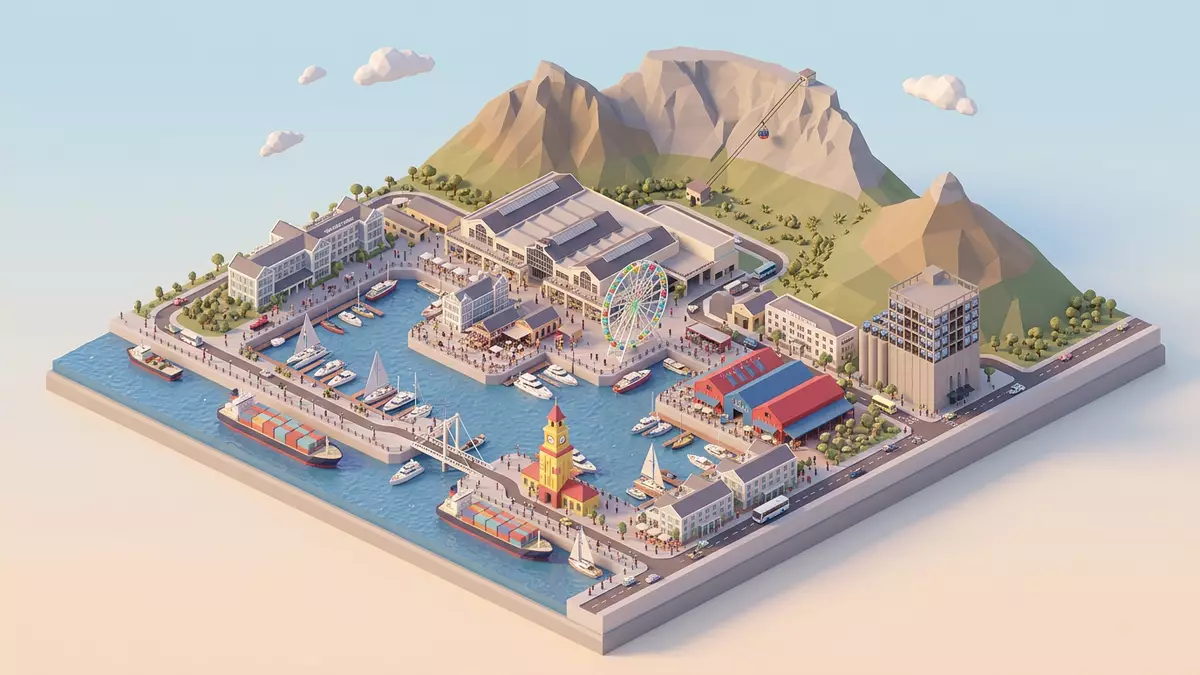
Victoria & Alfred Waterfront in Kapstadt is a harbour quarter of basins, brick and quays. Its name comes from the Alfred Basin and the Victoria Basin, two parts of Cape Town’s port. The district’s form keeps the harbour edge legible, with old dock structures beside active quays.
Victoria & Alfred Waterfront’s harbour basins and brickwork
The name Victoria & Alfred Waterfront honours Queen Victoria and Prince Alfred, linking the place to the colonial harbour works of the nineteenth century. The Alfred Basin was the first basin, and the Victoria Basin followed as shipping needs changed. harbour history the two basins
Prince Alfred tipped the first load of stone for the breakwater in 1860. That date remains tied to the harbour’s visible structure, not just its name. The waterfront later absorbed warehouses, cranes and dock buildings into a mixed harbour district.
Victoria & Alfred Waterfront as a working harbour quarter
The place still combines port functions with a public urban edge. That mix is visible in the relation between water, quays and converted industrial buildings. In November 1988, Victoria and Alfred Waterfront (Pty) Ltd was established to redevelop the docklands around the basins while the harbour continued operating. 1988 redevelopment historic precinct
Former dockside structures still define the setting. Brick warehouses, quays and harbour machinery give the area a working character that differs from a purely leisure precinct. The result is a waterfront where the port’s older geometry remains visible in the fabric of the place.
Victoria & Alfred Waterfront and Cape Town’s maritime edge
Victoria & Alfred Waterfront sits on the Atlantic side of Cape Town, within Table Bay and north of the central business district. Table Mountain forms the wider backdrop, but the waterfront itself is defined by harbour basins, dock buildings and open water. That makes it part port landscape, part city quarter. Table Bay setting Cape Town’s harbour
The district’s identity rests on contrast without contradiction: nineteenth-century harbour works beside contemporary streets and public spaces. The older basins remain the visual core, and the surrounding buildings keep that maritime frame intact. Queen Victoria, Prince Alfred and the harbour works of 1860 remain central to how the place is read.
Visiting Victoria & Alfred Waterfront: what travellers from Western Europe should know
- The waterfront lies in Kapstadt’s port district in Table Bay. It is reached through the city’s harbour area, north of the central business district.
- The terrain is level harbour ground, with quays, dock edges and built waterfront surfaces. The setting is urban rather than steep, but it remains tied to working-port infrastructure.
- English is widely used in Cape Town. The official language is Afrikaans, English and isiXhosa, and the currency is the South African rand.
- Entry requirements depend on your nationality; UK travellers can check the FCDO travel advice at gov.uk/foreign-travel-advice, Irish travellers the Department of Foreign Affairs at ireland.ie.
Searching for Victoria & Alfred Waterfront on social platforms
These links open searches for Victoria & Alfred Waterfront on each platform.
Frequently asked questions about Victoria & Alfred Waterfront
Where is Victoria & Alfred Waterfront?
It is in Kapstadt, on the harbour edge of Table Bay, north of the central business district. The waterfront forms part of the city’s working port.
What does a visit involve?
It involves a harbour landscape of quays, basins and converted dock buildings. The setting combines maritime infrastructure with urban streets and public spaces.
What makes it distinctive?
Its distinction lies in the visible overlap between old harbour works and a living port quarter. Queen Victoria, Prince Alfred and the basins still shape the place’s identity.


