Victoria & Alfred Waterfront: Cape Town’s harbour quarter of basins and brick
Published on 09/03/2026 at 19:53 | Editorial responsibility: Rafael Müller, Editor-in-Chief AD HOC NEWS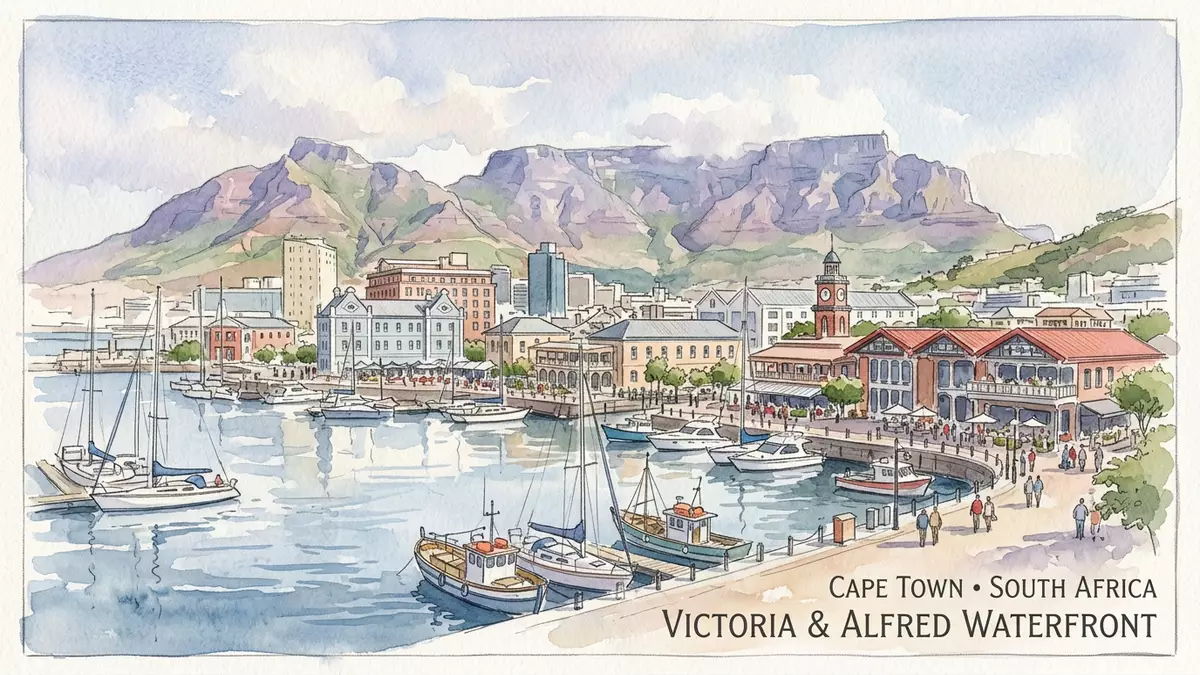
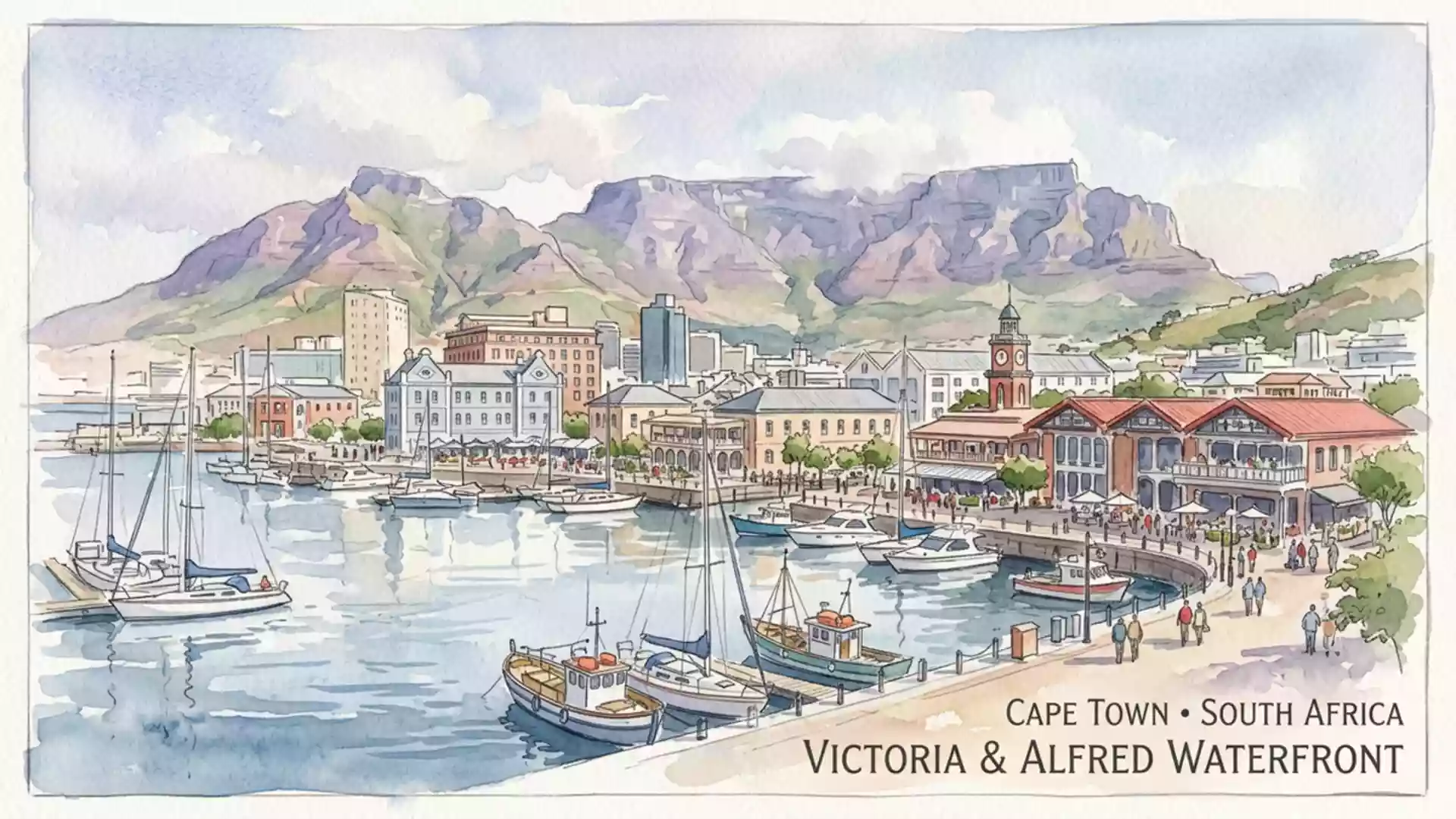
Victoria & Alfred Waterfront in Kapstadt is a harbour quarter where nineteenth-century basins and brick warehouses sit against the backdrop of Table Mountain and Table Bay. It takes its name from the Alfred Basin and the Victoria Basin, both named in honour of Queen Victoria and her son Prince Alfred, and anchors Cape Town’s long maritime history in a dense urban landscape of quays, converted dock buildings and a still-working port.
Harbour basins named for Victoria and Alfred
The defining structures at Victoria & Alfred Waterfront are the two harbour basins, carved into the edge of Table Bay as Cape Town grew into a major stop on the sea route between Europe and Asia. The Alfred Basin was the first of these, completed in the nineteenth century as part of new harbour works that followed destructive winter storms in Table Bay in June 1858.The two harbour basins A second, larger basin, later named the Victoria Basin, followed as shipping increased and steam-powered vessels demanded deeper, more sheltered water.
The basins carry more than royal names. During a visit to the Cape in September 1860, Prince Alfred, serving as a midshipman in the Royal Navy, tipped the first load of stone for the substantial breakwater that would shield the harbour entrance.Prince Alfred’s role in starting the breakwater Over roughly six decades from 1860 to around 1920, harbour works extended and consolidated the Alfred and Victoria basins, turning what had been an exposed anchorage into an all-weather port.
From industrial dockyard to mixed-use waterfront
For much of the twentieth century, the area around the Alfred and Victoria basins functioned as Cape Town’s industrial dockyard, with coal stores, cranes, workshops and bonded warehouses lining the quays.Coal stores and warehouses at the harbour As ship technology evolved and larger vessels favoured deeper, more modern berths elsewhere in Table Bay, parts of the old dock estate fell into neglect, leaving robust brick buildings standing beside underused quays.
A turning point came in November 1988, when Victoria & Alfred Waterfront (Pty) Ltd was established to redevelop the historic docklands around the two basins as a mixed-use quarter with retail, tourism, residential buildings and offices, alongside the continued operation of a working harbour.The formation of Victoria & Alfred Waterfront (Pty) Ltd in 1988 Early adaptive reuse projects included turning a 1904 coal store and customs baggage warehouse into the Victoria & Alfred Hotel and Alfred Mall, setting a pattern in which former industrial structures gained new functions while retaining their harbour-side setting.A 1904 coal store converted to a hotel
Brick warehouses, Victorian towers and Table Mountain views
Walking through Victoria & Alfred Waterfront reveals a layered architecture where late Victorian brick warehouses stand beside more recent commercial buildings, all oriented towards the water. Landmark structures include the Clock Tower and the Time Ball Tower, both examples of Victorian-era harbour architecture that still stand near the basins.Clock Tower and Time Ball Tower as Victorian architecture Many quays retain working features such as bollards, cranes and mooring points, while boardwalks and plazas have been added along the water’s edge.
The setting is framed by Table Mountain rising behind the city and the expanse of Table Bay opening out beyond the harbour mouth, giving the Waterfront a constant interplay between built forms and the wider landscape.Framed by Table Mountain and Table Bay Ferries depart from the quays to Robben Island, linking the Waterfront physically to the island prison across the bay, while sightseeing boats and harbour craft move between basins, channels and the open water.
Visiting Victoria & Alfred Waterfront: what travellers from Western Europe should know
- Victoria & Alfred Waterfront occupies the historic docklands on the edge of Table Bay in Kapstadt, immediately adjacent to the central city and within sight of Table Mountain.
- The quarter is built around harbour quays and piers with a mixture of level promenades, steps and internal staircases inside former warehouses and newer commercial buildings.
- Ferries to Robben Island depart from quays at Victoria & Alfred Waterfront, connecting the harbour to the island across Table Bay on dedicated passenger vessels.
- Kapstadt lies in South Africa; the official languages include Afrikaans, English and others, and the currency is the South African rand.
- Entry requirements depend on your nationality; UK travellers can check the FCDO travel advice at gov.uk/foreign-travel-advice, Irish travellers the Department of Foreign Affairs at ireland.ie.
Searching for Victoria & Alfred Waterfront on social platforms
These links open searches for Victoria & Alfred Waterfront on each platform.
Frequently asked questions about Victoria & Alfred Waterfront
Where is Victoria & Alfred Waterfront in Kapstadt?
Victoria & Alfred Waterfront is situated on the historic harbour edge of Kapstadt, around the Alfred and Victoria basins at the landward side of Table Bay.
What can visitors expect at Victoria & Alfred Waterfront?
Visitors encounter harbour quays, converted brick warehouses, Victorian towers, hotels, shops and cultural venues, alongside working port infrastructure and ferries crossing Table Bay.
What makes Victoria & Alfred Waterfront distinctive among harbour quarters?
Its character comes from the combination of nineteenth-century basins named for Queen Victoria and Prince Alfred, preserved maritime structures and an urban redevelopment that kept the harbour functioning.