
U Bein Bridge, Amarapura’s long teak crossing over Taungthaman Lake
Published on 08/28/2026 at 21:37 | Editorial responsibility: Rafael Müller, Editor-in-Chief AD HOC NEWS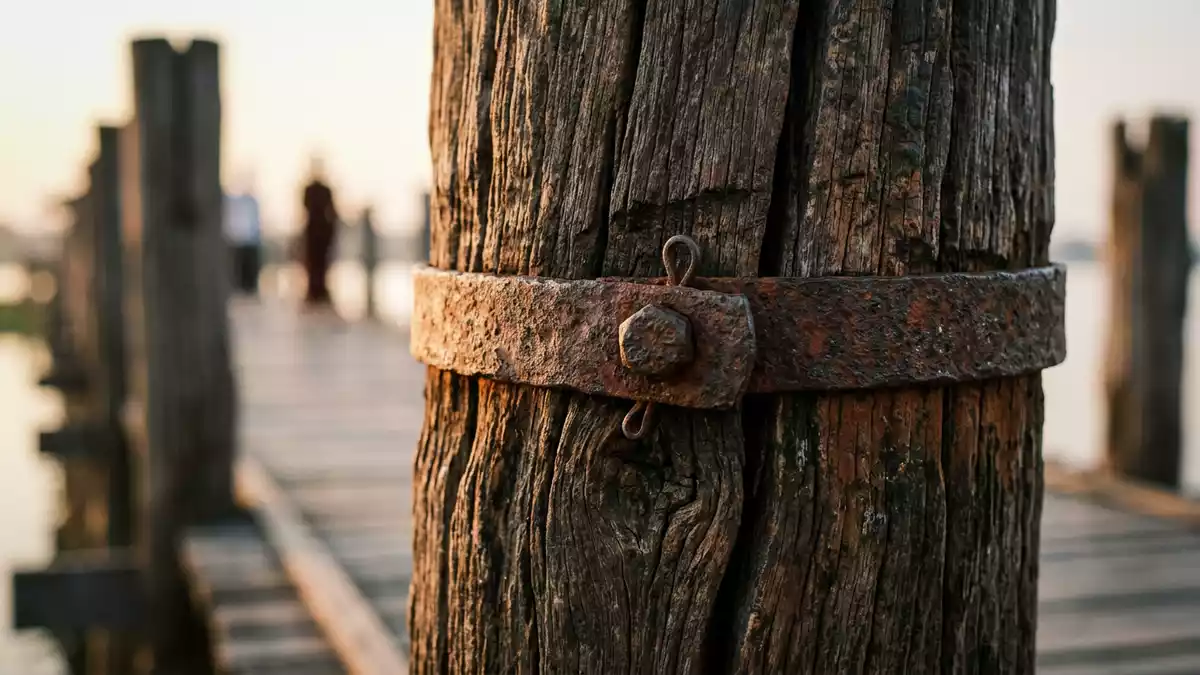
U Bein Bridge is a long teak footbridge that threads a wooden causeway across Taungthaman Lake beside Amarapura in central Myanmar, combining royal-era timber with a simple crossing used on an ordinary day. Built in the middle of the nineteenth century during the Konbaung dynasty, it is named after U Bein, an Amarapura official who oversaw its construction when the royal capital shifted to this lakeside town.
A nineteenth-century teak bridge across Taungthaman Lake
U Bein Bridge spans Taungthaman Lake on the edge of Amarapura in Myanmar’s Mandalay Region, forming a low wooden line between dry ground and the shallow water of the lake.spans Taungthaman Lake The bridge runs for about 1.2 km (0.75 mi), carrying pedestrians along a deck made from teak planks supported by a forest of upright posts sunk into the lakebed.having a length of 1.2 km Along its length, simple wooden handrails, rest houses and small pavilions break up the straight run of the walkway, marking points where people pause above the water.
Construction of U Bein Bridge began in 1849 and was completed in 1851, in the period when the capital of the Ava Kingdom moved to Amarapura under Konbaung rule.begun in 1849 and completed in 1851 The bridge is named for U Bein, also known as Maung Bein, an Amarapura official who had the structure built as the lakeside town took on the role of royal capital.named after Maung Bein In this setting, the long teak crossing sits within a landscape of former royal cities, with Inwa (Ava) and Mandalay nearby, each connected to the same dynasty.
Teak from former palace buildings turned into a causeway
U Bein Bridge is built largely of teak, a hardwood long used in Burmese palace architecture, shipbuilding and durable structures.largely composed of teak planks and pillars Timber for the bridge was taken from earlier royal buildings at Inwa, also known as Ava, which had been dismantled after earthquake damage in the 1830s.timber from the former palace of Ava Reusing palace columns and beams for an everyday crossing gave the new bridge both practical strength and a direct material link to the royal past of the surrounding region.
The structure threads more than a thousand teak posts into the bed of Taungthaman Lake, supporting hundreds of short spans of planking that together form the long deck.supported by 1,086 teak wood pillars In plan, the bridge runs with a gentle curve across the lake, creating changing views along its length as it passes areas of open water, patches of seasonal cultivation and zones where the lake narrows towards the shore.built at a slight curve Simple timber shelters rise at intervals along the deck, each raised on piles with open sides that frame views back towards Amarapura and out over Taungthaman Lake.
Everyday crossing with a royal-era backdrop
When U Bein Bridge was built in the mid-nineteenth century, Amarapura served as a royal capital under the Konbaung dynasty, one of several seats of power in the Mandalay Region during that era.a product of the Konbaung dynasty The bridge linked parts of the lakeshore during a phase of political and architectural change, when royal residences shifted between Inwa, Amarapura and Mandalay and palace timber was redistributed into other structures.constructed using wood from the teak palace at Amarapura That context gives the crossing a dual identity: structurally a straightforward timber causeway, yet historically connected to court life that centred on nearby royal compounds.
Across its length, U Bein Bridge functions as a pedestrian route, with people walking, cycling and carrying goods along the teak planks between the lake’s banks.long wooden bridge across Taungthaman Lake From the deck, views take in Taungthaman Lake’s shallow waters, seasonal boats and distant silhouettes of monasteries and pagodas that dot the surrounding landscape of Amarapura and its neighbouring historic cities. In one direction lies the town and its monastic quarters; in another, the line of the bridge leads towards fields and open ground that border the lake shore.
Visiting U Bein Bridge: what travellers from Western Europe should know
- U Bein Bridge lies beside Amarapura in Myanmar’s Mandalay Region, crossing Taungthaman Lake between the town’s lakeside edge and ground on the opposite shore.
- The bridge’s deck is carried on timber posts over shallow water, with steps up to the wooden walkway at access points and sections without continuous handrails.
- Amarapura is reached overland from Mandalay, with road links running south towards the lakeshore and local transport connecting the town with the approaches to U Bein Bridge.
- The official language is Burmese and the currency is the kyat.
- Entry requirements depend on your nationality; UK travellers can check the FCDO travel advice at gov.uk/foreign-travel-advice, Irish travellers the Department of Foreign Affairs at ireland.ie.
Searching for U Bein Bridge on social platforms
These links open searches for U Bein Bridge on each platform.
Frequently asked questions about U Bein Bridge
Where is U Bein Bridge located?
U Bein Bridge crosses Taungthaman Lake beside Amarapura in Myanmar’s Mandalay Region, in the central part of the country.
What can visitors expect when walking across the bridge?
Visitors follow a long teak walkway carried on timber posts above the shallow lake, passing simple shelters and viewing the surrounding landscape of water, fields and monasteries.
What makes U Bein Bridge distinctive among bridges in Myanmar?
U Bein Bridge is a nineteenth-century teak crossing built from former palace timber, running for about 1.2 km across Taungthaman Lake and linking everyday movement with royal-era history.


