
U Bein Bridge, Amarapura’s long teak crossing over Taungthaman Lake
Published on 08/25/2026 at 17:39 | Editorial responsibility: Rafael Müller, Editor-in-Chief AD HOC NEWS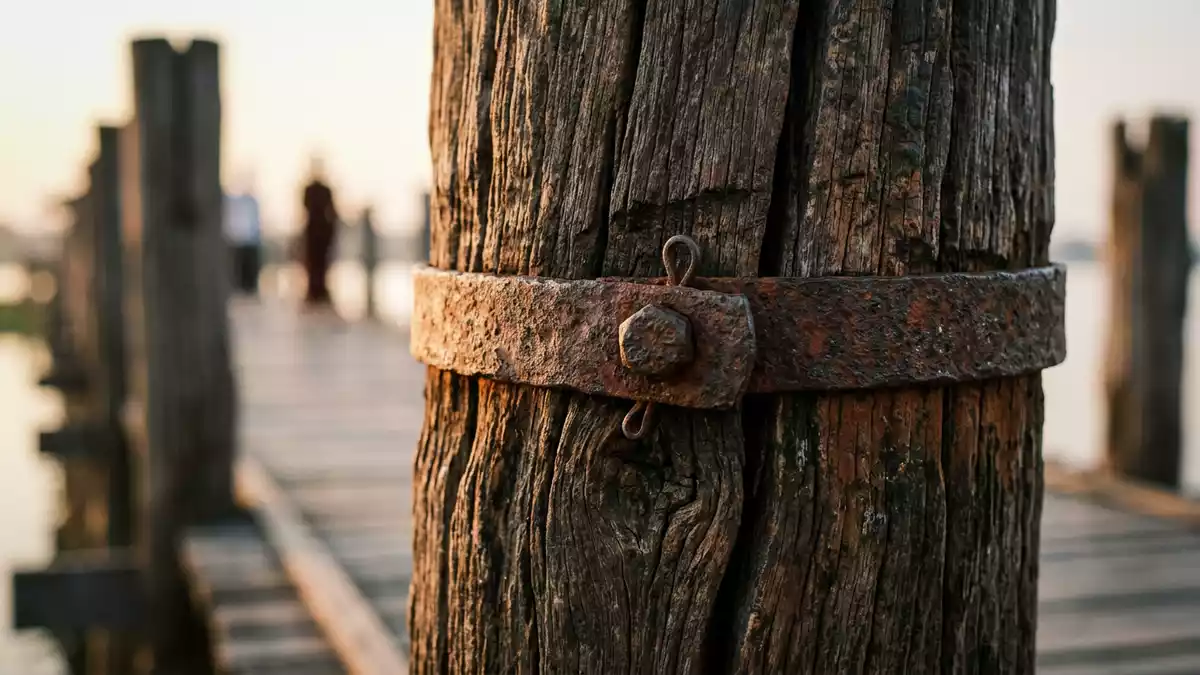
U Bein Bridge stretches as a narrow teak footway across Taungthaman Lake on the edge of Amarapura in Myanmar, turning a simple crossing into a long walk over water that has become inseparable from the landscape of the former royal city.
A nineteenth-century teak bridge over Taungthaman Lake
U Bein Bridge crosses Taungthaman Lake beside Amarapura in Myanmar’s Mandalay Region, forming a raised wooden causeway between dry ground and the shallow lake.crosses Taungthaman Lake The bridge is named after U Bein, an Amarapura official who oversaw its construction during the Konbaung dynasty, when Amarapura served as a royal capital for the Burmese kingdom.built by the mayor U Bein
Construction dates for U Bein Bridge are given in multiple sources as the middle of the nineteenth century, with work starting around 1849 and completion reported around 1850 or 1851.built between 1849 and 1851 During that period, the Konbaung dynasty shifted royal residences between Inwa (also known as Ava), Amarapura and Mandalay, and timber for the bridge was taken from earlier palace buildings at Inwa that were dismantled after earthquake damage in the 1830s.timber from the former palace of Ava
Long teak footway supported by hundreds of pillars
U Bein Bridge is a wooden footbridge built predominantly from teak, carrying a single narrow lane for pedestrians over Taungthaman Lake.longest teakwood bridge Its total length is given as around 1.2 km (approximately 0.75 mi), making it one of the most extensive timber crossings in regular use, with the deck rising only modestly above the lake surface.about 1.2 kilometres long
The bridge rests on over 1,000 vertical teak posts driven into the lakebed, recorded figures clustering around 1,086 or 1,089 supports, some of which have been replaced by concrete where timber has deteriorated.supported by 1086 poles The deck consists of simple wooden planks laid on horizontal beams that connect the posts, and the line of the bridge follows a gentle curve across Taungthaman Lake rather than a straight axis.built at a slight curve Along its length stand several covered pavilions where the walkway widens under simple roofs, and sections of the floor can be lifted at designated crossing points to let boats pass beneath.
Amarapura’s everyday crossing with royal timber
Amarapura lies just south of Mandalay and has served twice as a royal capital, during periods in the late eighteenth and nineteenth centuries when the Konbaung dynasty established court and monasteries along the eastern bank of the Ayeyarwady River.Amarapura as capital during Konbaung period The decision to reuse palace timber from Inwa for U Bein Bridge ties the lake crossing directly to that royal history, with structural members that once formed halls and colonnades now carrying a footway for monks, residents and visitors between Amarapura and villages on the far shore.
In daily use, U Bein Bridge functions as an ordinary footpath: people walk or cycle along its narrow boards, and the pavilions provide shaded pauses above the lake. The combination of royal timber, nineteenth-century construction and a long line of posts set into shallow water gives the bridge a distinctive character among the historic structures of the Mandalay Region, standing alongside monasteries, palace remains and city walls as part of a cluster of sites that trace the movement of Burmese royal capitals between Inwa, Amarapura and Mandalay.Konbaung-era timber crossing
Visiting U Bein Bridge: what travellers from Western Europe should know
- U Bein Bridge stands at Taungthaman Lake on the edge of Amarapura in Myanmar’s Mandalay Region, reached by road from Mandalay city via local streets and highways.
- The bridge itself is a narrow wooden footway supported by rows of teak posts over shallow water, with simple plank surfaces and covered pavilions that require walking with care.
- The surrounding landscape combines open water, low banks and nearby monasteries, so walking the bridge can be combined with exploring Amarapura’s historic religious sites on land.
- The official language is Burmese and the currency is the Myanmar kyat.
- Entry requirements depend on your nationality; UK travellers can check the FCDO travel advice at gov.uk/foreign-travel-advice, Irish travellers the Department of Foreign Affairs at ireland.ie.
Searching for U Bein Bridge on social platforms
These links open searches for U Bein Bridge on each platform.
Frequently asked questions about U Bein Bridge
Where is U Bein Bridge located?
U Bein Bridge spans Taungthaman Lake beside Amarapura in Myanmar’s Mandalay Region, a short distance south of Mandalay city.
What can visitors expect when walking the bridge?
Visitors follow a long, narrow wooden footway supported by teak posts over shallow water, passing simple pavilions and views of lake, villages and nearby monasteries.
What makes U Bein Bridge distinctive among Myanmar’s historic sites?
U Bein Bridge combines Konbaung-era palace timber, mid-nineteenth-century construction and a 1.2 km teak crossing, creating a rare example of royal materials reused for an everyday lake footpath.


