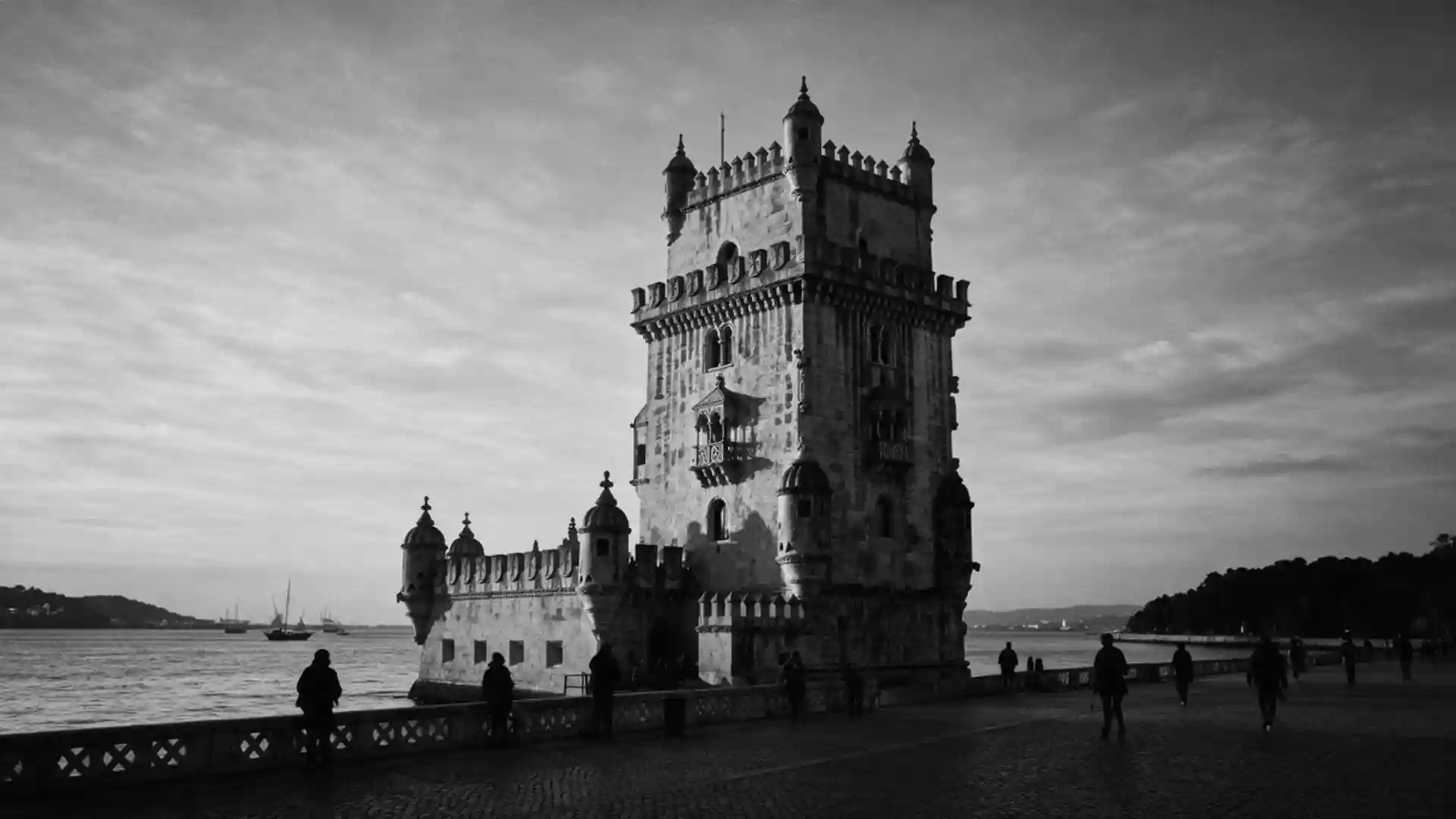
Torre de Belem, a carved stone outpost on the Tagus
Published on 09/02/2026 at 07:15 | Editorial responsibility: Rafael Müller, Editor-in-Chief AD HOC NEWS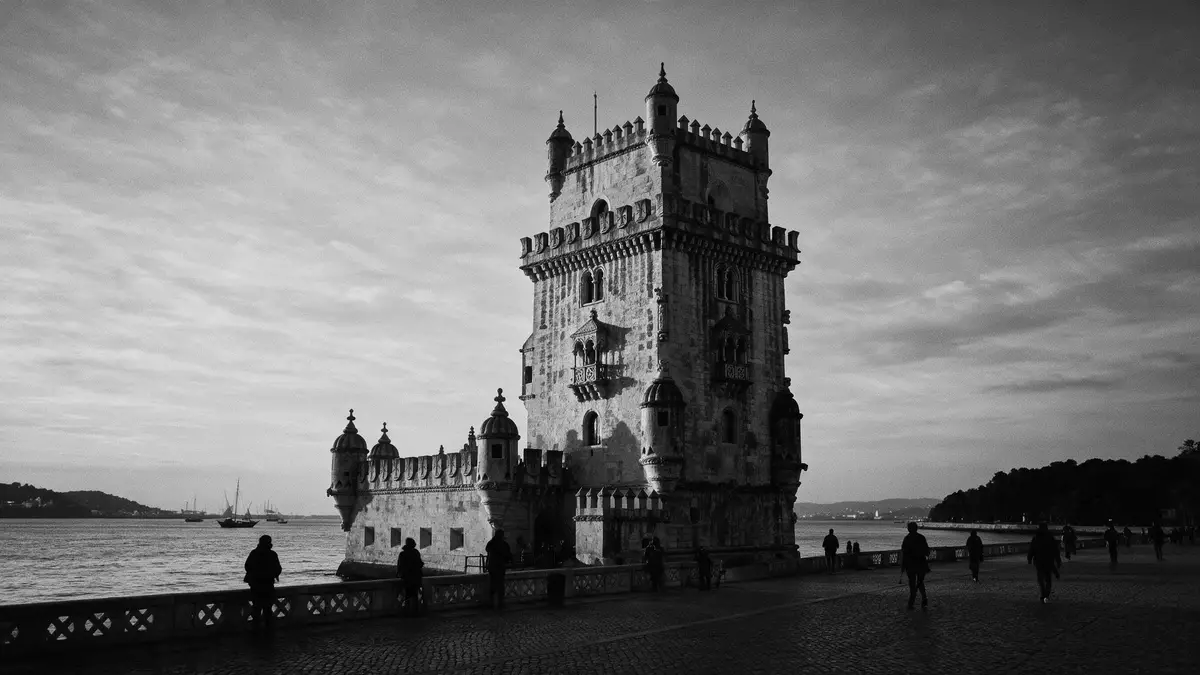
Torre de Belem on the Tagus in Lissabon is a compact limestone fortress where a slender tower and a low riverside bastion turn sixteenth-century defence into sculpted stone architecture. Built between 1514 and 1519 under King Manuel I, it stands as a Manueline outpost on the edge of the city and forms part of a World Heritage ensemble with the nearby Monastery of the Hieronymites.
A Manueline tower in carved limestone
Torre de Belem rises on the north bank of the Tagus estuary in the Belém district of Lissabon, on a basalt rock platform at the river’s edge.Basalt rock platform From the shore it presents two clearly distinct parts: a tall rectangular tower similar to a medieval keep and, projecting towards the water, a lower bulwark adapted to early modern artillery.Tall tower and bulwark The structure is built in pale limestone, so the masonry reads as a single sculpted object against the darker water of the Tagus.
The tower is closely associated with the Portuguese architect Francisco de Arruda, a specialist in military works during the reign of King Manuel I.Architect Francisco de Arruda Construction took place in the second decade of the sixteenth century, between 1514 and 1519, when Portugal’s maritime expeditions were reshaping the map of trade routes.Built between 1514 and 1519 In architectural terms the tower belongs to the Manueline style, a late Gothic idiom that combines intricate carving with maritime symbols and occasional references to earlier Moorish forms.Manueline style designation
Defence work, ceremonial gateway and prison
When Torre de Belem was completed, it formed part of a wider defensive system that guarded access to Lissabon’s harbour along the Tagus estuary.Defensive system guarding harbour It was positioned as one element in a tripartite network of fortifications that controlled the approach to the port, working with other strongpoints on the riverbanks to cover the main navigation channel.Tripartite defensive network In this role it carried artillery on the riverside bulwark and housed garrison rooms in the tower above.
Beyond its military function, the tower also served as a ceremonial reference point for voyages connected with the expedition led by Vasco da Gama at the end of the fifteenth century.Association with Vasco da Gama Over the centuries the building took on additional roles, including use as a customs house supervising ships entering the port and, in later periods, as a prison for detainees held in its lower chambers.Use as customs house and prison In its present form the interior operates as a monument with exhibition elements, so visitors move through spaces that have shifted from artillery platforms to interpretive rooms while the stone shell remains.
World Heritage status and riverside setting
Torre de Belem forms part of a joint World Heritage listing with the nearby Monastery of the Hieronymites, recognising the pair as a concentrated statement of Portugal’s “Age of Discovery”.Joint World Heritage listing The listing was confirmed in 1983 and treats the tower and monastery as different expressions of the same early sixteenth-century moment on the banks of the Tagus.World Heritage recognition One is a richly carved church and cloister facing inland; the other is a compact fortress projecting into the estuary.
The tower’s official Portuguese name, Torre de São Vicente, honours the patron saint of Lissabon, while the commonly used name Torre de Belem ties it to the surrounding district and riverfront.Tower of Saint Vincent name Standing slightly apart from the modern shoreline, it is linked to the promenade by a short pedestrian bridge over the water, so the approach emphasises its role as a stone outpost in the river.Linked to the shore by a walkway From the upper terraces, the view runs along the Tagus towards the Atlantic and back towards central Lissabon, setting the tower within both the river landscape and the urban skyline.
Visiting Torre de Belem: what travellers from Western Europe should know
- Torre de Belem stands in the Belém district west of central Lissabon, on the north bank of the Tagus River, and is reached along the riverside promenade or by tram lines that serve Belém.
- The tower rises above a basalt outcrop reached by a short bridge over the water, and inside it contains narrow staircases and stone floors that require steady footing.
- The Monastery of the Hieronymites lies within walking distance along the same riverfront, so a visit to Torre de Belem sits naturally within a wider circuit of early sixteenth-century monuments in Belém.
- The official language is Portuguese and the currency is the euro.
Searching for Torre de Belem on social platforms
These links open searches for Torre de Belem on each platform.
Frequently asked questions about Torre de Belem
Where is Torre de Belem in Lissabon?
Torre de Belem stands in the Belém district on the north bank of the Tagus estuary, west of central Lissabon, linked to the promenade by a short bridge.
What can visitors expect inside Torre de Belem?
Visitors encounter stone gun decks in the riverside bulwark, vaulted interior rooms in the tower and upper terraces that open views along the Tagus and towards the city.
What makes Torre de Belem distinctive among Lissabon’s monuments?
Torre de Belem is distinctive because it combines a compact fortress plan, richly carved Manueline stonework and a position out in the Tagus, all within a World Heritage ensemble.