
Tokyo Skytree, a steel lattice giant above Tokio
Published on 09/07/2026 at 22:55 | Editorial responsibility: Rafael Müller, Editor-in-Chief AD HOC NEWS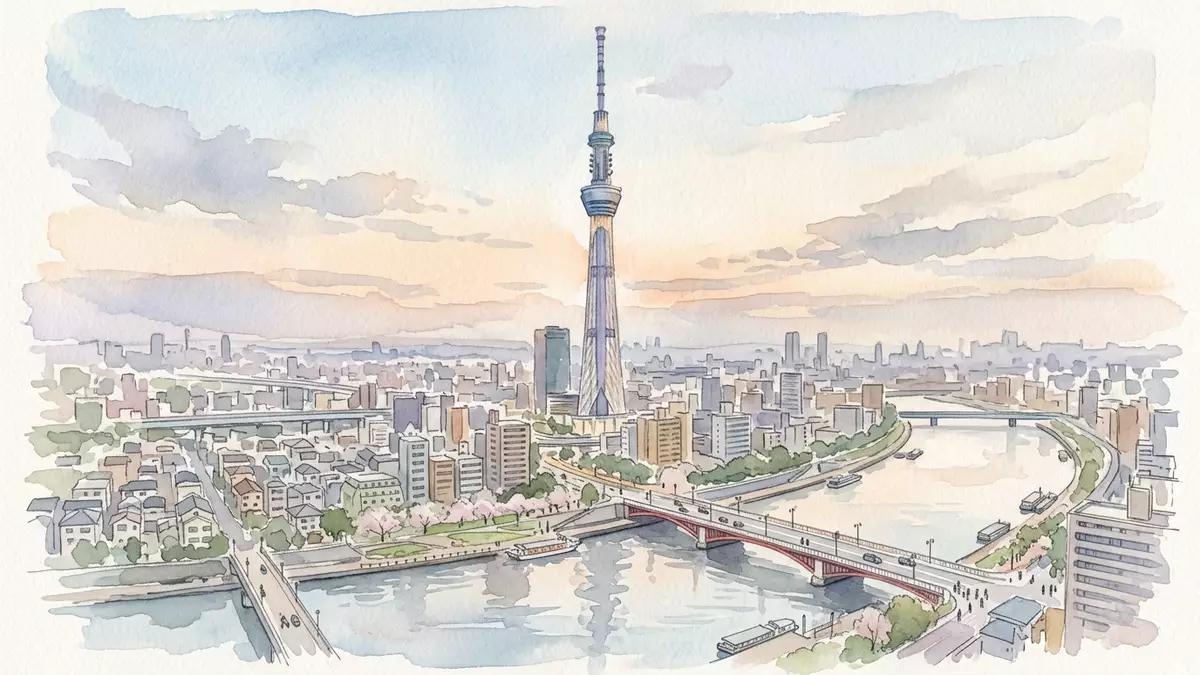
Tokyo Skytree rises above the Sumida district of Tokio as a steel lattice broadcasting tower with twin observation decks high over the city. Completed in 2012 and reaching a height of 634 m (2,080 ft), it has become a defining structure of the Japanese capital’s eastern skyline, combining engineering infrastructure with a striking public viewpoint.
A broadcasting tower turned city landmark
The tower stands in Sumida City on the eastern side of Tokio, in an area redeveloped as a mixed-use district with shops, entertainment facilities and access routes clustered around its base.With a height of 634 metres, Tokyo Skytree functions as a freestanding transmission tower for digital television and radio signals covering the metropolis and the wider Kanto region.It serves as a key piece of communications infrastructure, while also drawing visitors to its enclosed decks.
Construction of Tokyo Skytree began in 2008 under the main contractor Obayashi Corporation, working for Tobu Tower Skytree Co., Ltd. and related railway interests.The architectural and engineering design was led by Nikken Sekkei, a Japanese firm involved in numerous high-rise projects. Work continued through the late 2000s, and the structure reached its full height in 2011 before opening to visitors in May 2012.The tower was completed in February 2012 and opened to the public on 22 May 2012.
Steel lattice wrapped around a concrete core
Tokyo Skytree is built as a steel truss tower surrounding a reinforced-concrete central shaft, a configuration that gives the structure its distinctive tapered profile as it climbs above Sumida City.The building height is recorded at ground level plus 634.00 m, measured to the tip of the antenna mast. At its base, the plan transitions from a triangular arrangement into a more circular outline as it rises, an approach that stabilises the tower and gives it an easily recognisable silhouette across the city.
The central shaft of Tokyo Skytree is made of reinforced concrete and is surrounded by the steel lattice framing that carries the tower’s broadcasting equipment and observation facilities.The height of 634 m was selected in reference to “Musashi”, a historic name associated with the Tokyo region. Above the lower levels, structural rings and diagonal members accentuate the taper, while the upper portion narrows towards the antenna, emphasising the vertical reach over the surrounding wards of Tokio.
Observation decks above the metropolis
Although conceived as a broadcasting tower, Tokyo Skytree incorporates enclosed observation spaces that open views over Tokio and the wider Kanto plain. The Tembo Deck is located at a height of 350 m (1,150 ft) and forms the lower of the two main viewing levels.It has capacity for around 2,000 people at a time, with a ring of glass that allows a wide sweep of the urban landscape, from the Sumida River and neighbouring wards to distant mountain outlines on days of clear weather.
Above this, the Tembo Galleria runs along the upper part of the tower at about 450 m (1,480 ft), reached via internal circulation from the lower deck.The upper observatory includes a glass-covered skywalk that climbs several metres to the highest point of the platform, creating a sense of progression as visitors move through the space. Sections of the flooring use glass panels to reveal the streets and structures far below, underscoring the height that makes Tokyo Skytree one of the most prominent modern towers in Japan.
Visiting Tokyo Skytree: what travellers from Western Europe should know
- Tokyo Skytree stands in Sumida City, north-east of central Tokio, close to the Sumida River and integrated with the Tokyo Skytree Station on the Tobu Skytree Line.
- The approach from street level involves moving through multi-storey podium buildings and plazas, followed by lifts to the observation decks rather than long external staircases.
- The enclosed decks are at high altitude, with the Tembo Deck around 350 m above ground and the Tembo Galleria higher still, which may affect those sensitive to heights.
- The official language is Japanese and the currency is the yen.
- Entry requirements depend on your nationality; UK travellers can check the FCDO travel advice at gov.uk/foreign-travel-advice, Irish travellers the Department of Foreign Affairs at ireland.ie.
Searching for Tokyo Skytree on social platforms
These links open searches for Tokyo Skytree on each platform.
Frequently asked questions about Tokyo Skytree
Where is Tokyo Skytree located in Tokio?
Tokyo Skytree stands in Sumida City, north-east of central Tokio, close to the Sumida River and linked to local railway and metro stations.
What can visitors expect on the observation decks?
Visitors encounter enclosed viewing spaces around 350 m and 450 m above ground, with panoramic glass walls, internal walkways and sections of glass flooring above the city.
What makes Tokyo Skytree distinctive among towers in Japan?
Tokyo Skytree combines a 634 m height with a steel lattice wrapped around a concrete core, twin high-level decks and a major role as a digital broadcasting tower.


