
Teatro Romano de Cartagena and its hillside Roman stage
Published on 09/19/2026 at 07:29 | Editorial responsibility: Rafael Müller, Editor-in-Chief AD HOC NEWS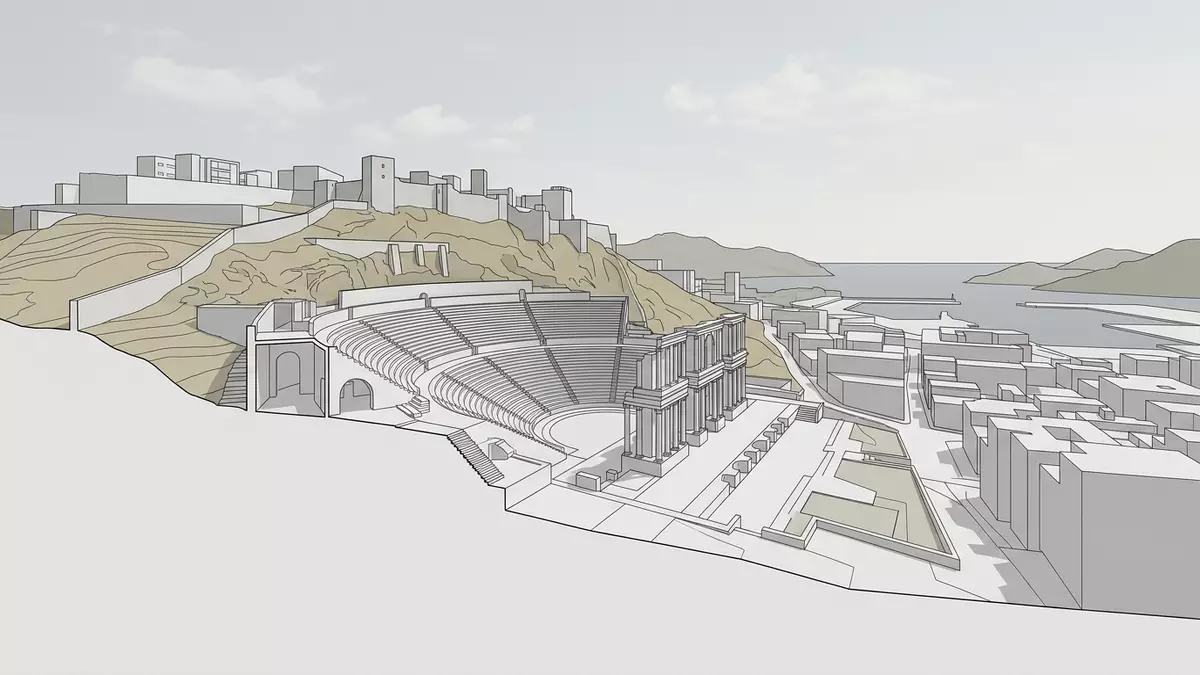
Teatro Romano de Cartagena is a Roman theatre embedded in the historic hillside of Cartagena in south?eastern Spain, where ancient stone terraces, cathedral remains and a contemporary museum form a single stepped ensemble overlooking the harbour. Built in the late first century BC in the Roman colony of Carthago Nova under Emperor Augustus, it is one of the most striking survivals of Roman public architecture in Spain, reshaped in recent decades into a layered archaeological and museum experience.
A Roman theatre rediscovered in the fabric of Cartagena
The Roman theatre at Cartagena was constructed between 5 and 1 BC, when the city was known as Carthago Nova and formed part of the Roman province in the Iberian Peninsula.Built between 5 and 1 BC The building occupies the slope of Cerro de la Concepción behind the Old Cathedral of Santa María la Vieja, taking advantage of the hillside to support its semicircular cavea, the stepped seating area that rises above the stage.On a hillside behind the Old Cathedral In Roman times it was used for theatrical performances and civic gatherings, giving the colony an imposing venue for public spectacle.
Archaeological excavations in the late twentieth century brought the scale of the theatre back into focus, revealing a structure capable of accommodating around 6,000 spectators in its stone ranks.Capacity for about 6,000 spectators Much of the cavea is carved directly into the bedrock, with the lower seating rings closest to the orchestra and the upper sectors rising towards the crest of the hill.Excavated largely into the bedrock The scaenae frons, the vertical backdrop of the stage, survives in foundations and partially reconstructed walls, giving a clear sense of the height and depth that once framed performances.
Museum route threaded through stone, streets and palace
Teatro Romano de Cartagena is approached through the Museo del Teatro Romano, which occupies the historic Palacio Pascual del Riquelme on Plaza del Ayuntamiento in the old centre of Cartagena.Museo del Teatro Romano in Palacio Pascual del Riquelme The museum route leads from the palace’s interior galleries, where sculptural fragments, inscriptions and architectural pieces from the theatre are displayed, out towards the archaeological site itself, turning the walk into a gradual transition from enclosed exhibition spaces to the open air of the cavea.
The museum and theatre complex occupies several levels on the hillside, connecting the restored seating, the stage zone and the remains of Santa María la Vieja, the old cathedral that stands above the theatre.Stone terraces, stage walls and museum route Visitors move through corridors, ramps and staircases within the museum before emerging into the theatre, where the curvature of the cavea and the view towards the harbour set the ancient structure in its Mediterranean port context.Museum route leading into the monument The integration of palace, museum and archaeological remains makes the complex a prominent cultural institution in the Region of Murcia.
Stone, decoration and later layers on the Roman stage
The theatre’s construction reflects Roman techniques of combining masonry and carved rock, with much of the seating hewn into the hillside and other sections formed by retaining walls and radial staircases in stone.Excavated into rock with masonry elements Decorative elements recovered during excavation include columns, capitals and sculpted reliefs that once articulated the scaenae frons, indicating a rich architectural treatment typical of major Augustan theatres.Augustan?period theatre with rich decoration Inscriptions and statuary fragments point to dedications and honourific displays that linked the space to imperial imagery and local elites.
Use of the theatre appears to have declined by the third century AD, when a market building was constructed over part of the site, reusing architectural materials from the stage and seating.Market constructed over the theatre Later historic phases left further layers: the medieval and early modern development of the cathedral above the cavea and the dense urban fabric around Plaza del Ayuntamiento built up while the theatre lay buried beneath houses and streets.Declared Bien de Interés Cultural in 1999 The present arrangement, in which the Roman structure, cathedral remains and museum form a single ensemble, makes those successive occupations legible on the hillside.
Visiting Teatro Romano de Cartagena: what travellers from Western Europe should know
- Teatro Romano de Cartagena stands in Cartagena in Spain’s Region of Murcia, on the slope of Cerro de la Concepción behind Santa María la Vieja, with the museum entrance in the Palacio Pascual del Riquelme on Plaza del Ayuntamiento.
- The approach from Plaza del Ayuntamiento runs through the museum, with corridors, ramps and staircases that lead out to the open seating of the theatre on the hillside, including stepped stone terraces and higher levels near the cathedral ruins.
- Cartagena is served by regional rail services and road links within south?eastern Spain, and Teatro Romano de Cartagena lies within walking distance of the waterfront and the main streets of the historic centre.
- The official language is Spanish and the currency is the euro.
Searching for Teatro Romano de Cartagena on social platforms
These links open searches for Teatro Romano de Cartagena on each platform.Frequently asked questions about Teatro Romano de Cartagena
Where is Teatro Romano de Cartagena located?
Teatro Romano de Cartagena stands on the hillside of Cerro de la Concepción behind the Old Cathedral of Santa María la Vieja, a short walk from Plaza del Ayuntamiento in Cartagena in Spain’s Region of Murcia.
What can visitors expect when they reach the site?
Visitors pass through the Museo del Teatro Romano in the Palacio Pascual del Riquelme, move along indoor galleries and passages, and emerge into the open Roman theatre with its stone seating, stage area and views towards the harbour, alongside the remains of the old cathedral.
What makes Teatro Romano de Cartagena distinctive among Roman theatres in Spain?
Teatro Romano de Cartagena combines an Augustan?period theatre capable of seating around 6,000 spectators with a modern museum route and the superimposed remains of a later cathedral, creating a visibly layered ensemble of Roman, medieval and contemporary structures on a single Mediterranean hillside.


