
Teatro Amazonas: Belle Époque opera in the Amazon rainforest
Published on 09/18/2026 at 11:48 | Editorial responsibility: Rafael Müller, Editor-in-Chief AD HOC NEWS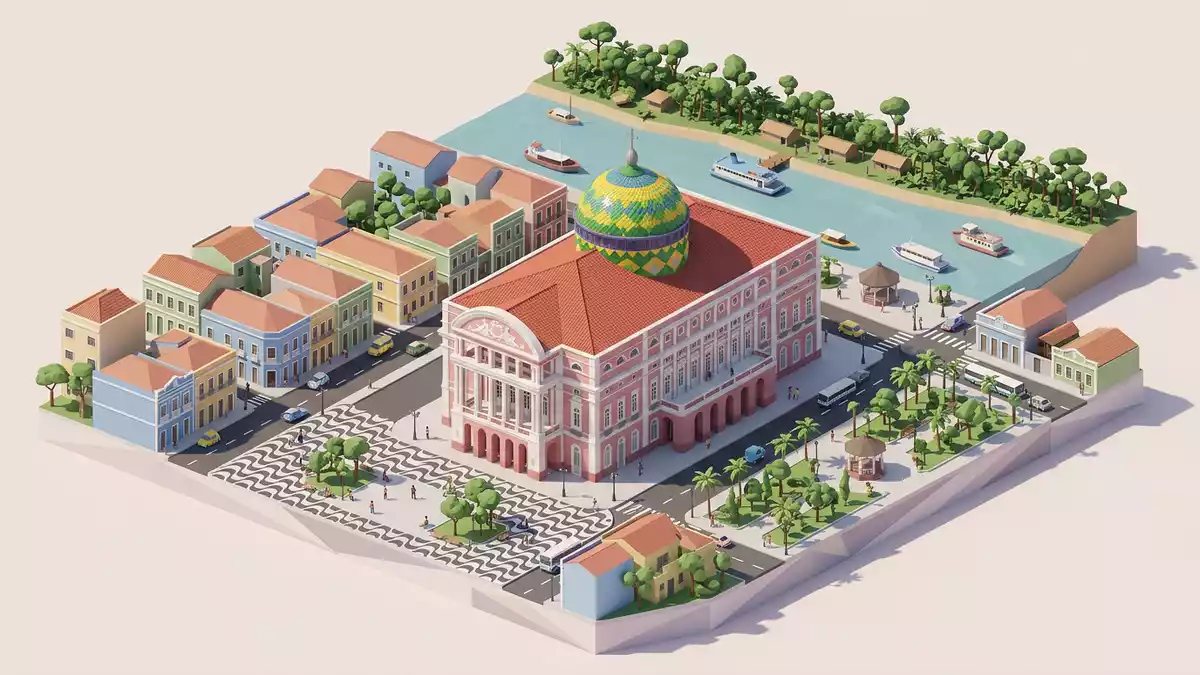
Teatro Amazonas in Manaus is an opera house from the late nineteenth century where Renaissance Revival architecture meets the river city at the edge of the Amazon rainforest. Conceived during Brazil’s rubber boom and inaugurated on 31 December 1896, it stands as a masonry monument to the period when Manaus grew into a major centre of latex export and cultural ambition.
A Belle Époque opera house in the Amazon
Teatro Amazonas is an opera house in the historic centre of Manaus, the capital of the state of Amazonas in northern Brazil, set on a rise above streets laid out close to the Rio Negro. The building was conceived in 1881, when Antonio José Fernandes Júnior, a member of the local House of Representatives, proposed a masonry theatre for the city during the era when fortunes were made in the rubber trade.proposed a grand cultural institution Construction began in 1884 under the Italian architect Celestial Sacardim, whose project followed Renaissance Revival principles and drew on European opera house models.construction of the Teatro Amazonas began in 1884
Work on the theatre progressed across the later 1880s and early 1890s, with stoppages and restarts, before the masonry and exterior form were completed by 1895.masonry work and exterior were completed by 1895 The building was inaugurated on 31 December 1896 and opened its stage with an Italian opera performance in early January 1897, linking this Amazonian city to operatic repertoires from Europe.inaugurated on 31 December 1896
Renaissance Revival architecture and imported materials
Teatro Amazonas is recognisable by its Renaissance Revival architectural style, an approach that was widespread in late nineteenth-century opera houses and civic theatres.architectural style is considered Renaissance Revival The exterior composition is organised around a main volume with a facade structured by pilasters, arches and classical detailing, topped by a dome whose coloured tiles form geometric patterns visible from across the surrounding district.colourful dome above the Amazonian cityscape The overall impression is that of a European-influenced theatre translated into the setting of an Amazonian river port.
Materials and decorative elements for Teatro Amazonas were brought from different parts of the world, reflecting the international reach of trade during the rubber cycle. Granite and other stones form the main structural walls, while interior finishes include painted ceilings, ornamental plasterwork and timber seating arranged in tiers around the stage. The ceiling of the auditorium was painted by an Italian artist to create the illusion of looking up at an iron lattice structure, echoing contemporary engineering landmarks in Europe.the ceiling offers the impression of looking upwards at a great iron structure Electric lighting was installed at the end of the nineteenth century, marking Teatro Amazonas out as a technologically advanced venue for its region.planned for the theatre to include electric lighting
From rubber-boom symbol to protected heritage
Teatro Amazonas is closely linked to the historical period known as the rubber boom, when latex exports from the Amazon basin created wealth that transformed Manaus and other river ports. During this Belle Époque era, the theatre served as a venue frequented by the local elite, and its scale and decorative richness reflected the prosperity of the late nineteenth century.became the symbol of a period of prosperity in the rubber boom As the rubber trade declined in the twentieth century, the building experienced periods of reduced use and physical deterioration, before programmes of restoration renewed its structure and interiors.
In 1966 Teatro Amazonas was declared a National Historic Heritage site in Brazil, recognising its architectural and cultural importance and securing formal protection for the building.declared a National Historic Heritage site in 1966 Subsequent restoration campaigns in the 1970s and late 1980s repaired structural elements and refreshed interior finishes, ensuring that the theatre continues to host performances and events while preserving much of its original Belle Époque character.designated a national historic landmark and restored in 1974 and again in 1990
Visiting Teatro Amazonas: what travellers from Western Europe should know
- Teatro Amazonas stands in the Largo de São Sebastião area of central Manaus, a short walk uphill from the waterfront streets that face the Rio Negro.
- The opera house is reached along urban pavements and stairways, and its interior includes staircases that rise to balconies and upper seating levels.
- The official language is Portuguese and the currency is the Brazilian real.
- Entry requirements depend on your nationality; UK travellers can check the FCDO travel advice at gov.uk/foreign-travel-advice, Irish travellers the Department of Foreign Affairs at ireland.ie.
Searching for Teatro Amazonas on social platforms
These links open searches for Teatro Amazonas on each platform.
Frequently asked questions about Teatro Amazonas
Where is Teatro Amazonas located?
Teatro Amazonas stands in the historic centre of Manaus, in the state of Amazonas in northern Brazil, close to the Rio Negro waterfront.
What can visitors expect inside the theatre?
Visitors encounter an auditorium with painted ceilings, tiered seating, balconies and decorative finishes typical of late nineteenth-century Renaissance Revival opera houses.
What makes Teatro Amazonas distinctive among opera houses?
Teatro Amazonas is distinctive for its Belle Époque architecture, colourful dome and setting within an Amazonian river city shaped by the late nineteenth-century rubber boom.


