
Suchitoto’s hillside colonial streets above Lake Suchitlán
Published on 09/11/2026 at 22:54 | Editorial responsibility: Rafael Müller, Editor-in-Chief AD HOC NEWS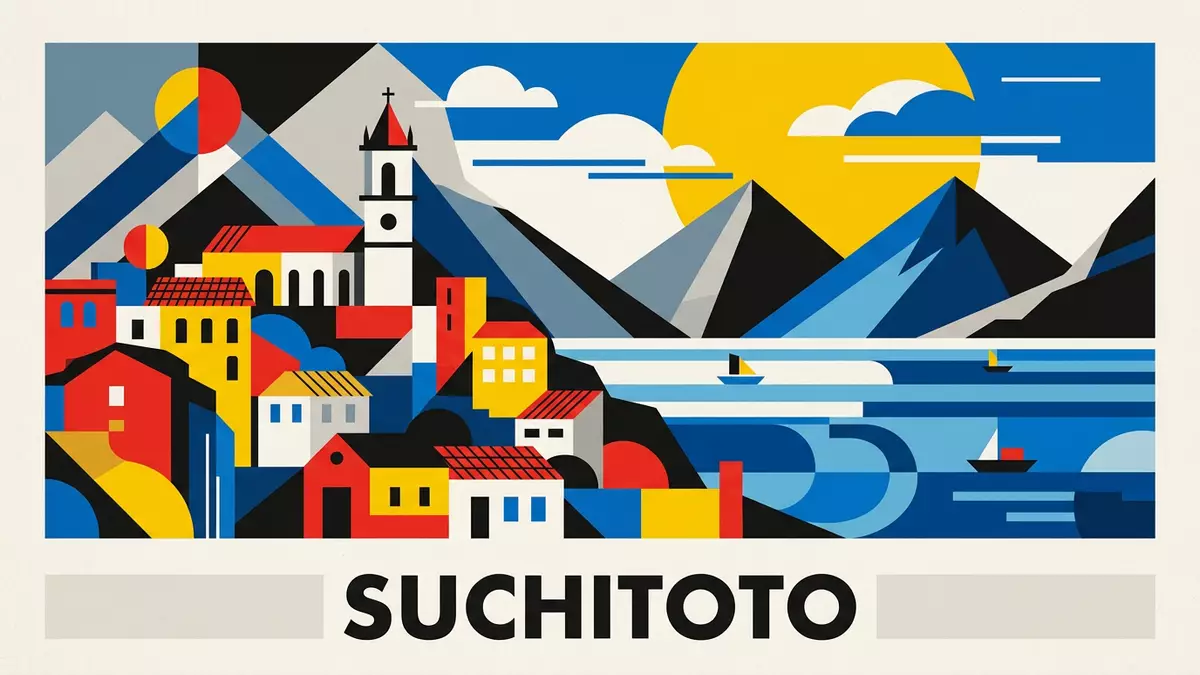
Suchitoto in central El Salvador is a colonial hillside town set above the broad waters of Lake Suchitlán, with cobblestone streets, terracotta roofs and a compact historic centre laid out on the slope. Its position in the Cuscatlán Department between the Guazapa volcano and the Lempa River gives the town a landscape of low hills falling away towards the reservoir, and the central streets step down from the main plaza towards viewpoints over the lake.
Hillside grid and colonial fabric
Suchitoto is a municipality in the Cuscatlán Department of central El Salvador, north-east of San Salvador on rising ground above the northern shore of Lake Suchitlán.Suchitoto is a municipality The lake is the country’s largest reservoir, formed behind the Cerrón Grande hydroelectric dam on the Lempa River in the 1970s, so the southern views from town take in a wide sheet of water rather than a narrow river valley.largest reservoir formed by the Cerrón Grande dam
The historic centre follows a rectilinear street plan established under Spanish colonial rule, with straight streets meeting at right angles and converging on a central plaza that organises daily life.rectilinear street plan under Spanish colonial rule Cobblestone roads run between low houses with whitewashed walls and terracotta-tiled roofs, many with internal courtyards behind plain facades. In the blocks closest to the main square the buildings stand close together, while streets further down the slope open out towards the lake with occasional balconies and miradors looking over the water.
Santa Lucía church and layers of history
The focal building on the main square is the Iglesia Santa Lucía, a white church completed in the nineteenth century that gives Suchitoto’s centre its most recognisable silhouette.white nineteenth-century church The present structure was built between 1853 and 1857 after a fire destroyed an earlier temple, driven by the priest Cayetano Bosque and executed by the architect Pío José Araujo.built between 1853 and 1857 Its facade, tower and raised position above the square make it the natural landmark for orientation in the compact centre, and the front steps look out over the plaza and surrounding streets.
Human settlement in the Suchitoto area predates Spanish colonisation, and the municipality includes the site where the Villa de San Salvador was founded in 1528 while the conquest was still under way.Villa de San Salvador founded in 1528 That early town was abandoned after 17 years and never reoccupied, but its location ties Suchitoto to the first phase of Spanish urban foundations in El Salvador. The name Suchitoto comes from Nahuatl and is usually translated along the lines of “place of flowers and birds”, reflecting pre-Columbian roots in the territory as well as the later colonial imprint.name comes from Nahuatl
Lake Suchitlán and surrounding landscape
Lake Suchitlán spreads south of the town as El Salvador’s largest artificial lake, held back by the Cerrón Grande dam on the Lempa River and edged by low hills and remnants of flooded valleys.largest lake formed by a dam From streets and viewpoints on the southern edge of the centre, the eye runs over the reservoir to distant slopes and small islands, giving a broad sense of scale that contrasts with the compact town grid behind.
Beyond the lake, the wider municipal area includes countryside that was heavily affected by the Salvadoran civil war in the 1980s, and traces of that period remain in memorials and stories tied to the surrounding villages.focal point during the civil war Closer in, natural sites such as the Cascada de los Tercios, with its patterned rock face and seasonal flow, connect the colonial streets to a landscape of lava formations, forest and rural tracks within reach of the town.Cascada de los Tercios and Lake Suchitlán
Visiting Suchitoto: what travellers from Western Europe should know
- Suchitoto lies north-east of San Salvador in central El Salvador, on a hillside above the northern shore of Lake Suchitlán, reachable by road from the capital through the Cuscatlán Department.
- The historic centre stands on sloping ground, and walking its cobblestone streets involves short climbs and descents between the main square, side streets and viewpoints.
- Natural sites associated with Suchitoto, including Lake Suchitlán and Cascada de los Tercios, are reached along rural roads and paths where surfaces can be uneven and conditions depend on recent weather.
- The official language is Spanish and the currency is the United States dollar.
- Entry requirements depend on your nationality; UK travellers can check the FCDO travel advice at gov.uk/foreign-travel-advice, Irish travellers the Department of Foreign Affairs at ireland.ie.
Searching for Suchitoto on social platforms
These links open searches for Suchitoto on each platform.
Frequently asked questions about Suchitoto
Where is Suchitoto and what kind of place is it?
Suchitoto is a municipality and hillside town in the Cuscatlán Department of central El Salvador, north-east of San Salvador and overlooking Lake Suchitlán.
What should visitors expect when walking through Suchitoto’s centre?
Visitors encounter cobblestone streets laid out in a straight-street grid, low whitewashed houses with terracotta roofs and a main square dominated by the white Santa Lucía church.
What makes Suchitoto distinctive among towns in El Salvador?
Suchitoto combines a well-preserved colonial street plan and nineteenth-century church with broad views over Lake Suchitlán and a history tied to both early Spanish foundations and the civil war era.


