

Suchitoto: a hillside colonial town above Lake Suchitlán
Published on 08/27/2026 at 09:38 | Editorial responsibility: Rafael Müller, Editor-in-Chief AD HOC NEWS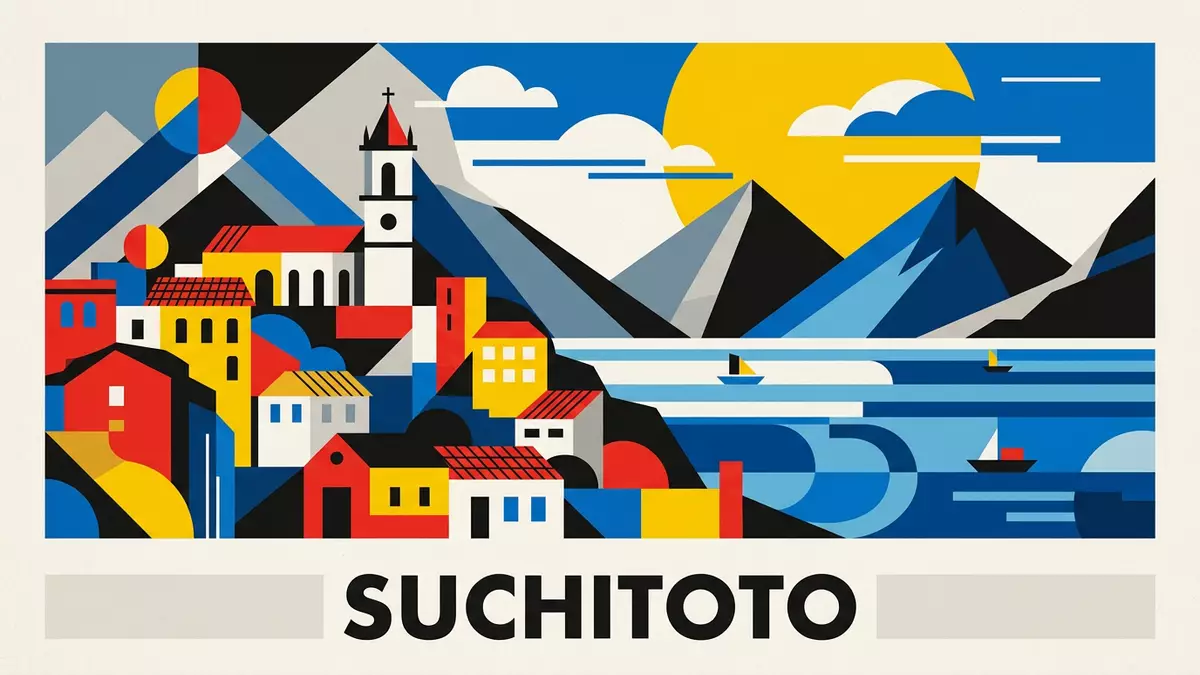
Suchitoto in central El Salvador is a small colonial town set on a hillside above Lake Suchitlán, with cobblestone streets, whitewashed houses and a prominent church on its main square anchoring daily life.
A colonial grid town facing a vast lake
Suchitoto lies in the Cuscatlán Department of El Salvador, on rising ground north-east of San Salvador, looking down towards the broad waters of Lake Suchitlán.Cuscatlán Department in El Salvador The lake is the country’s largest reservoir, formed by the Cerrón Grande hydroelectric dam on the Lempa River in the 1970s, so the town’s viewpoints take in a wide expanse of water and low hills rather than a narrow valley.largest lake formed by a dam
The historic centre follows a regular grid of cobblestone streets laid out in the Spanish colonial manner, with one-storey and two-storey houses whose clay tile roofs and shaded corridors line the blocks.urban grid with cobblestone streets Many facades are painted in pale colours, with wooden doors opening directly onto the street and inner courtyards behind. This pattern makes the centre compact enough to explore on foot, and the change from the denser townscape around the main square to the wider views over the lake happens within a short walk.
Santa Lucía church and Suchitoto’s colonial heritage
At the heart of Suchitoto stands the Iglesia Santa Lucía, a white-fronted parish church facing the plaza and providing one of the town’s best-known silhouettes.Iglesia Santa Lucía in Suchitoto The present building was constructed in the mid-nineteenth century, between 1853 and 1857, after an earlier church on the site was lost to fire. Its design was led by the architect Pío José Araujo, with support from the priest Cayetano Bosque, and the facade combines baroque elements with rococo touches, including a row of Ionic columns that give rhythm to the front.
Santa Lucía was declared a National Monument in 1978, recognising the church as a key piece of El Salvador’s architectural and religious heritage.National Monument declaration in 1978 Around it, Suchitoto preserves a broad ensemble of colonial-era streets and houses, making the town an example of Spanish colonial architecture in the country with a consistent character across much of the centre.colonial-style houses and cobbled streets Public spaces are modest in scale, with a central square that mixes everyday activity with views of the church facade, and smaller plazas and alleyways leading away towards the lake.
Name, history and cultural life
The name Suchitoto comes from Nahuatl and is translated as “place of flowers and birds”, reflecting the town’s origin in an indigenous landscape before Spanish rule.Nahuatl name meaning Human settlement in the area predates the arrival of Spaniards, and within the municipality lies the site where the early Villa de San Salvador was founded in 1528, an initial colonial town that was later abandoned when the administrative centre moved.original founding of the Villa de San Salvador
In the nineteenth century Suchitoto gained formal city status and served for a period as a departmental capital, giving it a civic role beyond its size.earned the title of city in 1858 The town’s later life has been marked by a strong engagement with the arts, associated in part with the work of filmmaker Alejandro Cotto and the presence of galleries, cultural centres and small theatres in refurbished houses around the centre.arts scene tied to Alejandro Cotto Alongside this cultural layer, Suchitoto has maintained traditions such as indigo dyeing, with workshops producing textiles coloured with locally prepared añil and selling them from small shops lining the streets.indigo dyeing tradition
Visiting Suchitoto: what travellers from Western Europe should know
- Suchitoto is reached by road from San Salvador, travelling north-east into the Cuscatlán Department, with buses and private vehicles following routes towards the lakeshore town.
- The historic centre is built on a slope above Lake Suchitlán, so walking involves cobblestone streets with noticeable gradients and short climbs between the plaza, side streets and viewpoints.
- The town lies between the Lempa River and the Guazapa volcano, and short trips from the centre reach rural landscapes, lakeside jetties and small waterfalls in the surrounding countryside.
- Spanish is the official language and the currency is the United States dollar.
- Entry requirements depend on your nationality; UK travellers can check the FCDO travel advice at gov.uk/foreign-travel-advice, Irish travellers the Department of Foreign Affairs at ireland.ie.
Searching for Suchitoto on social platforms
These links open searches for Suchitoto on each platform.
Frequently asked questions about Suchitoto
Where is Suchitoto in El Salvador?
Suchitoto is a colonial town in the Cuscatlán Department of El Salvador, north-east of the capital San Salvador and overlooking Lake Suchitlán.
What can visitors expect on a visit to Suchitoto?
Visitors encounter cobblestone streets, colonial-era houses, the Santa Lucía church on the main square, lake views and small cultural venues in converted historic buildings.
What makes Suchitoto distinctive among Salvadoran towns?
Suchitoto combines a well-preserved colonial grid, a named National Monument church, an arts scene and direct views over El Salvador’s largest lake from a compact hillside centre.


