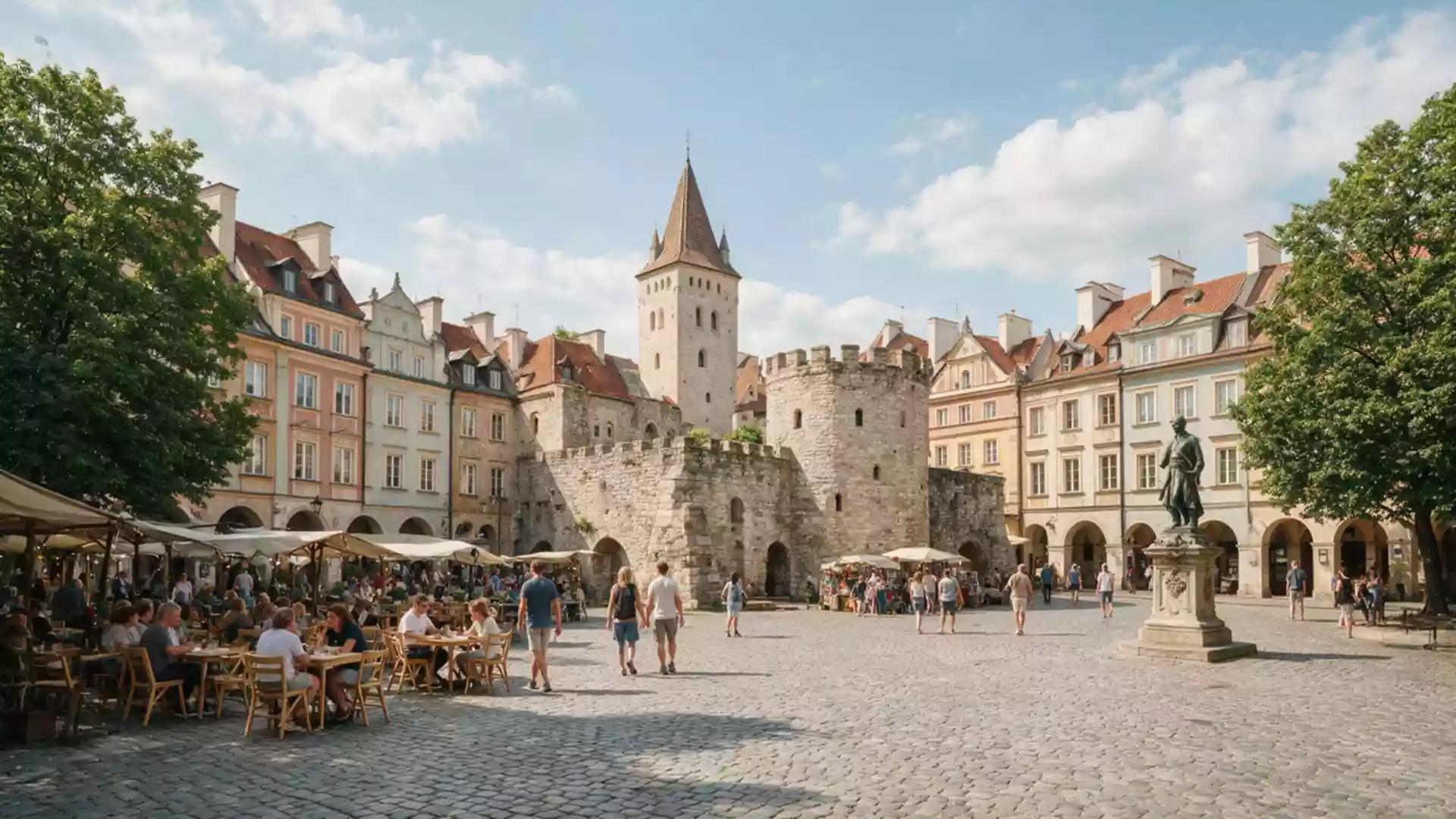
Stare Miasto w Warszawie and the art of a rebuilt Old Town
Published on 09/02/2026 at 14:31 | Editorial responsibility: Rafael Müller, Editor-in-Chief AD HOC NEWS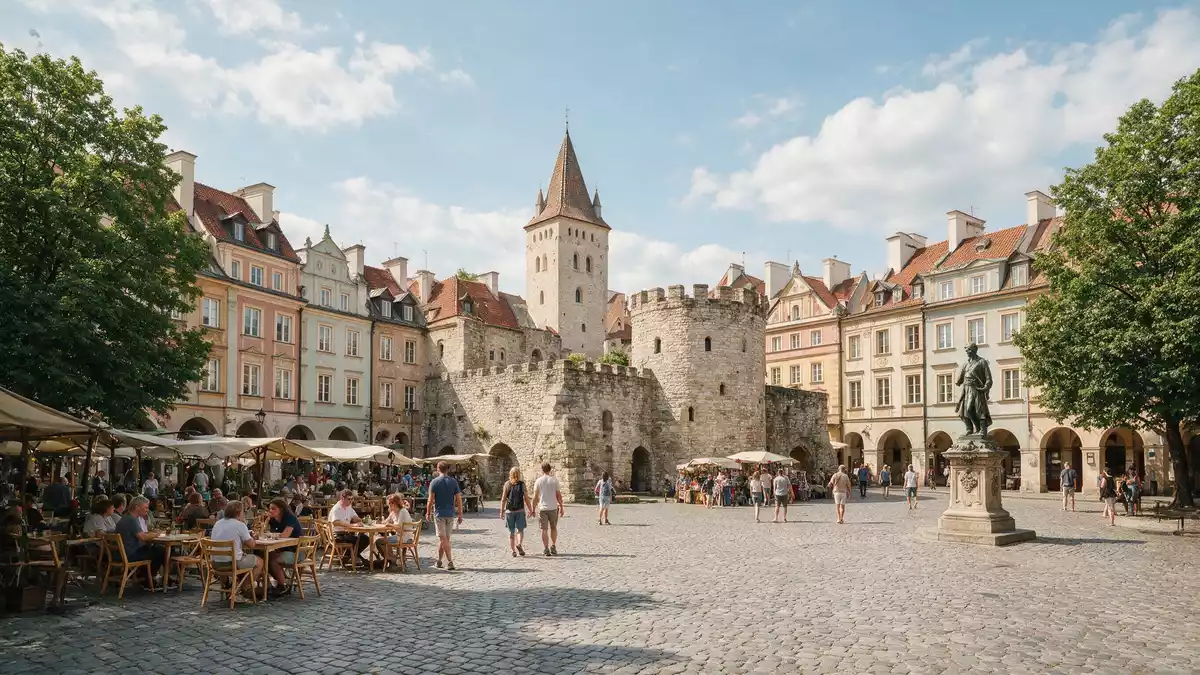
Stare Miasto w Warszawie, known in English as Warsaw Old Town, is the historic centre of Warsaw and a compact district where reconstructed townhouses trace a medieval street plan that reaches back to the thirteenth century.Warsaw Old Town forms part of the ?ródmie?cie district and, under the name Historic Centre of Warsaw, has been inscribed on the UNESCO World Heritage List since 1980.
A medieval layout reborn in brick and plaster
At street level, Stare Miasto w Warszawie is defined by its tight lattice of lanes, a pattern that dates back to the medieval origins of the city and was preserved through layers of rebuilding.the oldest urban core The district grew as the original walled town of Warsaw, centred on a market square and protected by defensive walls first raised between the fourteenth and sixteenth centuries.a ring of defensive walls
Walking through the Old Town reveals elevations shaped in the seventeenth and eighteenth centuries, with stuccoed facades and gabled roofs lining streets that still follow their medieval courses.architecture from the seventeenth and eighteenth centuries The built-up area of the UNESCO-listed Historic Centre of Warsaw covers about 25.9 ha (64.1 acres), bringing together Gothic, Renaissance, Baroque and Classicist elements within a single, walkable district.an area of 25.93 ha
A UNESCO World Heritage reconstruction
The character of Stare Miasto w Warszawie is inseparable from its reconstruction after the devastation of the Second World War, when more than 85% of Warsaw’s historic centre was destroyed during the events of 1944.the destruction of the historic centre After the war, a major rebuilding campaign led by the Warsaw Reconstruction Office began in 1945 and set out to restore the historic district while adapting it to contemporary urban life.the Warsaw Reconstruction Office created in 1945
The reconstruction drew on architectural surveys, archival documents and eighteenth-century cityscapes painted by Bernardo Bellotto, known as Canaletto, to recreate pre-war elevations and rooflines along the original medieval street network.Bellotto’s paintings and pre-war surveys UNESCO recognised the Historic Centre of Warsaw in 1980 as an outstanding example of near-total reconstruction across a span of history from the thirteenth to the twentieth century, highlighting both the urban fabric and the post-war rebuilding effort.an outstanding example of reconstruction
Market squares, castle hill and city walls
The heart of Stare Miasto w Warszawie is the Old Town Market Square, a roughly rectangular plaza framed by townhouses whose reconstructed facades echo seventeenth and eighteenth-century designs and whose interior courtyards were enlarged during post-war planning.changes to Old Town courtyards From the square, narrow streets radiate towards the remnants of the defensive walls and the Barbican, a fortified gate structure that once strengthened the northern line of the city’s fortifications.the Barbican and medieval walls
To the south-east, the Royal Castle complex rises on the Vistula escarpment above Castle Square, pairing a reconstructed royal residence with the column of King Sigismund III Vasa and the approach to ?wi?toja?ska Street and St John’s Cathedral.Castle Square, the Royal Castle and Sigismund’s Column The mix of religious buildings, civic spaces and fortified remains gives the Old Town a layered skyline, where church towers, castle roofs and segments of city wall rise above the townhouse roofs of the residential streets.
Visiting Stare Miasto w Warszawie: what travellers from Western Europe should know
- Stare Miasto w Warszawie lies within the ?ródmie?cie district of Warsaw on the western side of the Vistula River, north of the Royal Route and close to the Vistula escarpment.
- The Old Town’s streets are paved and many routes between the river front and the market square include noticeable gradients and flights of steps, especially near the escarpment and the remaining city walls.
- The district sits within Poland, where the official language is Polish and the currency is the z?oty.
- Entry requirements depend on your nationality; UK travellers can check the FCDO travel advice at gov.uk/foreign-travel-advice, Irish travellers the Department of Foreign Affairs at ireland.ie.
Searching for Stare Miasto w Warszawie on social platforms
These links open searches for Stare Miasto w Warszawie on each platform.
Frequently asked questions about Stare Miasto w Warszawie
Where is Stare Miasto w Warszawie located within the city?
Stare Miasto w Warszawie occupies the historic core of Warsaw within the ?ródmie?cie district, on the western bank of the Vistula River above the escarpment.
What should a visitor expect when exploring the Old Town?
Visitors encounter rebuilt townhouses, historic churches, segments of defensive walls and the Royal Castle precinct arranged along a medieval street network focused on the Old Town Market Square.
What makes Stare Miasto w Warszawie distinctive among historic districts?
Its distinction lies in the combination of a preserved medieval layout, multi-period architectural facades and a post-war reconstruction recognised by UNESCO as a near-total rebuilding of a historic urban core.