
Seongsan Ilchulbong, Jeju’s fortress-like sea crater
Published on 09/15/2026 at 21:52 | Editorial responsibility: Rafael Müller, Editor-in-Chief AD HOC NEWS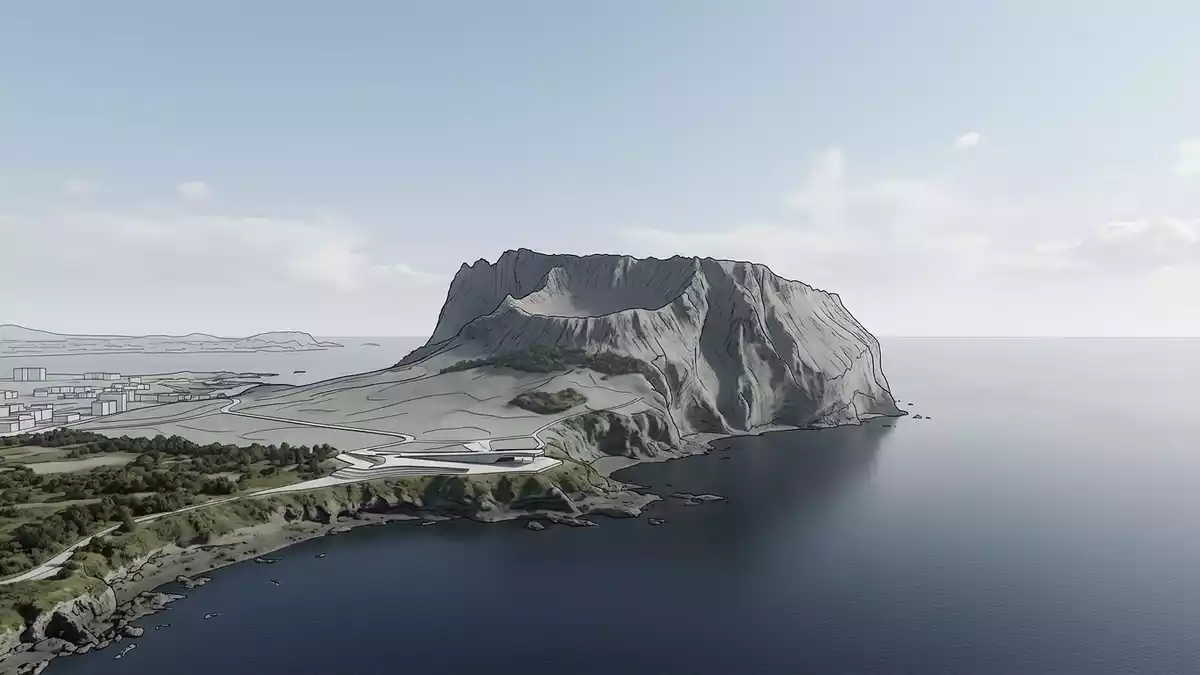
On the eastern coast of Jeju in South Korea, Seongsan Ilchulbong rises above the sea as a volcanic tuff cone whose broad summit crater faces the ocean and the surrounding islands. Formed several thousand years ago by explosive interaction between magma and seawater, it stands within the wider Jeju Volcanic Island and Lava Tubes World Natural Heritage site recognised by UNESCO in 2007, alongside Mount Halla and the Geomunoreum lava tube system.Jeju Volcanic Island and Lava Tubes
A sea-facing volcanic cone on Jeju’s eastern shore
Seongsan Ilchulbong stands on Jeju’s eastern seaboard in the settlement of Seongsan-eup, projecting into the sea in a headland-like form that reads clearly from the surrounding coastline.eastern tip of Jeju Island Geologically, it is a tuff cone, a volcanic edifice built from compacted ash and fragmented rock, created when rising magma met shallow seawater and produced explosive eruptions. The cone reaches around 180 m (590 ft) above sea level, giving its rim and crater a distinct profile against the sky.rose 180 meters above sea level
The summit is marked by a large crater with a bowl-like form measuring roughly 600 m (1,970 ft) across, ringed by ridges and cliffs that expose the internal volcanic layering.crater is about 600 meters in diameter Around the base, sea-facing slopes drop towards the shoreline, where wave erosion has cut into the outer flanks and revealed cross-sections of stratified tuff and other deposits along the coastal cliffs. From lower viewpoints the cone’s jagged rim and steep sides stand out against the more gently undulating landscape of eastern Jeju.
A textbook of hydrovolcanic geology
Seongsan Ilchulbong is an archetypal example of a hydrovolcanic tuff cone, formed by Surtseyan-type eruptions where ascending magma interacted explosively with shallow seawater on the flank of the larger Jeju volcano.Seongsan Ilchulbong tuff cone The eruptions piled layers of volcanic ash and debris around a single vent, which later consolidated into tuff made up of breccia, lapilli tuff, stratified tuff and bedded tuff.hydroclastic volcanic feature These materials are exposed today in the crater walls and coastal cliffs, where the bedding dips at angles that can reach several tens of degrees.
The cone emerged in the Late Pleistocene Epoch, within a window estimated between 120,000 and 40,000 years ago, when magma rising beneath a shallow sea floor met cold seawater and produced explosive phreatomagmatic activity.Late Pleistocene Epoch Wave erosion since that period has sculpted the outer slopes, cutting clear sections through multiple tuff layers and leaving the present-day cone attached to Jeju’s main landmass by accumulations of sand and soil.originally a separate island For geologists, Seongsan Ilchulbong is therefore a natural field laboratory where the sequence of eruptions can be read from the exposed strata.
Protected status and the experience of the crater
Beyond its scientific importance, Seongsan Ilchulbong holds multiple layers of formal protection. In July 2000 the peak area was declared a Natural Monument of South Korea, reflecting its scenic profile and the clarity of its volcanic exposures.Natural Monument designation In 2007 it became part of the Jeju Volcanic Island and Lava Tubes UNESCO World Natural Heritage listing, and later it was also recognised within the UNESCO Global Geopark framework, placing it within international networks of protected geological sites.UNESCO World Natural Heritage and Geopark
Visitors encounter Seongsan Ilchulbong most directly by following paths that ascend its flanks towards the crater rim. The climb shifts from coastal views of the sea and nearby islets to perspectives into the interior crater, where grasses and other vegetation cover the floor and contrast with the exposed tuff in the surrounding walls.summit holds a broad, bowl-like crater The overall impression is of a fortress-like natural structure, with a high rim, steep outer slopes and an interior basin open to the sky.
Visiting Seongsan Ilchulbong: what travellers from Western Europe should know
- Seongsan Ilchulbong stands on the eastern side of Jeju Island in South Korea, in Seongsan-eup, and is reached along coastal roads that link Jeju’s wider network of towns and villages.
- Paths and stairways climbing the cone involve sustained ascent over multiple flights of steps, so the visit includes a noticeable gradient between the approach at sea level and the crater rim.
- The official language is Korean and the currency is the South Korean won.
- Entry requirements depend on your nationality; UK travellers can check the FCDO travel advice at gov.uk/foreign-travel-advice, Irish travellers the Department of Foreign Affairs at ireland.ie.
Searching for Seongsan Ilchulbong on social platforms
These links open searches for Seongsan Ilchulbong on each platform.Frequently asked questions about Seongsan Ilchulbong
Where is Seongsan Ilchulbong located?
Seongsan Ilchulbong stands on the eastern shore of Jeju Island in South Korea, in the coastal settlement of Seongsan-eup, projecting into the sea as a volcanic headland.
What should visitors expect during a visit?
A visit involves walking on paths and stairways that climb from near sea level up the cone’s flanks to viewpoints on the crater rim, with changing views of the sea, crater interior and surrounding islands.
What makes Seongsan Ilchulbong distinctive among Jeju’s landscapes?
Its combination of a high, bowl-shaped summit crater, steep sea-facing slopes and clearly exposed tuff layers, together with UNESCO World Natural Heritage and national monument status, sets it apart within Jeju’s volcanic scenery.


