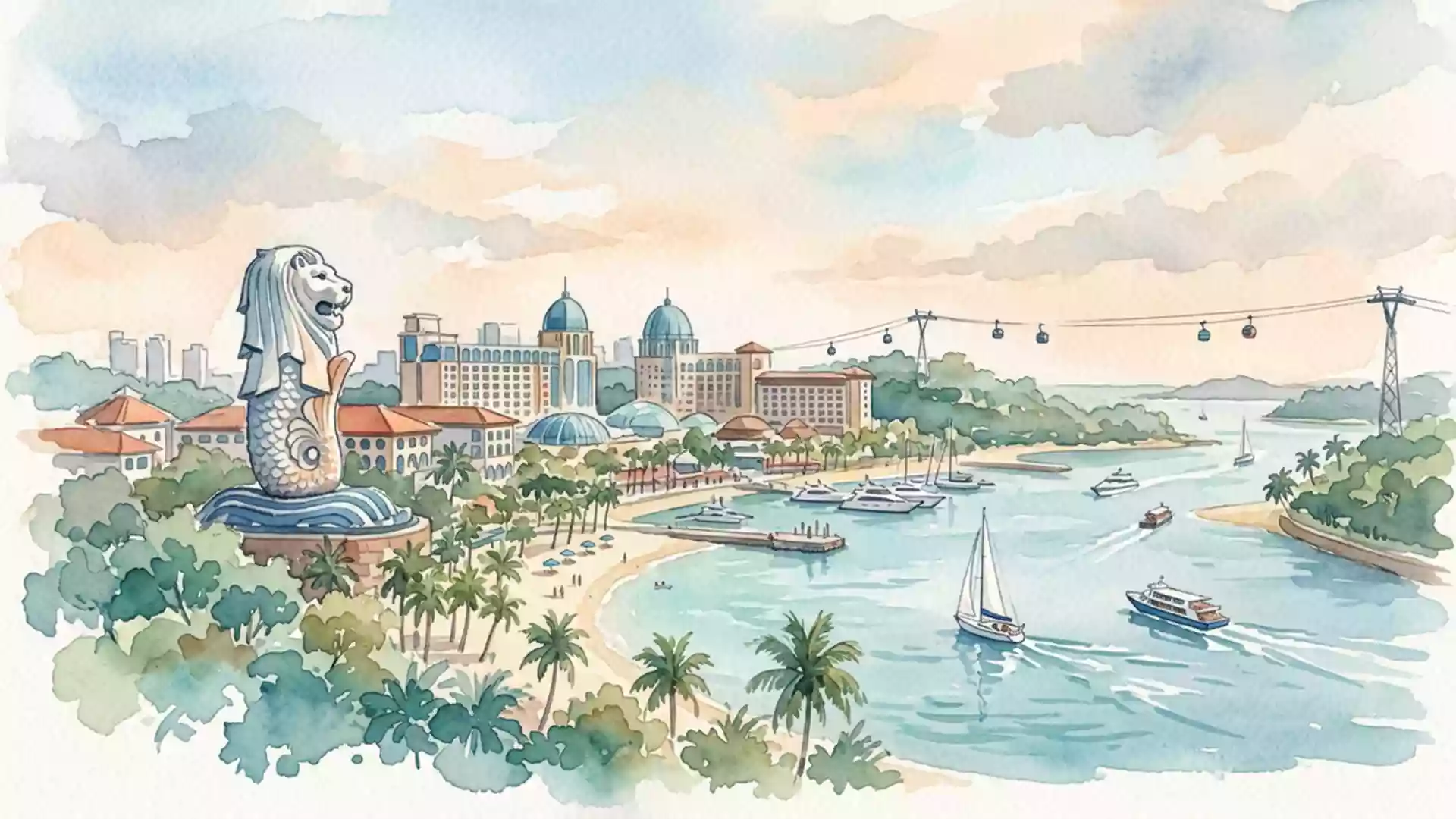
Sentosa’s layered island of forts, forests and beaches
Published on 08/30/2026 at 10:25 | Editorial responsibility: Rafael Müller, Editor-in-Chief AD HOC NEWS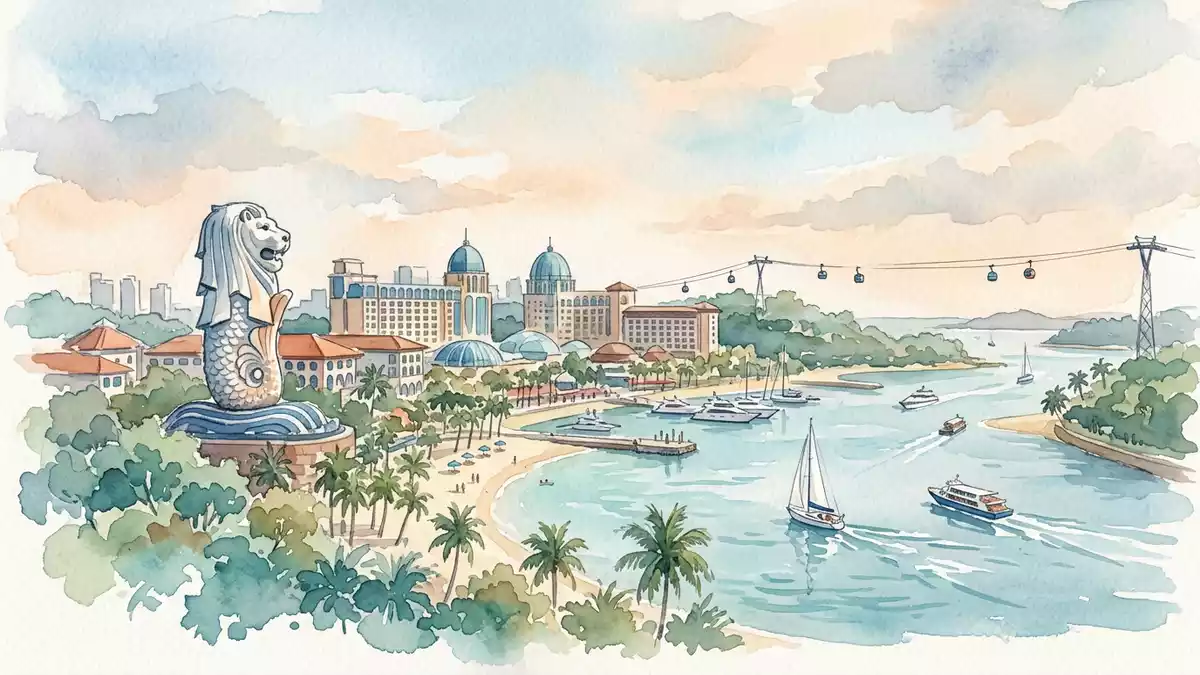
Sentosa off the southern coast of Singapore is an island where coastal forts, forested slopes and carefully groomed beaches share the same compact terrain. Once known as Pulau Blakang Mati and used for military installations, it began a deliberate transformation into a leisure resort in the early 1970s, turning gun batteries and barracks into a backdrop for holiday escapes.Developed as a resort from the 1970s
From Blakang Mati to Sentosa resort island
For centuries the small island south of Singapore’s main landmass carried very different associations from its present image. Its Malay name Pulau Blakang Mati, loosely connected with death in local tradition, reflected a reputation coloured by disease and piracy in the nineteenth century.Pulau Blakang Mati British colonial planners recognised its strategic position facing the shipping approaches to Keppel Harbour and began installing artillery on the island in the late nineteenth century.
The island’s role shifted again during the Second World War, when gun batteries that had been aimed out towards the sea were turned inland as Japanese forces advanced on Singapore from the north.Gun batteries on the island After the war years, Sentosa housed military installations and a prisoner?of?war camp under Japanese occupation before Singapore’s government chose a different path for the island in the 1970s, renaming it Sentosa and mapping out recreation grounds, attractions and beaches for residents and visitors.Renaming as Sentosa in the 1970s
Fort Siloso and the island’s military ridge
Sentosa’s western heights are crowned by Fort Siloso, one of several coastal forts constructed in the late nineteenth century to guard the seaward approaches to Singapore.Fort Siloso on the western heights Built on Mount Siloso, the fort originally carried muzzle?loading artillery that was later replaced by breech?loading guns as naval technology evolved in the early twentieth century. The surviving structures form a compact open?air museum, with casemates, tunnels and gun emplacements threaded along the ridge.
In 2022 Fort Siloso was gazetted as a National Monument of Singapore, formally recognising its role in the country’s coastal defence history and its association with the Second World War.Gazetted as a National Monument in 2022 Walking the ramparts and covered walkways gives a sense of how artillery positions once overlooked the straits, while the preserved barracks and displays trace the island’s shift from military outpost to heritage site within a leisure landscape.
Forested slopes, beaches and modern attractions
Sentosa’s compact landmass brings several landscapes close together. Inland, slopes carry secondary forest threaded by walking paths and heritage trails that connect viewpoints, World War II sites and clusters of attractions.The Sentosa Heritage Trail Towards the south coast, wide strips of sand such as Siloso Beach and Palawan Beach are framed by palms and low?rise resort buildings, creating a shoreline that looks out towards passing ships and anchored vessels.
On the northern side of the island, large?scale attractions cluster around Resorts World Sentosa, a development that opened in 2010 with a casino and a Universal Studios theme park alongside an aquarium and other draws.Resorts World Sentosa with Universal Studios Elsewhere around Imbiah Lookout stand further attractions and adventure activities, from waxwork museums to rides and treetop circuits, interspersed with green slopes that still recall the island’s earlier, less manicured landscape.
Visiting Sentosa: what travellers from Western Europe should know
- Sentosa lies just south of Singapore’s main island, across a short stretch of water from HarbourFront and the approaches to Keppel Harbour, and is connected to the city by road, a light?rail line and a cable car.Sentosa south of Singapore’s main island
- The island’s terrain ranges from flat beachfront promenades to hilly interior ridges; moving between beaches, Imbiah Lookout and Fort Siloso involves slopes, stairways and lifts rather than level ground throughout.
- Fort Siloso stands on Mount Siloso at the western end of Sentosa, where visitors encounter casemates, tunnels and gun emplacements along paths that follow the contours of the headland.
- The official language is English and the currency is the Singapore dollar.
- Entry requirements depend on your nationality; UK travellers can check the FCDO travel advice at gov.uk/foreign-travel-advice, Irish travellers the Department of Foreign Affairs at ireland.ie.
Searching for Sentosa on social platforms
These links open searches for Sentosa on each platform.
Frequently asked questions about Sentosa
Where is Sentosa in relation to Singapore city?
Sentosa is an island just south of Singapore’s main island, separated by a narrow strait near HarbourFront and facing the shipping approaches to Keppel Harbour.Island south of Singapore
What can visitors expect on a first visit to Sentosa?
A visit combines groomed beaches, hillside attractions and green walks with large?scale draws such as Resorts World Sentosa, Universal Studios Singapore and the preserved military site at Fort Siloso.
What makes Sentosa distinctive among urban resort islands?
Sentosa stands out for the way nineteenth? and twentieth?century fortifications on Mount Siloso sit within a contemporary resort landscape of beaches, theme parks and forested interior slopes.