
San Miguel de Allende, a baroque highland city of pink stone
Published on 09/07/2026 at 19:35 | Editorial responsibility: Rafael Müller, Editor-in-Chief AD HOC NEWS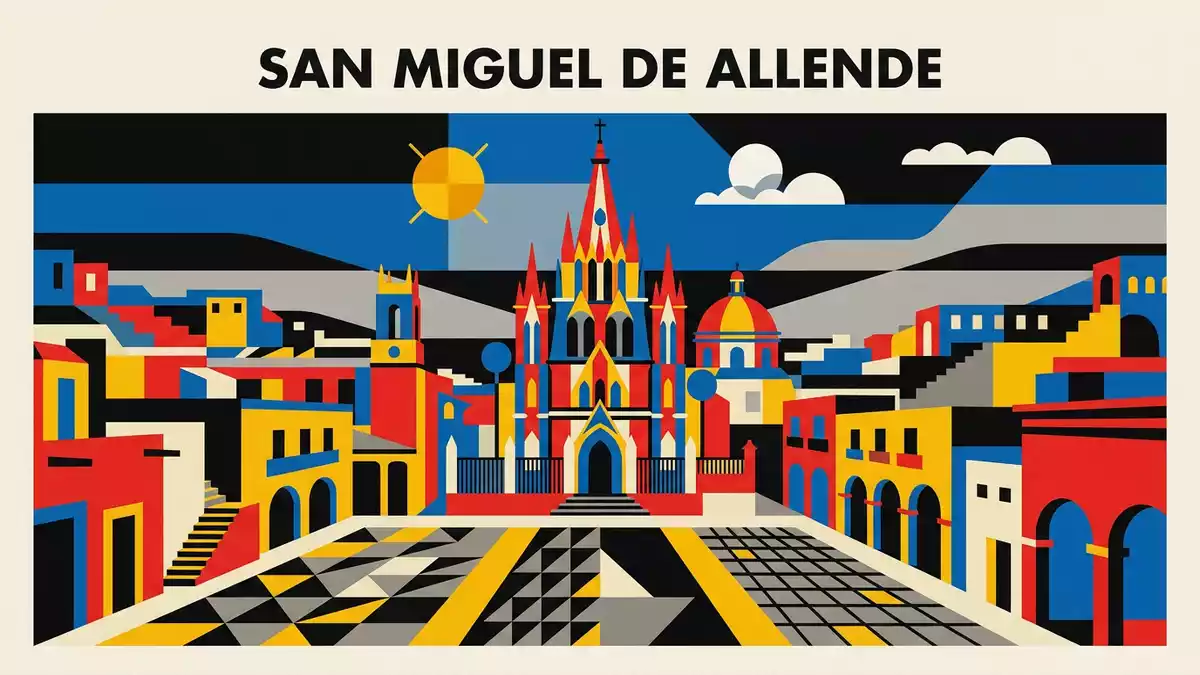
San Miguel de Allende in central Mexico is a colonial highland city built on a regular grid of stone streets, plazas and religious buildings that crystallised during the seventeenth and eighteenth centuries.Protective town of San Miguel Its historic centre and the nearby Sanctuary of Jesús Nazareno de Atotonilco have been recognised as a cultural World Heritage Site by UNESCO since 2008, reflecting both their preserved architecture and their role in Mexico’s struggle for independence.World Heritage Site designation
Pink stone streets and a baroque skyline
San Miguel de Allende lies in the state of Guanajuato in the mountains of the Bajío region, on a plateau roughly north-west of Mexico City.central Mexican location Arriving into the historic centre, the first impression is of low masonry buildings grouped along cobbled streets, with façades rendered in warm shades that range from ochre and terracotta to the pink stone associated with the town’s churches.highland baroque city of pink stone
The historic centre forms a compact urban ensemble of blocks laid out on a rational grid, an example of Spanish colonial town planning in the Americas.rational territorial and urban development Within this grid, plazas open between the façades, many of them framed by arcades and lined with civic buildings, mansions and churches from the baroque period.
La Parroquia and the churches of the centre
The most recognisable building on the skyline is the parish church of Saint Michael, La Parroquia de San Miguel Arcángel, which faces the main plaza with a tall neo-Gothic façade in pink stone.pink spires and Gothic-inspired silhouette Behind this façade stands a structure whose origins lie in a baroque church completed in the early eighteenth century, with the present neo-Gothic front designed in the 1880s by Zeferino Gutiérrez, a self-taught mason and architect from the town.neo-Gothic facade by Zeferino Gutierrez
The combination of an eighteenth-century colonial church and nineteenth-century neo-Gothic towers gives La Parroquia a layered profile, with pinnacles rising above the square and stone tracery set against a backdrop of lower tiled roofs.parish church history Other churches within the centre retain more conventional baroque façades, with pilasters, statuary niches and bell towers that form a varied skyline when seen from the surrounding hills.
From colonial road town to World Heritage ensemble
San Miguel de Allende began as a town linked to the Camino Real de Tierra Adentro, an inland road that carried goods and people across New Spain, and its regular street plan reflects that strategic role as a protected stop along the route.colonial-era town on Camino Real Many of the houses along the streets date from the seventeenth and eighteenth centuries, with thick walls and inner patios, and together with the religious buildings they form the core zone of the UNESCO inscription.
The World Heritage listing “Protective town of San Miguel and the Sanctuary of Jesús Nazareno de Atotonilco” was confirmed in 2008 under criteria that recognise both the architectural adaptation of European baroque and neo-Gothic forms and the town’s association with the Mexican War of Independence.UNESCO historic district The inscription covers a sizeable area of the historic centre and extends along the road northward to the sanctuary complex at Atotonilco, where church buildings with richly decorated interiors echo the religious life of colonial Mexico.
Visiting San Miguel de Allende: what travellers from Western Europe should know
- San Miguel de Allende stands in the state of Guanajuato in central Mexico, reached overland from major Mexican hubs such as Mexico City and Querétaro by intercity buses and roads.
- The historic centre is built on hilly ground at high altitude, with cobbled streets, kerbs and stairs between different levels, so walking around involves short climbs on irregular stone surfaces.
- The main plazas, including the central garden in front of La Parroquia, are bordered by arcaded pavements and low kerbs, and many side streets narrow between continuous rows of masonry houses.
- The official language is Spanish and the currency is the Mexican peso.
- Entry requirements depend on your nationality; UK travellers can check the FCDO travel advice at gov.uk/foreign-travel-advice, Irish travellers the Department of Foreign Affairs at ireland.ie.
Searching for San Miguel de Allende on social platforms
These links open searches for San Miguel de Allende on each platform.
Frequently asked questions about San Miguel de Allende
Where is San Miguel de Allende?
San Miguel de Allende is a colonial city in the state of Guanajuato in central Mexico, on a highland plateau north-west of Mexico City.
What should travellers expect on a visit?
Travellers encounter a compact historic centre of cobbled streets, plazas and stone buildings, with churches and mansions arranged on a grid and framed by low hills.
What makes San Miguel de Allende distinctive?
Its combination of pink stone churches such as La Parroquia, an eighteenth-century colonial street plan and the joint World Heritage listing with the Sanctuary of Atotonilco gives San Miguel de Allende a particular character.


