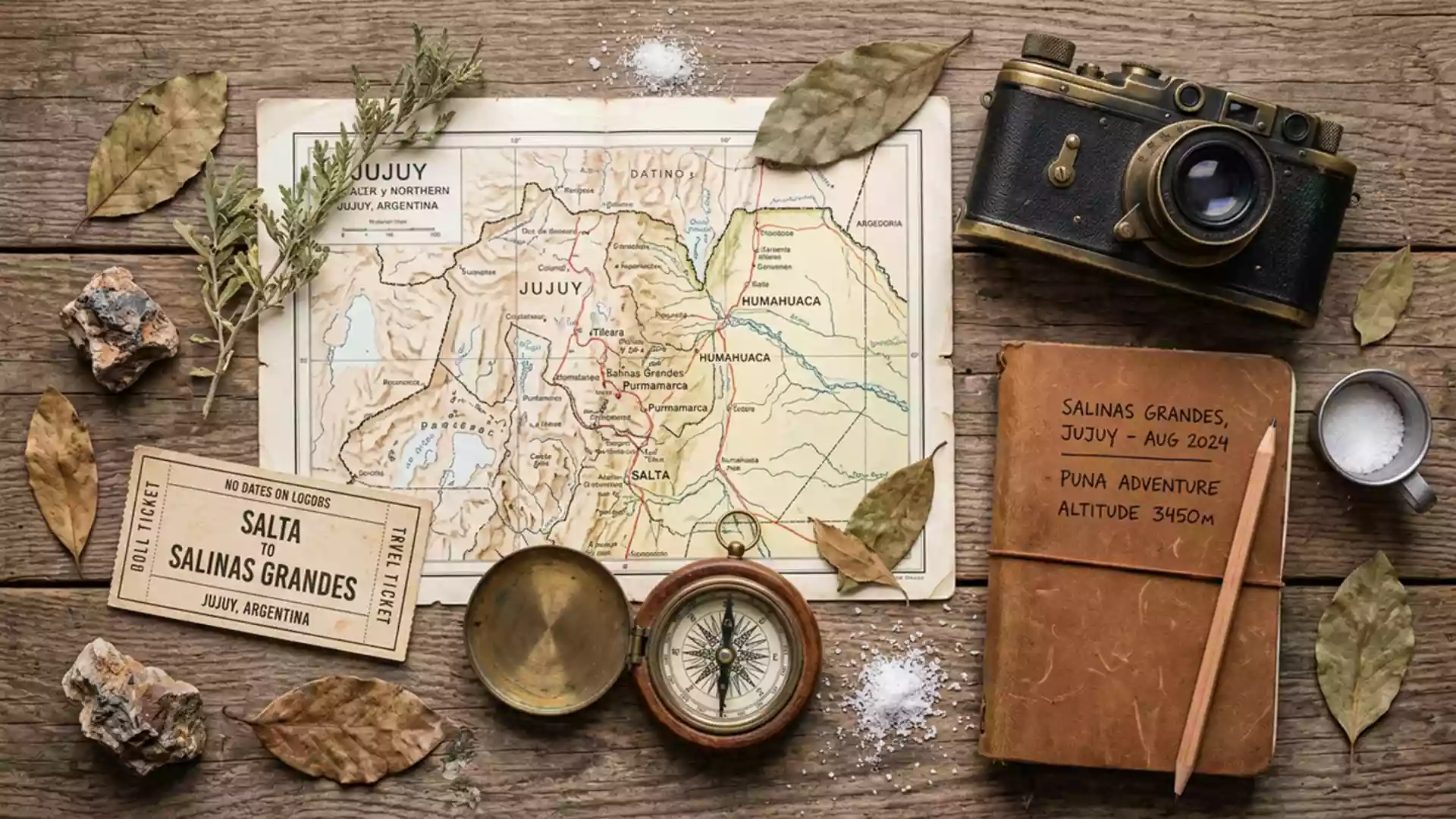
Salinas Grandes, a white salt plain in the high Andes
Published on 09/11/2026 at 20:13 | Editorial responsibility: Rafael Müller, Editor-in-Chief AD HOC NEWS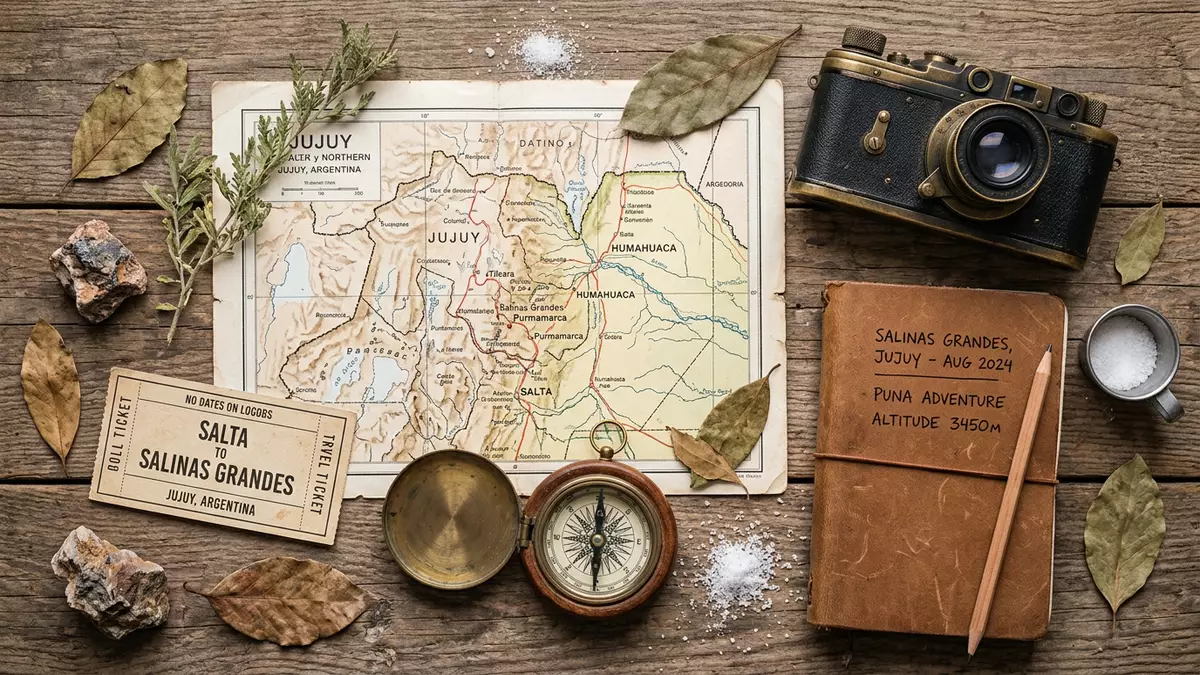
Salinas Grandes in Jujuy is a high-Andean salt plain shared between the provinces of Jujuy and Salta in northwest Argentina, where a broad basin has filled with salt over millions of years and hardened into a bright white crust at around 3,450 m (11,320 ft) above sea level.around 3,450 m above sea level The salar sits within the Puna, the high desert plateau east of the main Andean chain, and stretches over more than 200 km² as a nearly level expanse framed by low scrub and rocky slopes.extend over an area of 212 km²
A high-altitude basin turned into a sea of salt
Salinas Grandes lies on the plateau west of the Quebrada de Humahuaca, in a closed basin that collects mineral-rich water from surrounding volcanic ground and has no outlet to the sea.an endorheic basin with no outlet to the sea Over geological time, lakes formed in this depression; under intense sun and dry winds, the water evaporated and the dissolved salts precipitated, layer upon layer, until they created a thick white crust that now covers the basin floor.salt flats originated from ancient lakes that once filled these depressions
Geologists place the origin of this salt basin in the wider volcanic history of the Andes, with the uplift and tectonic collision that raised the Puna plateau during the Cenozoic and Miocene periods providing the structural basin and volcanic activity feeding mineralised water into it.created a large and deep basin on their eastern flank The salt deposits consist primarily of halite, common sodium chloride, but analyses and reports also point to potassium, magnesium and lithium compounds in the brine beneath the crust, linking this stark landscape to the mineral wealth of the wider Andean region.the salt deposits consist primarily of halite
Patterns, pools and the geometry of the salt surface
From ground level, the surface of Salinas Grandes appears as an almost continuous sheet of white, interrupted only by shallow extraction pools and working zones where the crust has been cut into blocks and stacked in low piles.a nearly level expanse of white broken by shallow extraction pools The crust itself averages a few tens of centimetres in thickness, resting on brine whose mineral content reflects the long concentration of salts in this closed basin.a thick white crust was built up on average about 30 centimeters deep
Up close, the salt surface is structured into a geometric tessellation where crystal growth has broken the flat expanse into repeating polygons.the surface is a hexagonal pattern of crystallised salt formations Temperature swings between day and night and the shrinkage and expansion of the salt create these patterns, which from above form a grid stretching toward the horizon and emphasising both the scale of the salar and the regularity imposed by its physical chemistry.polygonal pattern of salt formations
Indigenous salt work and mineral resources at Salinas Grandes
For the communities of Jujuy and Salta, Salinas Grandes has long been a working landscape as well as a striking one, with indigenous groups such as the Atacama using the salt crust as a source of halite for generations and cutting it into blocks for trade and local use.mined by the Atacama people for centuries In more recent decades, the brines beneath the salt crust have drawn industrial attention because of their sodium and potassium content and the presence of lithium-bearing solutions, placing the salar within the broader picture of Andean evaporite resources explored for battery metals.industrial importance for its sodium and potassium
Across the salt plain, small cooperative enterprises run by local communities organise salt extraction and craft production, using cut blocks to build simple structures and to create items sold in nearby settlements and roadside stalls.indigenous communities run cooperative tourism on the salt flat The combination of traditional salt work on the surface and the exploration of brine resources beneath links Salinas Grandes to both long-standing Andean livelihoods and contemporary debates around mineral extraction on high-altitude salars.
Visiting Salinas Grandes: what travellers from Western Europe should know
- Salinas Grandes lies in northwest Argentina on the border between the provinces of Jujuy and Salta, reached by road across the high plateau from towns such as Purmamarca on National Route 52.reached by driving from Purmamarca on RN 52
- The salt flat is at around 3,450 m (11,320 ft) altitude, so any visit involves being at high elevation on an exposed plain with strong sun and marked temperature changes between day and night.3,450 m reported average altitude
- Within the salar, the terrain is largely level but underfoot surfaces range from hard salt crust to cut blocks and shallow pools, and vehicle and foot access follow tracks laid out across the white expanse.
- The official language is Spanish and the currency is the Argentine peso.
- Entry requirements depend on your nationality; UK travellers can check the FCDO travel advice at gov.uk/foreign-travel-advice, Irish travellers the Department of Foreign Affairs at ireland.ie.
Searching for Salinas Grandes on social platforms
These links open searches for Salinas Grandes on each platform.
Frequently asked questions about Salinas Grandes
Where is Salinas Grandes located?
Salinas Grandes is a salt flat in northwest Argentina, shared by the provinces of Jujuy and Salta on the high Puna plateau west of the Quebrada de Humahuaca.shared by the provinces of Jujuy and Salta
What can visitors expect on a visit to Salinas Grandes?
Visitors encounter an extensive white salt surface at high altitude, with geometric patterns in the crust, shallow pools where salt is extracted, and views to the surrounding desert hills.a vast salt plain in Jujuy and Salta
What makes Salinas Grandes distinctive among Andean salt flats?
Salinas Grandes combines a high elevation of around 3,450 m, a sizeable area of more than 200 km², a polygon-patterned salt crust and long-standing indigenous salt work, all within a readily accessible basin in Jujuy and Salta.third-largest salt desert in South America