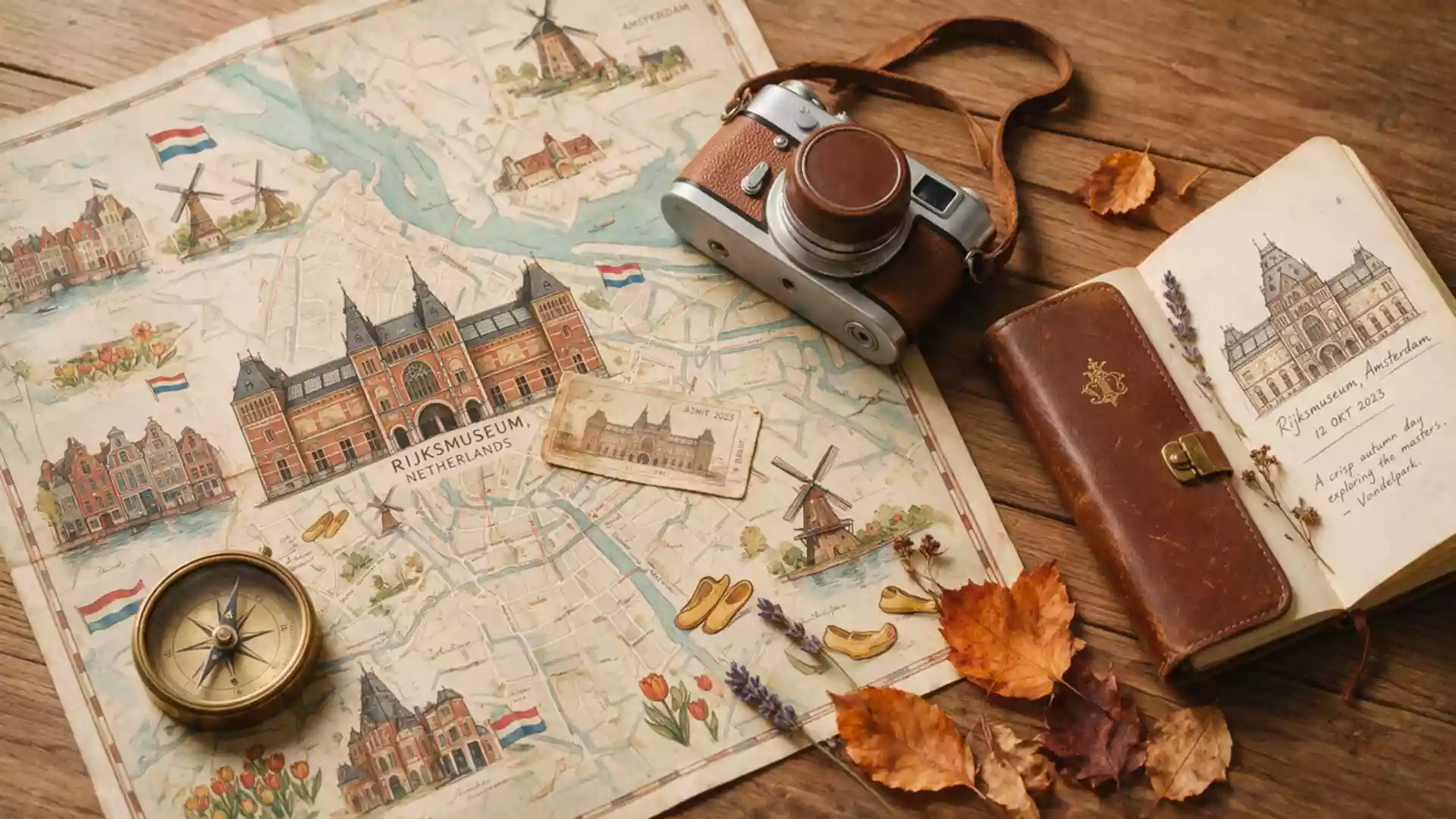
Rijksmuseum: a national story in brick and galleries
Published on 09/05/2026 at 10:57 | Editorial responsibility: Rafael Müller, Editor-in-Chief AD HOC NEWS
Rijksmuseum in Amsterdam is the national museum of the Netherlands, housed in a historic building designed by Pierre Cuypers and opened in 1885 on Museumplein. The museum’s collection spans several centuries of art and history, with a particular strength in seventeenth-century Dutch painting.
A neo-Gothic landmark shaped by Pierre Cuypers
The present Rijksmuseum building was designed in the nineteenth century by the Dutch architect Pierre Cuypers, a leading figure in Neo-Gothic architecture. He blended Gothic forms and Renaissance references with decorative motifs drawn from Dutch history and symbolism, creating a richly articulated facade and interiors that present the museum itself as part of the national narrative.Pierre Cuypers was chosen as architect The building was constructed in the later decades of the nineteenth century and opened to the public in 1885 as a purpose-built home for the national collections.A new building in Gothic Revival style opened in 1885
The museum’s location on Museumplein places it among other major cultural institutions and close to Amsterdam’s historic canal belt. Approaching the building, visitors encounter brick elevations punctuated by towers and decorative gables, with stone and tile details that highlight coats of arms and historical allegories.The Rijksmuseum is located on Museumplein Inside, Cuypers’ original plan combined grand, vaulted halls with smaller galleries, and later renovations restored many of these spatial relationships after twentieth-century alterations.
From early national collection to modern museum
The institution behind Rijksmuseum dates back to the decision in 1798 to establish a national museum on the French model, with the National Art Gallery opening in The Hague in 1800. In 1808 the collection was transferred to Amsterdam under King Louis Bonaparte and installed in the Royal Palace on Dam Square, before moving to the Trippenhuis city palace in the early nineteenth century.The government decided to establish a national museum in 1798 The opening of Cuypers’ building in 1885 brought several national collections together under one roof, including paintings, historical objects and works that had previously been housed in separate museums.The museum has been housed in Cuypers’ Rijksmuseumgebouw since 1885
In the twentieth and early twenty-first centuries, Rijksmuseum underwent a series of refurbishments. Interior changes in the mid-twentieth century increased exhibition space but altered the original decorative scheme. A major renovation programme led by the Spanish practice Cruz y Ortiz took place between 2003 and 2013, restoring the building more closely to its nineteenth-century appearance while reorganising circulation and gallery layouts for contemporary visitors.The museum closed for refurbishment between 2003 and 2013 The result is a museum that combines historical architecture with modern display spaces and services.
Galleries of Dutch art and the Night Watch
Rijksmuseum’s collection covers arts, crafts and history from around 1200 to 2000, with thousands of objects on permanent display. Among its strengths is a large group of paintings from the Dutch Golden Age, including works by Jacob van Ruisdael, Frans Hals, Johannes Vermeer, Jan Steen and Rembrandt van Rijn.The collection focuses on arts, crafts and history from 1200 to 2000 The museum also holds prints, drawings, sculpture, decorative arts and objects that illuminate social and political history, supported by the associated print room known as the Rijksprentenkabinet.Associated with the museum is the Rijksprentenkabinet
One of the most recognisable works in Rijksmuseum is Rembrandt’s large painting commonly referred to as “The Night Watch”, which occupies a central place in the galleries devoted to seventeenth-century art.The museum has the largest Rembrandt collection in the Netherlands Visitors move through chronological displays that link painting, applied arts and historical artefacts, tracing developments in Dutch society from the medieval period through the Republic and into more recent centuries. The building’s axial halls and decorated vaults frame these galleries, so that the architecture and the collection together present a layered account of the Netherlands’ artistic and historical heritage.
Visiting Rijksmuseum: what travellers from Western Europe should know
- Rijksmuseum stands on Museumstraat by Museumplein in the southern part of central Amsterdam, in the city’s museum quarter served by tram and other public transport.
- The historic building includes wide entrance halls and large gallery floors, but some routes involve staircases between levels within the exhibition spaces.
- The official language is Dutch and the currency is the euro.
Searching for Rijksmuseum on social platforms
These links open searches for Rijksmuseum on each platform.
Frequently asked questions about Rijksmuseum
Where is Rijksmuseum located in Amsterdam?
Rijksmuseum stands on Museumstraat by Museumplein in Amsterdam’s museum quarter, close to the city’s historic canals and main shopping streets.
What can visitors expect inside Rijksmuseum?
Visitors encounter galleries of Dutch and European art, decorative objects and historical artefacts displayed in chronological sequence within Pierre Cuypers’ historic museum building.
What makes Rijksmuseum distinctive among museums?
Rijksmuseum combines a national collection strong in Dutch Golden Age painting with a Neo-Gothic building whose architecture and decoration present Dutch history as part of the museum experience.