
Recife Antigo, the island quarter where Recife began
Published on 08/28/2026 at 13:06 | Editorial responsibility: Rafael Müller, Editor-in-Chief AD HOC NEWS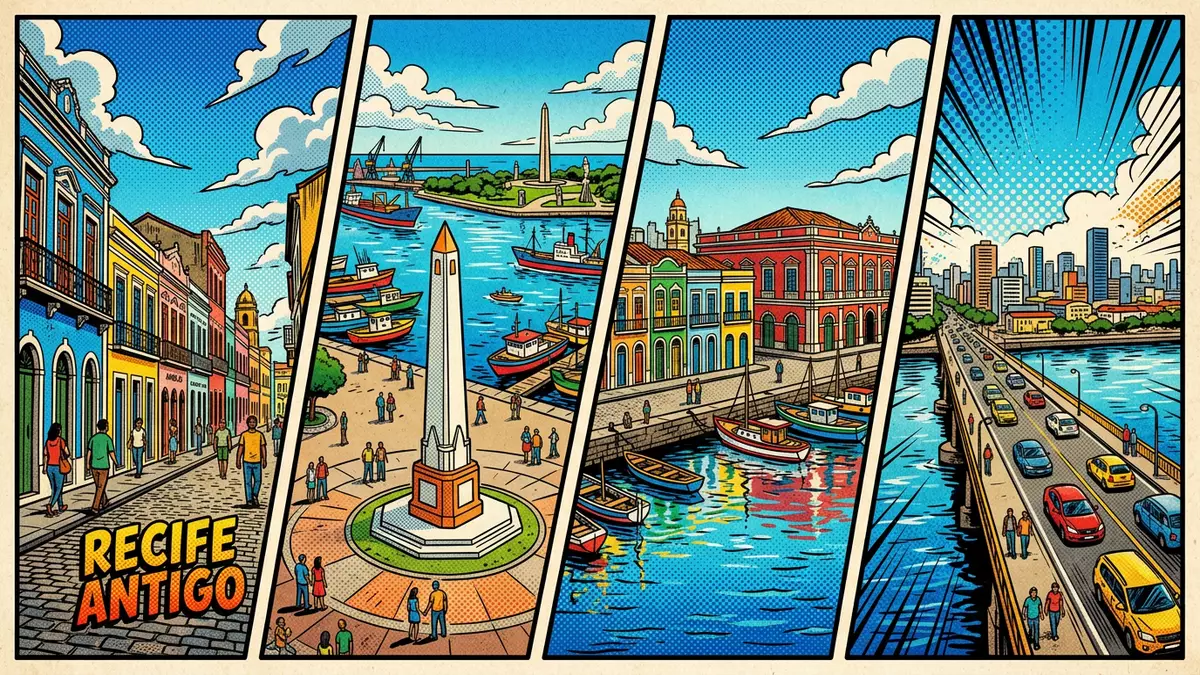
Recife Antigo in Recife, Brazil, is the historic island quarter where the city first took shape along rivers, docks and cobbled streets, framed by the Atlantic and old port installations. Officially known as Bairro do Recife, it forms the eastern part of Recife’s historic centre and sits at the point where the Capibaribe and Beberibe rivers meet the ocean, giving the district a distinctly waterside character.eastern part of Recife’s historic centre
An island of streets, rivers and harbour views
Recife Antigo occupies the Island of Recife at the mouth of the Capibaribe and Beberibe rivers, bordered by estuarine channels on one side and the harbour on the other.occupies the Island of Recife Bridges link this waterside quarter to the rest of the city, but within the island the scale changes to narrower streets, older façades and a dense, walkable grid that still reflects its colonial roots.historical center
The waterfront edge runs beside docks and quays that once served the Porto do Recife, while inland streets are lined with townhouses and public buildings from different eras.originated a partir de um porto Many thoroughfares preserve cobbled paving, and the street pattern shows how Recife grew around its harbour, with views opening to water at the ends of several blocks and long sightlines towards cranes and warehouses along the quay.framed by docks and estuarine channels
Historic façades and repurposed port buildings
Recife Antigo is part of Recife’s historic centre and contains buildings that trace several architectural periods, from colonial churches to structures reflecting French-influenced urban design of the early twentieth century.inspirados na arquitetura francesa Large former warehouses and customs buildings near the quayside have been restored, their façades retaining period details while their interiors accommodate cultural spaces, craft centres and other public uses.armazém 11 do Porto do Recife
The district has been the focus of conservation and revitalisation efforts, with restoration of historic houses, pavements, lighting and gardens reinforcing its role as a listed heritage area.Patrimônio Histórico e Artístico As a result, Recife Antigo combines preserved architecture with newer functions: portside sheds accommodate galleries and craft markets, former financial buildings house cultural centres, and streets once dominated by maritime trade now host museums and venues alongside everyday city life.Shopping Paço Alfândega e Armazéns do Porto
Marco Zero and landmarks of Recife Antigo
At the heart of Recife Antigo lies Praça Rio Branco, better known as Marco Zero, the official point from which road distances in the region are measured and a symbolic marker of where Recife began as an urban settlement.ponto de partida para medir as distâncias A bronze marker installed in the square in 1938 formalised this function, turning the plaza into both a practical reference for road numbering and a civic monument linked to the city’s geography.inaugurado em 31 de janeiro de 1938
Several important landmarks cluster around the square and across Recife Antigo. Former port warehouses host the Centro de Artesanato de Pernambuco, showcasing regional craft traditions in a building directly beside the quay.Centro de Artesanato de Pernambuco Nearby, structures such as the Torre Malakoff, the Sinagoga Kahal Zur Israel, the Forte do Brum and the former stock exchange, now a cultural centre, illustrate the district’s role in religion, defence, trade and culture over several centuries.Torre Malakoff, Sinagoga Kahal Zur Israel, Forte do Brum
Visiting Recife Antigo: what travellers from Western Europe should know
- Recife Antigo lies on the Island of Recife at the eastern side of Recife’s historic centre, bordered by the Capibaribe and Beberibe rivers and the harbour, and linked to other districts by several road bridges.
- Much of the historic quarter is best explored on foot along cobbled streets and squares; some routes involve uneven paving and modest changes in level, particularly close to the waterfront and former port installations.
- Marco Zero, in Praça Rio Branco, serves as an orientation point for the district and for road distances in the region, and lies beside former warehouses that now house cultural and craft centres.
- Recife Antigo forms part of Brazil, where the official language is Portuguese and the currency is the Brazilian real.
- Entry requirements depend on your nationality; UK travellers can check the FCDO travel advice at gov.uk/foreign-travel-advice, Irish travellers the Department of Foreign Affairs at ireland.ie.
Searching for Recife Antigo on social platforms
These links open searches for Recife Antigo on each platform.Frequently asked questions about Recife Antigo
Where is Recife Antigo located within Recife?
Recife Antigo is the Bairro do Recife, an island quarter forming the eastern part of Recife’s historic centre at the meeting point of the Capibaribe and Beberibe rivers.bairro da cidade do Recife
What can visitors expect when walking through Recife Antigo?
Visitors encounter cobbled streets, historic façades, repurposed port warehouses and riverside squares, with landmarks such as Marco Zero, heritage-listed buildings and cultural centres concentrated in a compact area.revitalizado, restauração dos casarões
What makes Recife Antigo distinctive among Brazilian historic quarters?
Recife Antigo is distinctive for being an island historic quarter shaped by its harbour, where port installations, riverfront squares, religious buildings and cultural venues together show how Recife developed from a colonial harbour into a major coastal city.onde a cidade nasceu


