
Recife Antigo, the island quarter where Recife began
Published on 08/27/2026 at 06:07 | Editorial responsibility: Rafael Müller, Editor-in-Chief AD HOC NEWS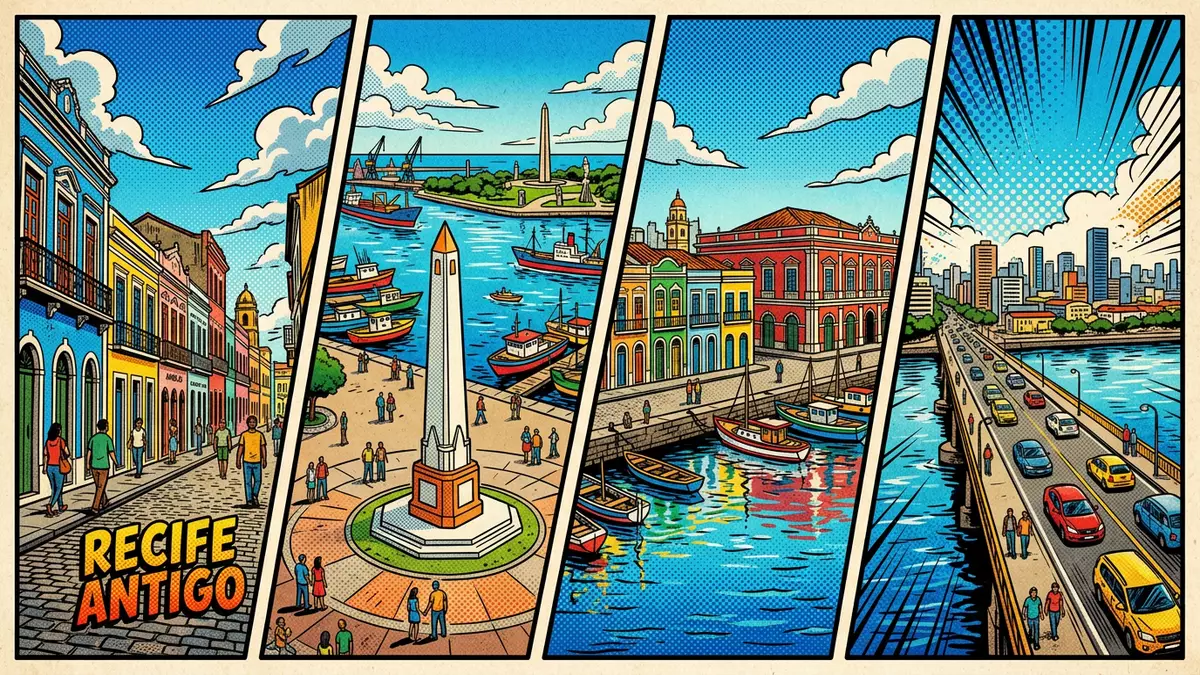
Recife Antigo is the waterfront quarter where Recife first took shape, laid out on an island at the mouth of its rivers and still framed by docks and estuarine channels. The district, officially known as Bairro do Recife, forms the eastern part of Recife’s historic centre and shows in its streets and buildings how a port city on Brazil’s north-eastern Atlantic coast grew from a colonial harbour into a centre of culture and technology.
An island between rivers and ocean
Recife Antigo occupies the Island of Recife at the point where the Capibaribe and Beberibe rivers meet the Atlantic, giving many streets water on one side and urban fabric on the other.Capibaribe and Beberibe rivers The quarter stands as the historical section of central Recife, its name “Old Recife” reflecting its role as the city’s earliest urban core.historical section of central Recife
The area grew around a harbour protected by offshore reefs, with quays and warehouses lining the inner waterfront. Streets run parallel to the docks before turning inland, where commercial buildings, churches and civic structures are grouped close together. At its southern end lies Praça Barão do Rio Branco, widely known as Marco Zero, a square that marks the traditional starting point of Recife and opens towards the river mouth and the reef that gave the city its name.Praça Barão do Rio Branco
From colonial harbour to historic streets
Recife Antigo developed as a port settlement under Portuguese rule in the sixteenth century, when trading facilities were established along the reef-sheltered shoreline.Portuguese trading facilities The urban pattern reflects this long history, combining narrow early streets with broader later avenues laid out as the harbour and town expanded. In the seventeenth century Count Maurice of Nassau brought a more ordered plan to what had been an irregular port settlement, a change still visible in the way plots and thoroughfares are arranged.Count Maurice of Nassau
Later legislation in the twentieth century recognised the historic character of the neighbourhood and set out preservation and revitalisation rules, helping to keep Recife Antigo’s streetscapes intact while encouraging new uses for its buildings.preservation and revitalisation rules Walking through the quarter today means passing painted façades, former customs warehouses and churches that stand alongside structures adapted for cultural institutions, offices and social life.
Synagogues, squares and repurposed warehouses
Several landmarks within Recife Antigo anchor its role in Atlantic and Brazilian history. Rua do Bom Jesus, one of the district’s principal streets, is home to Kahal Zur Israel Synagogue, recognised as the first synagogue built in the Americas and linked to the Jewish communities that lived here during the seventeenth century.Kahal Zur Israel Synagogue Nearby squares such as Praça do Arsenal bring together civic buildings and cultural venues, with the Malakoff Tower standing as a former defensive or observation structure repurposed for cultural use.Praça do Arsenal with the Malakoff Tower
The waterfront has also gained new cultural centres in adapted port buildings. Paço Alfândega, once a customs warehouse close to the heart of Recife Antigo, now functions as a shopping and social complex inside its historic shell.Paço Alfândega Along Avenida Alfredo Lisboa stands the Centro Cultural Cais do Sertão, a museum and cultural hub that brings the culture of Brazil’s Sertão region to the maritime setting of Recife Antigo, housed in a former warehouse on the quay.Centro Cultural Cais do Sertão Together, these sites show how historic port structures have been adapted to hold contemporary cultural and commercial life.
Visiting Recife Antigo: what travellers from Western Europe should know
- Recife Antigo lies on the Island of Recife at the eastern side of the historic centre, bordered by the Capibaribe and Beberibe rivers and the harbour, and is linked to other districts of Recife by road bridges.
- Streets in Recife Antigo combine cobbled surfaces, pavements and quayside promenades, with some areas involving short flights of steps between street level and waterfront squares.
- The official language is Portuguese and the currency is the Brazilian real.
- Entry requirements depend on your nationality; UK travellers can check the FCDO travel advice at gov.uk/foreign-travel-advice, Irish travellers the Department of Foreign Affairs at ireland.ie.
Searching for Recife Antigo on social platforms
These links open searches for Recife Antigo on each platform.Frequently asked questions about Recife Antigo
Where is Recife Antigo within Recife?
Recife Antigo occupies the Island of Recife at the eastern side of Recife’s historic centre, bordered by the Capibaribe and Beberibe rivers and the harbour installations.
What can visitors expect when walking through Recife Antigo?
Visitors find cobbled streets, riverside squares and adapted warehouses that house cultural centres, shops and other activities in among churches and historic civic buildings.
What makes Recife Antigo distinctive among Brazilian historic quarters?
Its setting on an island between river mouths and ocean, its origins as Recife’s harbour quarter and landmarks such as Kahal Zur Israel Synagogue and repurposed port buildings give it a distinctive maritime and cultural character.


