
Real Alcazar de Sevilla, a layered royal palace of stone and gardens
Published on 09/17/2026 at 08:14 | Editorial responsibility: Rafael Müller, Editor-in-Chief AD HOC NEWS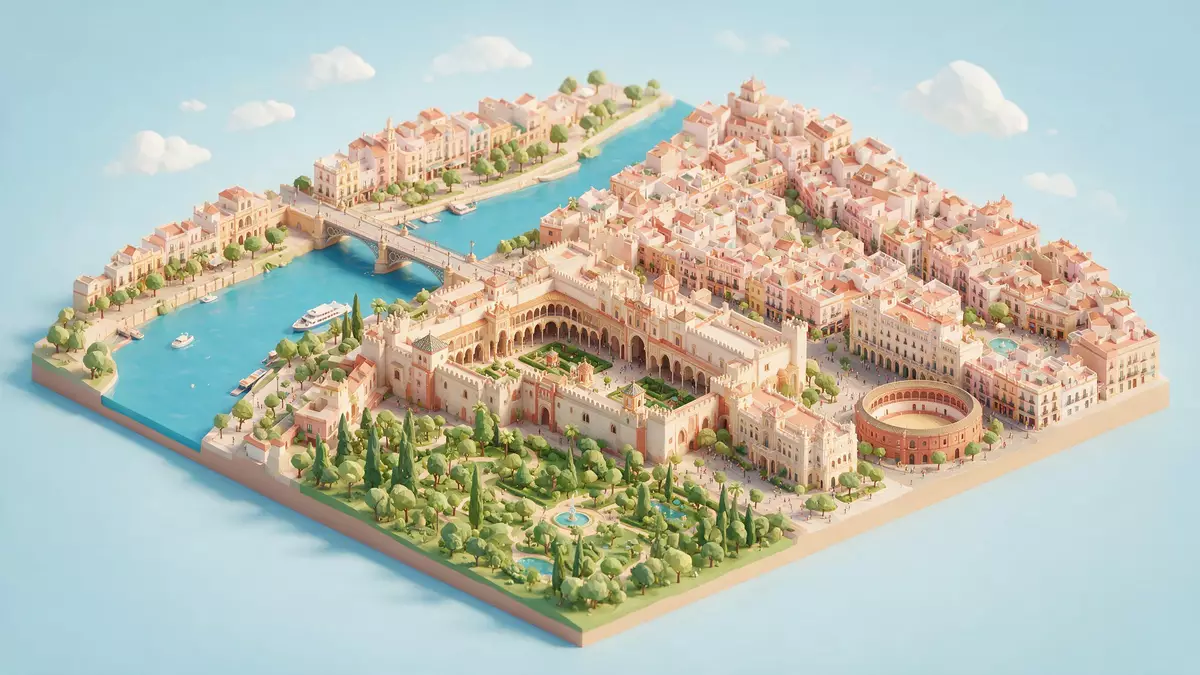
Real Alcazar de Sevilla in Sevilla is a fortified royal palace where Islamic foundations, a fourteenth-century Mudéjar residence and later Gothic and Renaissance halls stand within one walled enclosure. Its buildings and gardens trace a millennium of power in southern Spain, from caliphs and taifa kings to Castilian monarchs and the Spanish royal family, who still use parts of the complex as an official residence.
A palace grown from an Islamic citadel
The story of Real Alcazar de Sevilla begins with an Islamic stronghold on the southern edge of the medieval city, raised when Sevilla formed part of Al-Andalus under Umayyad rule. A fortified complex developed here in the tenth century as the residence of the Moslem governor, establishing the nucleus of walls and defensive towers that shaped the palace perimeter.original nucleus of the Alcázar Over the eleventh and twelfth centuries, Abbadid and Almohad rulers extended these enclosures and laid out early palatial quarters and gardens within the protected space.Abbadid and Almohad palace complex
Following the Castilian conquest of Sevilla in 1248 under Ferdinand III of Castile, the compound became a royal residence for the Christian kings of Castile.Ferdinand III residence in the thirteenth century Alfonso X ordered the construction of a Gothic palace with stone halls and ribbed vaults alongside the earlier Islamic structures, bringing the architectural language of thirteenth-century Castile into the existing fortress. Within the same perimeter, fortified walls, courtyards, residential ranges and service buildings accumulated, turning the Alcazar into a compact seat of royal power rather than a single, uniform palace.
Pedro I’s Mudéjar palace and later additions
The heart of what visitors recognise today as Real Alcazar de Sevilla is the Mudéjar palace commissioned in the fourteenth century by Pedro I of Castile. Between about 1356 and 1366 this king ordered an entirely new palace inside the existing complex, drawing on Muslim craftsmen from centres such as Granada and Toledo to shape its architecture.Mudéjar palace under Pedro I The result is a residence where delicate stucco, carved wood, coloured tilework and Arabic inscriptions share space with Castilian heraldry and royal apartments arranged around internal courts.Mudéjar Palace built between 1356 and 1366
Later monarchs added further layers. Gothic halls and chapels extended the residential area, while Renaissance wings introduced arcaded loggias and classical orders to the ensemble.Gothic and Renaissance additions Across the site, Islamic, Mudéjar, Gothic and Renaissance features stand within one fortified perimeter, making Real Alcazar de Sevilla a pre-eminent example of Mudéjar style in the Iberian Peninsula where Christian patronage adopted and transformed Islamic artistic traditions.preeminent example of Mudéjar style
Gardens, royal use and World Heritage status
Beyond the palaces, Real Alcazar de Sevilla opens into extensive gardens laid out in successive phases, from geometric beds close to the Mudéjar residence to later avenues, pavilions and ornamental features along the outer walls.later garden designs These gardens form a green counterpart to the stone architecture, with terraces, water features and planted enclosures opening southwards from the palace rooms. From upper galleries, views extend over patterned beds, tall hedges and the outer fortifications, underlining how the complex combines defensive elements with spaces for ceremony and retreat.
Real Alcazar de Sevilla forms part of a UNESCO World Heritage ensemble together with Sevilla Cathedral and the Archivo de Indias, recognised in 1987 for the way these monuments represent major phases of the city’s urban history from the Almohad period through Christian Andalusia to the era when Sevilla served as Puerto de Indias for Atlantic trade.World Heritage ensemble The Spanish royal family continues to use parts of the palace for official occasions, giving Real Alcazar de Sevilla the distinction of being the oldest royal residence in Europe that has retained its function as a working palace.oldest royal palace in Europe still in use
Visiting Real Alcazar de Sevilla: what travellers from Western Europe should know
- Real Alcazar de Sevilla stands in the historic centre of Sevilla, immediately south of Sevilla Cathedral, within the area that formed the medieval core of the city.
- The palace complex is enclosed by substantial fortification walls; approaches from the surrounding streets involve passing through gates and walking across paved courtyards.
- Inside the complex, movement between palace rooms and gardens frequently involves staircases, uneven historic flooring and corridors arranged around interior courts.
- Sevilla is reached by air and rail; San Pablo Airport serves the city, while mainline trains arrive at Sevilla-Santa Justa station.
- Spain lies within the European Union; the official language is Spanish and the currency is the euro.
Searching for Real Alcazar de Sevilla on social platforms
These links open searches for Real Alcazar de Sevilla on each platform.
Frequently asked questions about Real Alcazar de Sevilla
Where is Real Alcazar de Sevilla and what kind of place is it?
Real Alcazar de Sevilla is a fortified royal palace complex in the historic centre of Sevilla in southern Spain, immediately beside Sevilla Cathedral.
What can visitors expect inside Real Alcazar de Sevilla?
Visitors encounter palaces and halls in Islamic, Mudéjar, Gothic and Renaissance styles, along with extensive gardens, enclosed courtyards and historic defensive walls.
What makes Real Alcazar de Sevilla distinctive among European palaces?
Real Alcazar de Sevilla combines a functioning royal residence with architecture spanning a millennium and forms part of a UNESCO World Heritage ensemble with the city’s cathedral and Archivo de Indias.


