
Qalat Salah al-Din, Cairo’s limestone fortress above the city
Published on 09/12/2026 at 12:57 | Editorial responsibility: Rafael Müller, Editor-in-Chief AD HOC NEWS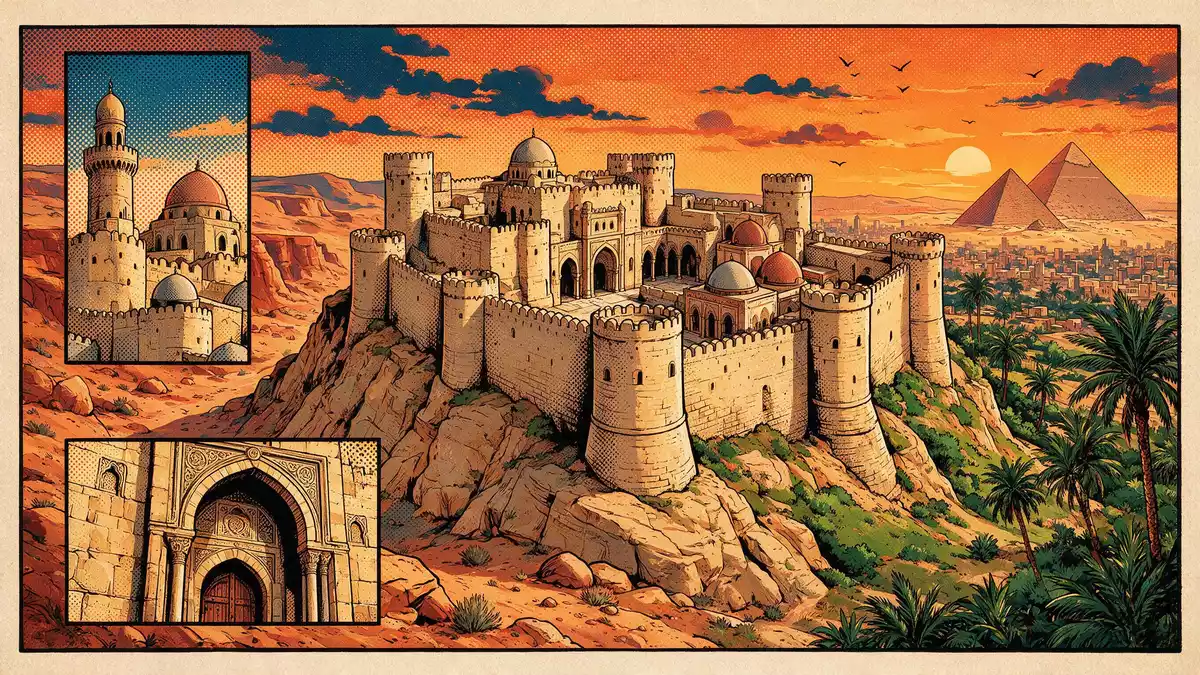
Qalat Salah al-Din in Kairo, known in English as the Citadel of Saladin or Cairo Citadel, is a medieval fortress complex that crowns the Mokattam Hills on the eastern side of Egypt’s capital. Built under the Ayyubid ruler Salah al-Din al-Ayyubi in the twelfth century, it later became a long-standing seat of government overlooking the historic urban districts below.
A limestone stronghold on the Mokattam Hills
The fortress occupies a rocky spur connected to the Mokattam Hills, taking advantage of the natural elevation above the older quarters of Cairo and the plains of the Nile valley.Muqattam Hills location Thick defensive walls enclose a series of courtyards, gates and towers, with the outer fortifications following the contours of the hill in long stretches of limestone masonry.
Salah al-Din al-Ayyubi, founder of the Ayyubid dynasty, ordered the construction of the citadel in the twelfth century as part of a wider system of fortifications around Cairo.Ayyubid-era foundation Subsequent rulers in the Mamluk and Ottoman periods extended and modified the complex, but the core identity of Qalat Salah al-Din as a hilltop fortress remained, with successive layers of building leaving a visible record of changing styles and technologies.
From Ayyubid fortress to Ottoman-era citadel city
Within the walls, Qalat Salah al-Din developed into a self-contained political centre, with palaces, administrative buildings and military installations arranged across the slopes of the hill.Medieval Islamic-era fortification For centuries it functioned as the seat of Egyptian government, with rulers residing in palatial quarters inside the citadel while the surrounding city expanded below.
Later additions reshaped the silhouette of the fortress. The Mosque of Muhammad Ali, built in the nineteenth century under Muhammad Ali Pasha, introduced a prominent Ottoman-style domed mosque to the summit of the hill, rising above earlier structures and becoming a recognisable landmark in its own right.Citadel of Salah al-Din al-Ayyubi Inside the complex, museums devoted to military history and other themes now occupy former barracks and administrative buildings, preserving artefacts that relate to the citadel’s strategic role.
Qalat Salah al-Din within Historic Cairo
The citadel stands on the south-eastern side of Historic Cairo, above districts such as El Abageyah in Qesm Al Khalifah.Citadel in the Al-Qalaa district Its elevated position offers wide views across Cairo’s dense urban fabric, with minarets, domes and rooftops stretching towards the Nile.
Historic Cairo, recognised as a UNESCO World Heritage Site for its concentration of Islamic architecture, includes Qalat Salah al-Din as a key element in the city’s defensive and ceremonial landscape.Part of the Historic Cairo World Heritage area Standing on its terraces, the relationship between the fortress and the surrounding mosques, madrasas and historic streets is clear: stone ramparts frame a panorama of centuries of urban growth.
Visiting Qalat Salah al-Din: what travellers from Western Europe should know
- Qalat Salah al-Din stands on the Mokattam Hills on the south-eastern side of Historic Cairo and is reached along urban roads from central districts of Kairo.
- The interior of the citadel involves walking across sloping courtyards and climbing staircases within mosques and museum buildings, some of them narrow and extended over several flights.
- The fortress overlooks older quarters of Cairo, so the approach by road passes through historic districts before ascending the hill towards the main gate complex.
- The official language is Arabic and the currency is the Egyptian pound.
- Entry requirements depend on your nationality; UK travellers can check the FCDO travel advice at gov.uk/foreign-travel-advice, Irish travellers the Department of Foreign Affairs at ireland.ie.
Searching for Qalat Salah al-Din on social platforms
These links open searches for Qalat Salah al-Din on each platform.
Frequently asked questions about Qalat Salah al-Din
Where is Qalat Salah al-Din located in Cairo?
Qalat Salah al-Din stands on the Mokattam Hills on the south-eastern side of Historic Cairo, above districts such as El Abageyah in Qesm Al Khalifah.
What can visitors expect inside the citadel?
The complex contains mosques, museums, courtyards and terraces within its walls, with the Mosque of Muhammad Ali and military museum among the most recognisable elements.
What makes Qalat Salah al-Din distinctive among Cairo’s historic sites?
Its combination of a medieval hilltop fortress, long use as a seat of government and elevated views across Historic Cairo gives the citadel a prominent role in the city’s historic landscape.


