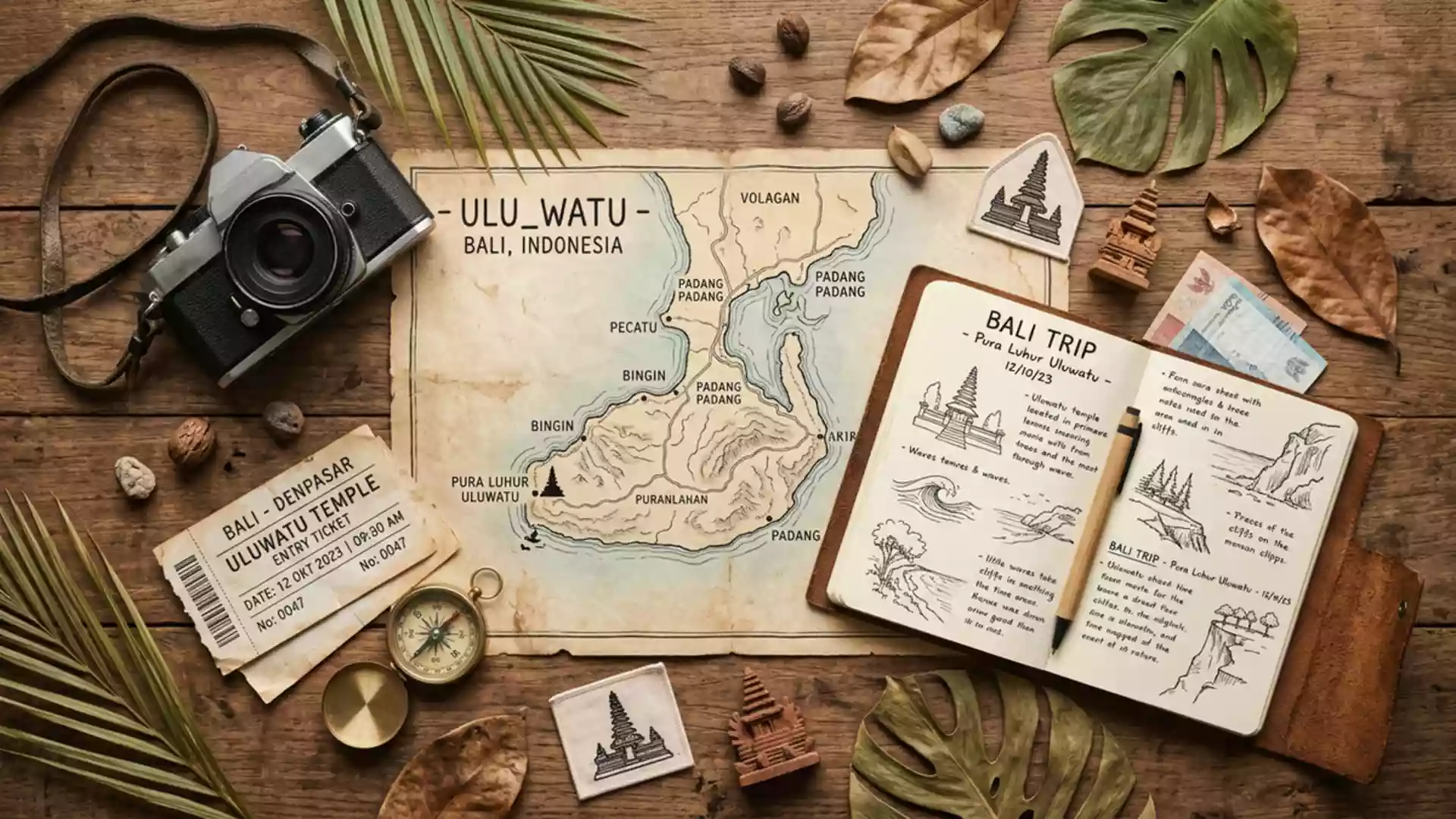
Pura Luhur Uluwatu, a sea temple on Bali’s cliff edge
Published on 09/09/2026 at 19:39 | Editorial responsibility: Rafael Müller, Editor-in-Chief AD HOC NEWS
Pura Luhur Uluwatu is a Balinese Hindu sea temple in Pecatu on Bali’s Bukit Peninsula, set high on a limestone cliff above the Indian Ocean. The shrine complex is associated with the Sad Kahyangan, a group of directional temples that mark the island’s spiritual geography and guard its outer edges.Sad Kahyangan directional temples The present layout brings together ancient stone courtyards, cliff-top walls and coastal vegetation at the south-western tip of Bali.cliff at Bali’s southern tip
Cliff-edge setting above the Indian Ocean
Pura Luhur Uluwatu occupies the upper surface of a limestone promontory that drops steeply to the Indian Ocean, with the main temple compound enclosed by walls near the cliff edge.Balinese Hindu temple on the Bukit Peninsula The cliff is described as about 70 m (230 ft) above sea level, giving the temple an elevated position above breaking surf and exposed rock ledges.balances on a 70-meter limestone cliff Pathways follow the top of the escarpment, with stretches of low walls, shrines and viewpoints that face out across the Indian Ocean.
The temple stands on the south-western tip of the Bukit Peninsula in Pecatu village within Badung Regency, an area of dry, rocky upland surrounded by coastal cliffs.south-western tip of the Bukit Peninsula The limestone bedrock carries scrub vegetation and small trees, with temple courtyards and guardian structures set above the sea-facing precipice. Visitors walking along the cliff paths see long stretches of coastline curving away in both directions, with waves breaking far below the sacred compound.
A coastal sanctuary with deep historical roots
Pura Luhur Uluwatu belongs to a network of Balinese temples positioned around the island’s perimeter and is counted among nine key directional temples that protect Bali in spiritual terms.nine key directional temples Archaeological fragments and local tradition link the site to the 10th century, with development into a more substantial complex during the 11th century under figures such as Empu Kuturan.10th-century fragments and 11th-century complex Later associations connect the temple with the Javanese sage Nirartha, whose presence at Uluwatu contributed to its status as a place of high spiritual significance in Balinese Hinduism.
The name “Pura Luhur Uluwatu” combines “pura”, a term for a temple, with “luhur”, indicating an elevated or spiritually exalted status, and “Uluwatu”, the local toponym for the cliff area.known locally as Pura Luhur Uluwatu The complex is dedicated to deities such as Batara Rudra, reflecting its role as a coastal sanctuary and a guardian of the island’s south-western boundary.dedicated to Lord Rudra Ceremonies and offerings maintain the temple’s religious life, and its sea-facing position reinforces the connection between ritual practice and the surrounding ocean.
Layout, materials and daily use
The built elements at Pura Luhur Uluwatu follow Balinese temple conventions, with gateways, open courtyards and inner sanctums arranged along a sequence of walled precincts. Carved stone candi bentar split gates and towering paduraksa gates mark transitions between zones, while pavilions with tiered meru roofs rise above the compounds. Much of the structure uses local limestone and other stone, with decorative work in carved relief and guardian figures placed near entrances.
Beyond the central sanctuary, cliff-top walking routes pass shrines and viewing areas that are enclosed by low walls or fencing along the edge. The surrounding grounds support stands of trees and undergrowth, providing shade over sections of the paths. Long-tailed macaques live around the temple, interacting with the built environment and vegetation as a resident troop.resident macaques Religious observances, processions and ritual preparations occupy the inner courtyards, while visitors tend to remain in the outer precincts and along the cliff walks to view the coastline.
Visiting Pura Luhur Uluwatu: what travellers from Western Europe should know
- Pura Luhur Uluwatu stands on the Bukit Peninsula in southern Bali, in Pecatu village within South Kuta, Badung Regency; access is by road from other parts of the island.located in Pecatu in South Kuta
- The terrain around the temple consists of uneven limestone surfaces and cliff-top paths, with steps in several sections and drops to the sea on the outer side of the walls.
- Pecatu lies in Indonesia; the official language is Indonesian and the currency is the Indonesian rupiah.
Searching for Pura Luhur Uluwatu on social platforms
These links open searches for Pura Luhur Uluwatu on each platform.
Frequently asked questions about Pura Luhur Uluwatu
Where is Pura Luhur Uluwatu located?
Pura Luhur Uluwatu is in Pecatu village on the Bukit Peninsula in South Kuta, within Badung Regency in southern Bali, Indonesia.Pecatu in South Kuta, Badung
What should visitors expect on a visit?
Visitors encounter a cliff-top temple complex with stone gateways, courtyards, cliff paths and views over the Indian Ocean, along with resident macaques in the surrounding grounds.cliff temple and macaques
What makes Pura Luhur Uluwatu distinctive among Bali’s temples?
Pura Luhur Uluwatu is distinctive for its position on a high limestone cliff above the Indian Ocean and its role as one of Bali’s Sad Kahyangan directional temples.Sad Kahyangan temple