
Postojnska jama: Slovenia’s great karst underworld
Published on 09/07/2026 at 21:09 | Editorial responsibility: Rafael Müller, Editor-in-Chief AD HOC NEWS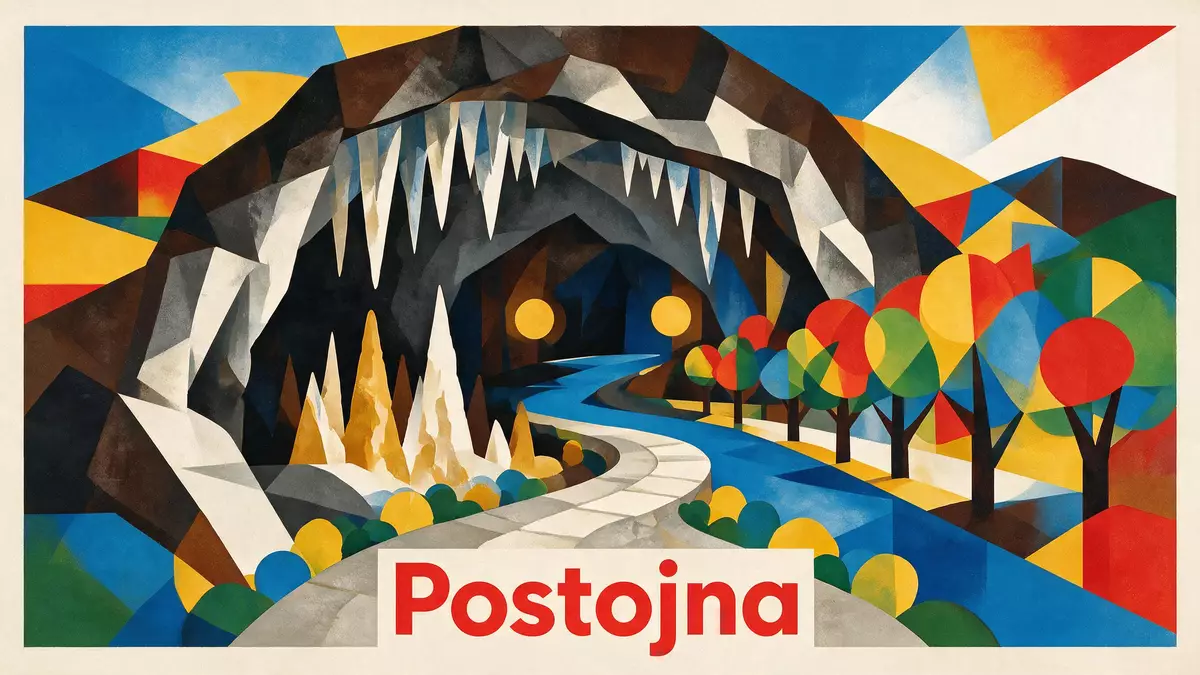
Postojnska jama, known in English as Postojna Cave, is a vast karst cave system beneath the town of Postojna in south?western Slovenia. Stretching for over 20 km through limestone hills, it has been carved by the Pivka River into a connected world of chambers, galleries and tunnels that has drawn organised visitors since the nineteenth century.Postojna Cave
A karst labyrinth shaped by the Pivka River
Postojnska jama lies just outside Postojna in south?western Slovenia, in a classic karst region where rivers vanish into fissured limestone and reappear through springs further downstream.Postojna Cave system The cave passages run for more than 20 km underground, with survey data on the wider system documenting a length of around 24 km and a maximum depth of roughly 115 m (377 ft) beneath the surface.length and depth
The rock surrounding Postojnska jama consists of thick beds of limestone, part of the wider karst plateau between the Pivka basin and the Ljubljanica River catchment.karst plateau Over long geological periods, the Pivka and its underground tributaries have dissolved and eroded the rock along fractures, forming multi?level corridors, wide halls and narrower connecting tunnels. The caves belong to a larger subterranean hydrological system in which water moves between Postojnska jama and neighbouring caves such as Planina Cave, even though these are not yet fully connected in official mapping.Postojna Cave system
From early explorations to an underground railway
The known history of Postojnska jama as a destination for organised visits goes back two centuries. Public tours began in the early nineteenth century, placing it among the earliest show caves with regular guided access, and it has been continuously developed with walkways and lighting since that era.show cave history Over generations, more passages were explored and mapped, extending the known length of the cave system far beyond the initial entrance area.
One of the most distinctive features of a visit is the underground railway that carries visitors deep into the hill from the main entrance. The cave has hosted an electric cave train for decades, making it possible to cover several kilometres inside the mountain without a strenuous underground walk.access by train Beyond the rail section, a prepared route on foot continues through selected galleries and chambers, following paths that were laid out to bring visitors close to a range of stalactites, stalagmites and flowstone formations. Survey figures from culture and show?cave registries record an established visitor trail of several kilometres, making Postojnska jama the longest publicly accessible depth of any cave system in Slovenia.publicly accessible trail
Stalactites, chambers and subterranean life
Inside Postojnska jama, the rock has been sculpted into a varied sequence of spaces, from narrower corridors to large chambers where ceilings rise high above the cave floor. The walls and roofs are lined with stalactites formed by mineral?rich water dripping from the limestone, while the ground hosts stalagmites and columns created where these dripstone formations meet. The cave passages are arranged on several levels, reflecting changes in river flow and base level across geological time.karst chambers and galleries
Postojnska jama also harbours specialised subterranean fauna adapted to life in darkness, humidity and relatively stable temperatures. Among the best known inhabitants is the olm, a cave?dwelling amphibian that has become closely associated with the Postojna cave system.cave fauna In some parts of the cave, prepared areas and interpretive displays introduce visitors to this underground ecosystem, linking the visible formations to the water and life that sustain them below the surface.
Visiting Postojnska jama: what travellers from Western Europe should know
- Postojnska jama lies on the edge of Postojna in south?western Slovenia, with the show?cave entrance reached via Jamska cesta from the town centre and motorway connections from Ljubljana.location near Postojna
- The prepared visitor route combines an underground train ride and a walk on surfaced paths through the cave, including sections with steps and gradients that demand steady footing.cave tour description
- In winter, outside temperatures around Postojna can be low, while conditions inside the cave remain relatively stable; travellers often carry an extra layer for the underground sections.Postojna Cave area
- The official language of Slovenia is Slovene and the currency is the euro.
- Nearby attractions in the same karst landscape include Predjama Castle, a medieval structure built into a cliff with its own cave system underneath.Predjama Castle
Searching for Postojnska jama on social platforms
These links open searches for Postojnska jama on each platform.
Frequently asked questions about Postojnska jama
Where is Postojnska jama located?
Postojnska jama is situated beneath the town of Postojna in south?western Slovenia, in a karst landscape of limestone hills and sinking rivers.
What can visitors expect on a standard tour?
A standard tour combines an underground train ride from the main entrance with a guided walk on prepared paths through selected chambers and galleries.
What makes Postojnska jama distinctive among Slovenian caves?
Postojnska jama stands out for its long mapped system of multi?level passages, its extensive guided visitor trail, and the presence of cave fauna such as the olm.


