
Postojnska jama: Slovenia’s great karst underground
Published on 08/21/2026 at 16:58 | Editorial responsibility: Rafael Müller, Editor-in-Chief AD HOC NEWS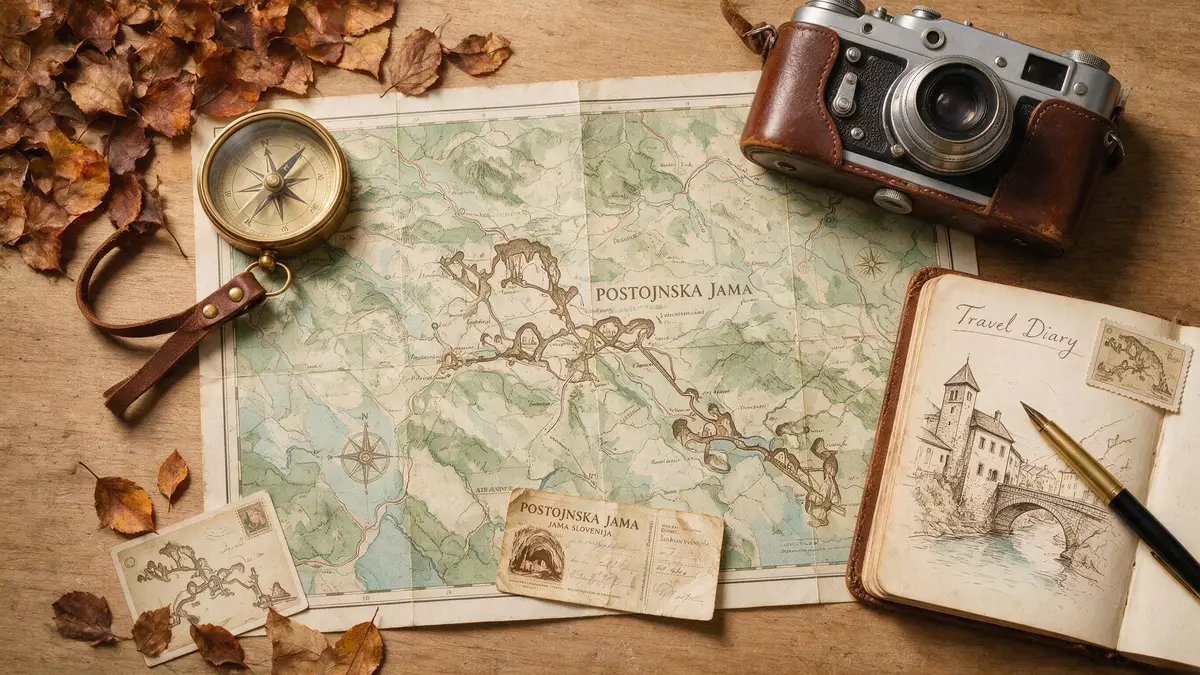
Postojnska jama, known in English as Postojna Cave, is a vast karst cave system beneath the town of Postojna in south?western Slovenia. Stretching for more than 20 km through limestone hills, it has been shaped over hundreds of thousands of years by underground rivers and dripping water into a connected world of chambers, galleries and tunnels.
A karst labyrinth carved in Cretaceous limestone
The karst landscape around Postojna lies where thick Cretaceous limestone meets less permeable rocks of the Eocene, creating an ideal setting for underground drainage and cave formation.Cretaceous limestone above Eocene beds can be seen in the wider area, and the cave passages follow the paths cut by the Pivka River and its predecessors through this soluble rock.The Höhlen von Postojna entry describes sediments in the system with ages up to around 0.9 million years, underscoring the long geological history behind the present cave.
The explored system of Postojnska jama runs for over 24 km underground, with passages on several levels linked to a network of entrances in the karst plateau above Postojna.Survey data from Burger.si notes more than 24,000 m of subterranean tunnels and a maximum documented depth of around 115 m beneath the surface, making it one of the longest known cave systems in Slovenia. Within the wider karst drainage basin of the Ljubljanica River, Postojnska jama forms the upper part of a complex underground catchment carved by the Pivka and its underground tributaries.
From early exploration to an underground railway
Human contact with Postojnska jama reaches far back: archaeological work has found evidence of occupation in parts of the system at the end of the last glaciation, and written signatures appear in one gallery from the thirteenth century.Descriptions of early visits mention a “Gallery of Old Signatures” and refer to medieval visitors, while later records document organised exploration in the nineteenth century.Historical notes in German point to an attested visit in 1213 as an early fixed date in the written history of the cave.
The transformation of Postojnska jama into a show cave accelerated in the nineteenth century as more of its galleries were mapped and made accessible to visitors. An underground railway was introduced in the 1870s to carry visitors deep into the system, evolving into the electric cave train that still runs through several kilometres of tunnels today.Accounts of a tourist railway since 1872 highlight it as one of the earliest underground lines built specifically for tourism. Over time, further entrances such as Otoška jama, Magdalena jama, ?rna jama and Pivka Cave became recognised as parts of the same interconnected system, extending the mapped length and adding variety to the tours.Descriptions of connected caves list these neighbouring segments as natural and historical entrances.
Halls, formations and a neighbouring castle
Inside Postojnska jama, the train and walking paths pass through a sequence of large halls and narrower galleries decorated with stalactites, stalagmites and flowstone. Over long periods, water enriched with calcium carbonate has seeped through the overlying soil and rock, depositing calcite in delicate curtains, pillars and columns.Geological explanations of calcite deposition describe how percolating water picks up dissolved minerals in the forested plateau above, then releases them in the cave environment to build up formations millimetre by millimetre. The result is a landscape where surfaces vary between smooth flowstone, delicate needle?like crystals and heavy columns joining floor and ceiling.
Postojnska jama sits in a wider visitor complex that also includes Predjama Castle, a Renaissance castle built into a cliff and above another cave entrance some kilometres away.Tourist information on Postojna cave describes Predjama Castle as the largest cave castle in the world, making the combination of an extensive karst system and a cliff?side fortress a distinctive pairing in this part of Slovenia. The surroundings mix coniferous and mixed forest, karst poljes and the valley of the Pivka River, so a visit to the cave often sits within a day spent moving between underground chambers and the open landscape around Postojna.
Visiting Postojnska jama: what travellers from Western Europe should know
- Postojnska jama lies beneath the town of Postojna in south?western Slovenia, along the valley of the Pivka River, with access from Jamska cesta on the edge of town.
- Much of a standard visit takes place on hard, sometimes damp surfaces in underground galleries and halls, with a combination of train travel and walking on paths and steps.
- Predjama Castle stands in the countryside near Postojna and is linked to another cave entrance under its cliff, so combining cave and castle involves short travel through rolling karst terrain.
- The official language is Slovene and the currency is the euro, which is used throughout Slovenia for everyday transactions.
Searching for Postojnska jama on social platforms
These links open searches for Postojnska jama on each platform.
Frequently asked questions about Postojnska jama
Where is Postojnska jama located?
Postojnska jama lies beneath the town of Postojna in south?western Slovenia, in a karst region drained by the Pivka River and connected to the wider Ljubljanica basin.
What can visitors expect inside the cave?
Visitors encounter large halls, narrower galleries and a variety of stalactites, stalagmites and flowstone, reached by a combination of underground train travel and walking on prepared paths.
What makes Postojnska jama distinctive compared with other caves?
The combination of an extensive mapped karst system exceeding 20 km, an early underground tourist railway, and nearby Predjama Castle built into a cliff above another cave makes it a distinctive cave complex in Slovenia.


