Petergof and its baroque water gardens by the Gulf
Published on 09/11/2026 at 15:40 | Editorial responsibility: Rafael Müller, Editor-in-Chief AD HOC NEWS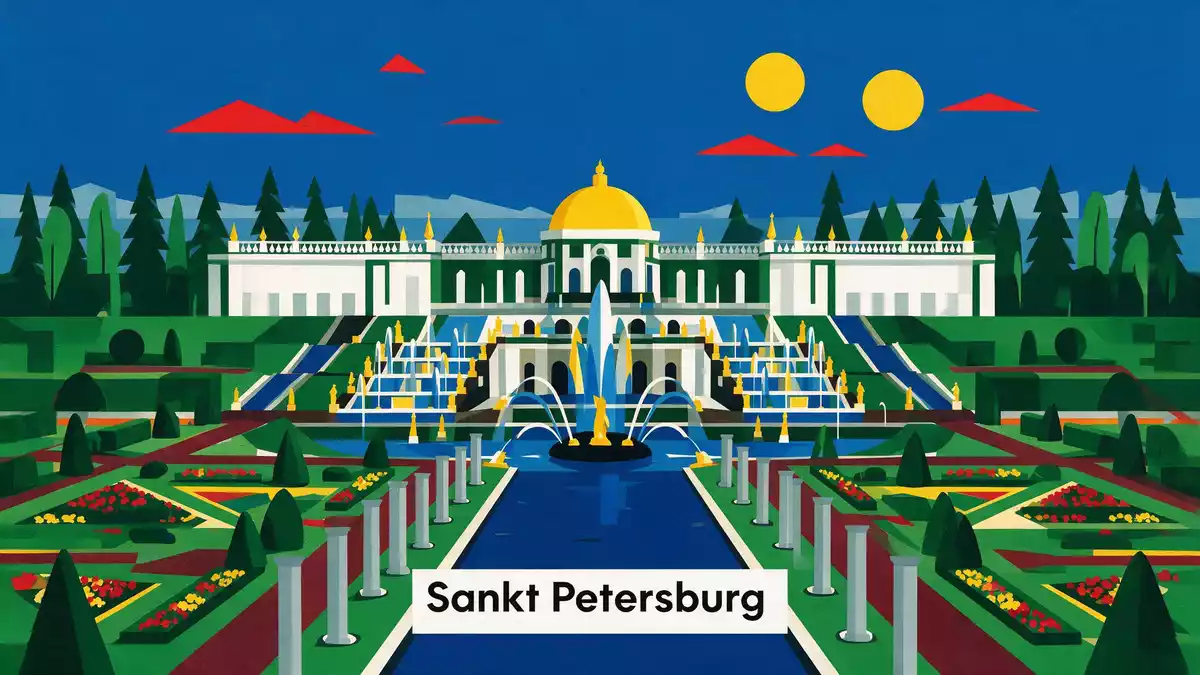
Petergof in Sankt Petersburg is best read through its water and stone: baroque palaces, formal gardens and long sightlines laid out beside the Gulf of Finland. Its history is tied to Peter the Great, and the complex took shape in the early eighteenth century. The surviving ensemble still gives the place a courtly scale rather than a single monument.
Baroque palaces above the lower gardens
The name Petergof covers a palace ensemble, formal parks and a coastal town, all bound together by the same imperial landscape. The museum record gives a building period of 1714 to 1723, which places the main work in the reign of Peter I.
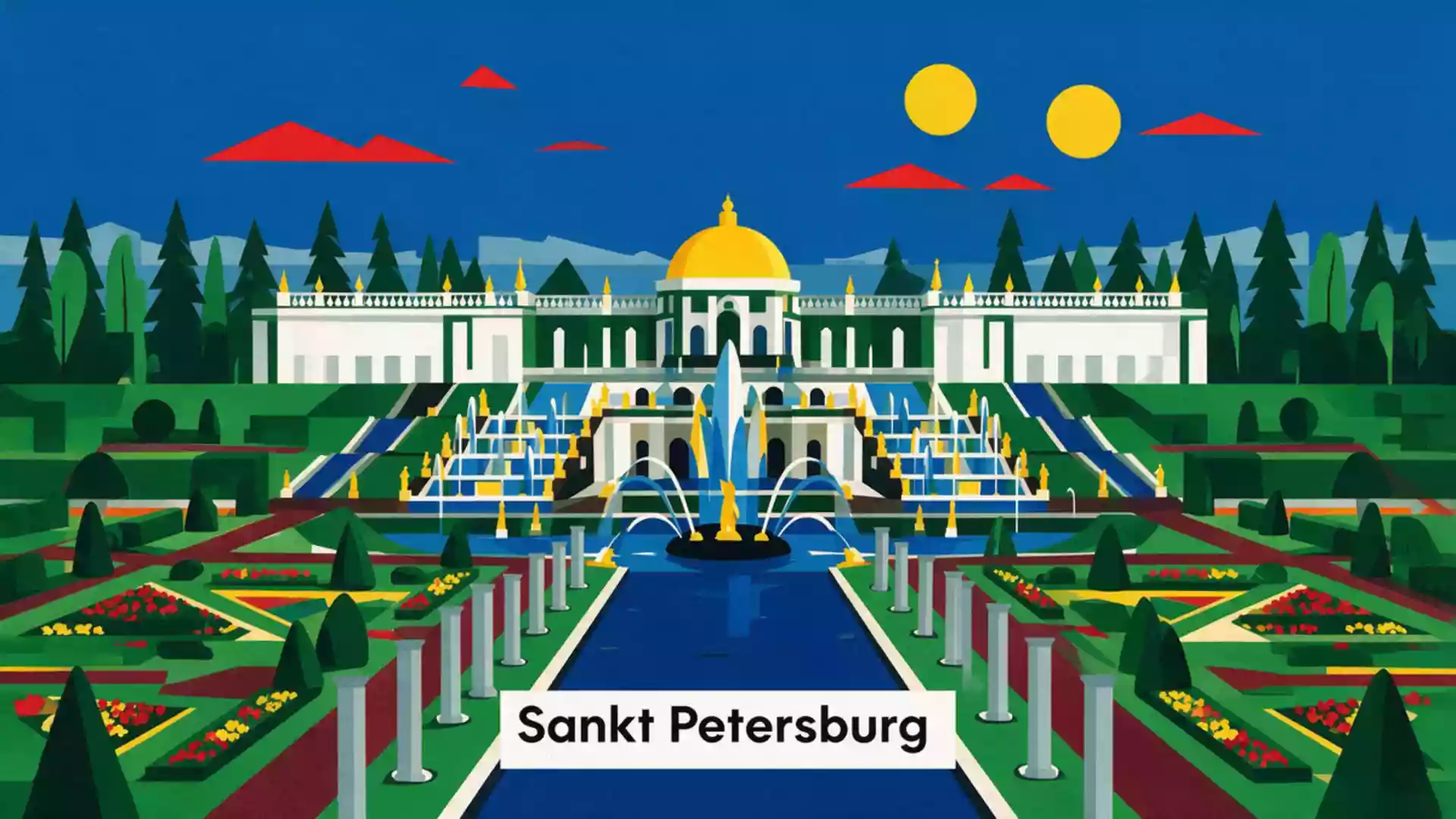
The broad composition is easy to grasp at a glance: palaces rise above terraces, while the gardens spread outward in geometric lines. The ensemble belongs to the world of Russian baroque, with later additions layered across its parks and buildings.
A residence linked to Peter I
Petergof is closely associated with Tsar Peter I, who founded the estate in the early eighteenth century. The place entered the UNESCO listing for the Historic Centre of Saint Petersburg in 1990.
That formal recognition sits well with what is visible on site: a linked set of palaces, cascades and gardens rather than a single isolated building. The ensemble reads as a planned imperial setting, with architecture and parkland treated as one composition.
The town and the ensemble together
Petergof is also a municipal town on the southern shore of the Gulf of Finland. The place was first recorded in 1705, and its older form remained attached to the estate even as the town developed around it.
The location gives the site its coastal character. The lower ground, terraces and open parkland make the relation between the upper buildings and the gardens immediately legible.
Visiting Petergof: what travellers from Western Europe should know
- Petergof lies west of central Sankt Petersburg on the Gulf of Finland. Regional rail and road links connect the city with the estate and its parks.
- The terrain is flat in parts and layered in others, with terraces, steps and long park walks between named sections of the ensemble.
- The official language is Russian and the currency is the Russian rouble.
- Entry requirements depend on your nationality; UK travellers can check the FCDO travel advice at gov.uk/foreign-travel-advice, Irish travellers the Department of Foreign Affairs at ireland.ie.
Searching for Petergof on social platforms
These links open searches for Petergof on each platform.
Frequently asked questions about Petergof
Where is Petergof?
Petergof is in Sankt Petersburg, on the Gulf of Finland. It is a coastal ensemble rather than an inland palace complex.
What does a visit involve?
The place combines palaces, gardens and terraces, so the experience is as much about moving through an ensemble as entering a single building. The layout spreads across parkland and formal grounds.
What makes Petergof distinctive?
Its identity lies in the combination of Peter I, early eighteenth-century planning and the long baroque composition of palaces and gardens. The result is a linked imperial landscape rather than a solitary landmark.