Petergof’s palace and garden ensemble by the Gulf
Published on 08/28/2026 at 12:39 | Editorial responsibility: Rafael Müller, Editor-in-Chief AD HOC NEWS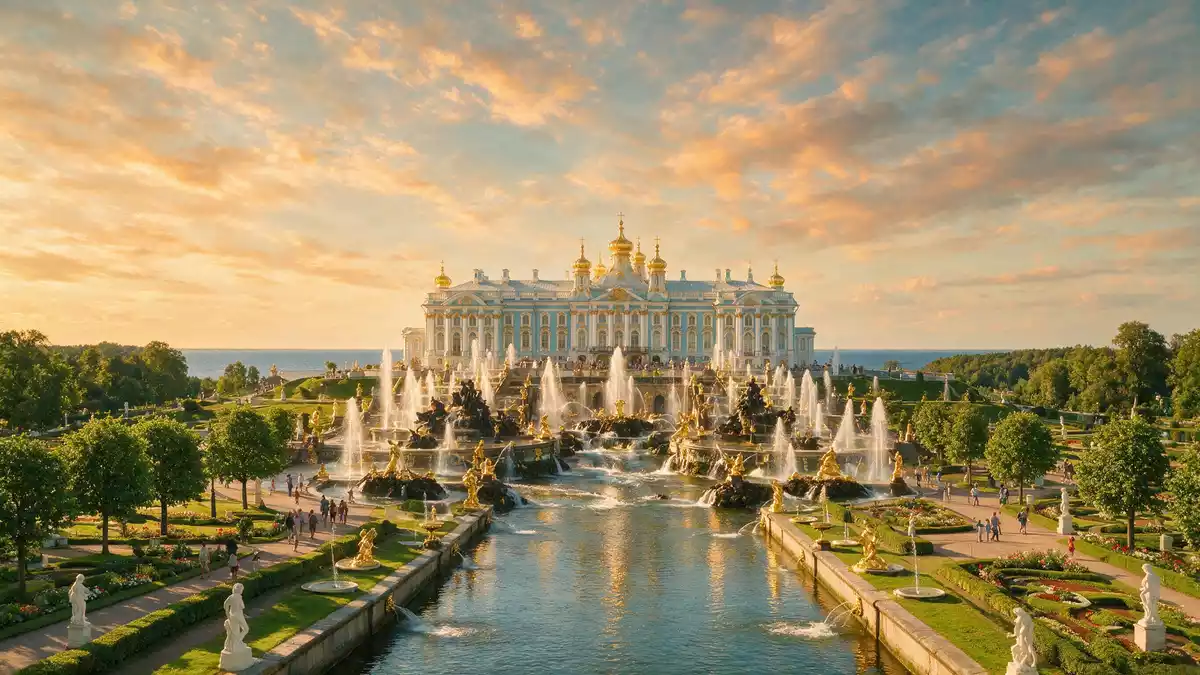
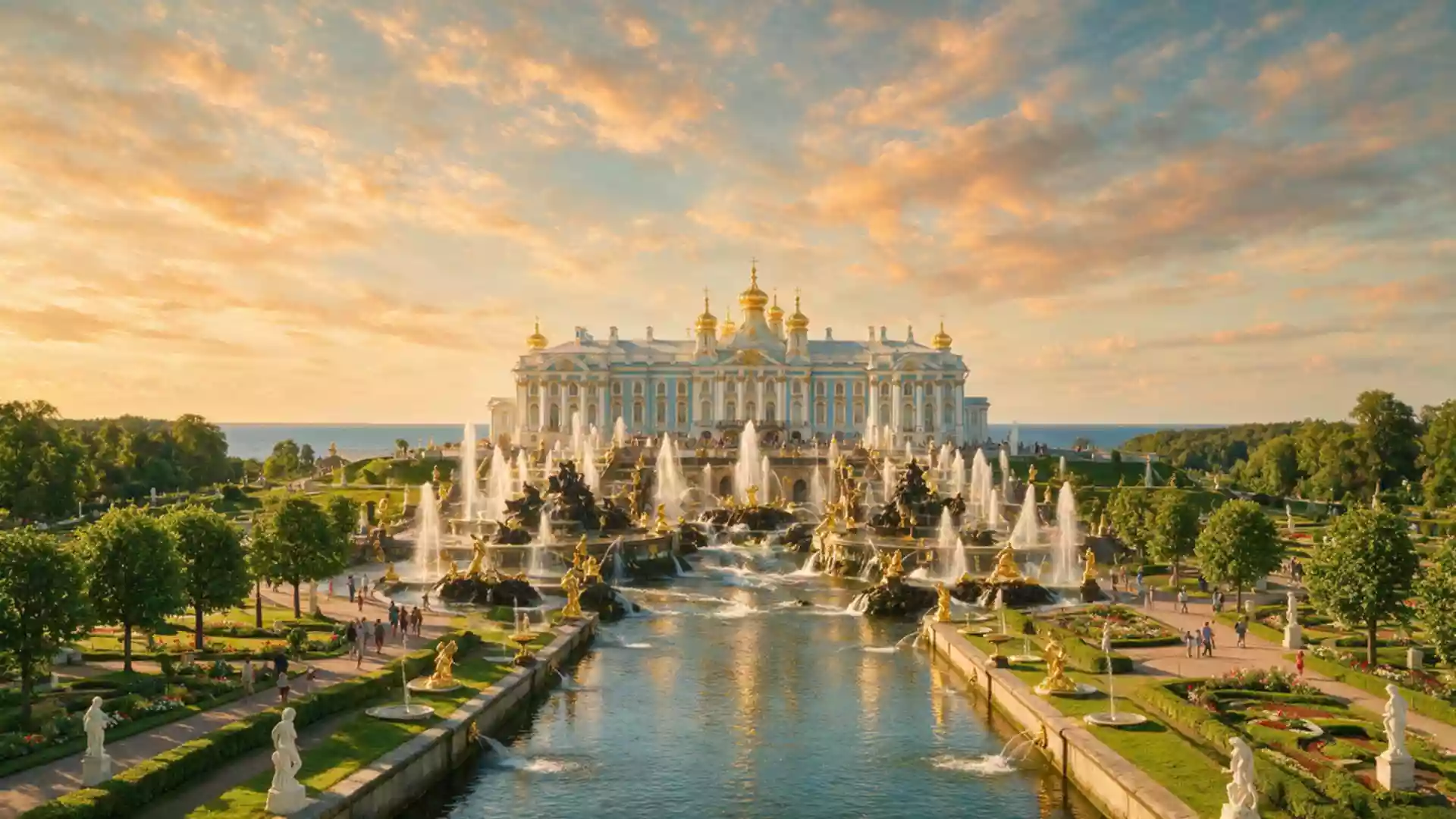
Petergof is a palace-and-garden ensemble on the southern shore of the Gulf of Finland, south-west of Sankt Petersburg. Its identity rests on a long alignment of palaces, terraces, fountains and parkland under the name of Peter the Great.
Petergof’s imperial shoreline setting
The complex is spread across the Upper Garden and the Lower Park, with the Grand Peterhof Palace above the lower ground and a series of smaller palaces and pavilions around them. The palace ensemble entered the UNESCO World Heritage listing for the Historic Centre of Saint Petersburg and Related Groups of Monuments in 1990UNESCO World Heritage.
Petergof has been linked with Peter the Great since the early eighteenth century, and the ensemble took shape in the reign of Peter I. The museum site records a building period from 1714 to 1723 and preserves that courtly scale in its named palaces, cascades and formal gardensbuilding period.
Fountains, terraces and named palaces
The most recognisable part of Petergof is the lower garden system, where the Grand Cascade, Samson Fountain and the long fountain alleys form a dense sequence of water, steps and paving. The official museum inventory also names Monplaisir Palace, Marly Palace, the Hermitage Pavilion and the Bathhouse Block among the ensemble’s surviving partsnamed palaces.
The site’s historical range matters as much as its layout. Petergof was first recorded in 1705, and the same ensemble later became a summer residence of the emperors; that sequence is part of its historical weight, not a decorative labelfirst recorded.
Petergof and Peter the Great’s court world
Petergof belongs to the wider imperial landscape of Saint Petersburg, where Baroque and neoclassical monuments sit beside canals, embankments and palace suburbs. The UNESCO property description places Peterhof among the suburban ensembles that express the city’s imperial characterimperial landscape.
The ensemble also shows how court architecture and garden design were treated as one composition. That is visible in the relation between the upper terrace, the lower park and the water axis running towards the Gulf of Finland, with the palace mass set above the garden sequencewater axis.
Visiting Petergof: what travellers from Western Europe should know
- Petergof lies south-west of Sankt Petersburg on the Gulf of Finland. The town is reached by rail, road and ferry links from the city.
- The Lower Park includes terraces, steps and long formal walks. The ensemble also spreads across open parkland, so the different parts read as a sequence rather than a single room.
- The official language is Russian and the currency is the Russian rouble.
- Entry requirements depend on your nationality; UK travellers can check the FCDO travel advice at gov.uk/foreign-travel-advice, Irish travellers the Department of Foreign Affairs at ireland.ie.
- Conditions on the mountain change with the seasons; the local cable-car operators and alpine clubs provide information.
Searching for Petergof on social platforms
These links open searches for Petergof on each platform.
Frequently asked questions about Petergof
Where is Petergof?
Petergof is in Sankt Petersburg, on the southern shore of the Gulf of Finland. It belongs to the wider imperial zone associated with the city.
What does a visit involve?
It involves palaces, formal gardens and a strong water element, with the Lower Park and Grand Cascade among the central parts. The layout extends across terraces, paving and parkland.
What makes Petergof distinctive?
The combination of imperial palace architecture and an extensive fountain landscape defines it. Peter the Great and the eighteenth-century court setting remain part of the place’s identity.