
Persepolis and the stone terrace of the Achaemenid kings
Published on 09/23/2026 at 23:47 | Editorial responsibility: Rafael Müller, Editor-in-Chief AD HOC NEWS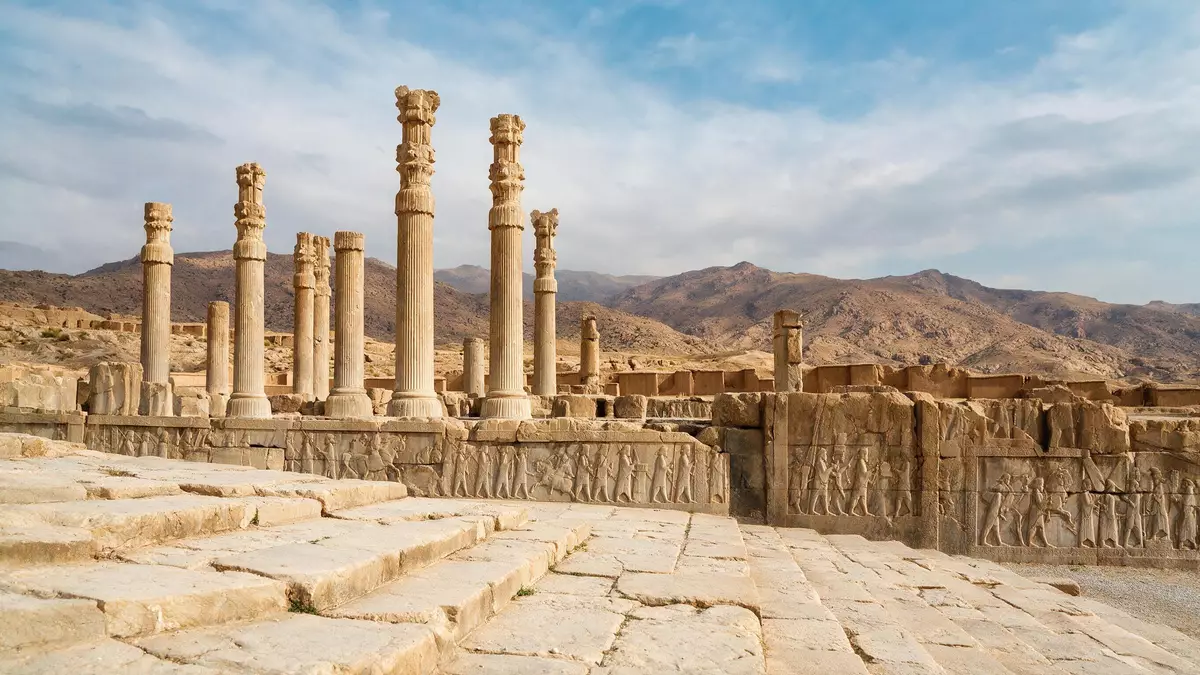
Persepolis is an ancient city of stone terraces, columned halls and carved delegations near Shiraz in southern Iran. Founded by Darius I in 518 BCE, it became the ceremonial capital of the Achaemenid Empire, and its surviving architecture remains arranged across a monumental raised platform.
Persepolis rises above the Marvdašt Plain
The ruins stand on the Marvdašt Plain in Fars province, northeast of Shiraz. A great terrace combines natural rock with built masonry, creating a broad platform for palaces, stairways, gateways and reception halls. The scale of the terrace is visible before the individual carvings come into view.
The Persian name was P?rsa, while Persepolis is the Greek name associated with the city. The site served as a dynastic centre for the Achaemenid kings, whose empire extended across much of western and central Asia during the sixth and fifth centuries BCE. the Achaemenid capital was inscribed as a UNESCO World Heritage Site in 1979.
Darius I and the Achaemenid building programme
Darius I marked the site in 518 BCE, beginning a royal complex that continued under Xerxes I and Artaxerxes I. The buildings belong to the Achaemenid period, yet their details combine traditions from several regions within the empire.
Stone columns, monumental staircases and carefully cut reliefs define the principal remains. The Apadana, a major audience hall, occupied a central place among the royal buildings. Its stairways carry long carved processions of representatives bringing gifts, with clothing, hairstyles and animals rendered in repeated, formal patterns.
The Gate of All Nations bears an association with Xerxes I and forms one of the recognisable entrances within the complex. Other surviving structures include the Tachara, the Palace of Darius, the Palace of Xerxes and the Hundred Columns Hall. the royal monuments were built by Darius and his successors, with work continuing across successive reigns.
Reliefs, columns and the destruction of 330 BCE
Persepolis is read through fragments as much as through complete buildings. Tall columns retain traces of elaborate capitals, while stairways preserve rows of figures facing towards the centre of the ceremonial complex. The reliefs show delegations from different lands within the Achaemenid realm.
The figures are presented in ordered groups rather than as a crowded battle scene. Their repeated gestures, garments and offerings create a visual record of imperial ceremony. Lions, bulls and other sculpted forms appear among the architectural decoration, joining animal imagery with royal spaces.
Alexander of Macedon captured Persepolis in 330 BCE. The palaces were looted and burned, leaving collapsed columns, damaged reliefs and blackened architectural fragments among the surviving stonework. the city’s destruction marked the end of its role as an Achaemenid royal centre.
The site’s physical identity remains the terrace: a wide stone stage carrying halls, stairways and carved processions above the plain. That relationship between platform and palace gives Persepolis its particular character. It is both an archaeological ruin and a legible plan of imperial architecture.
Visiting Persepolis: what travellers from Western Europe should know
- Persepolis lies in Fars province on the Marvdašt Plain, northeast of Shiraz. Road travel from Shiraz is the practical approach, with the site reached by land transport.
- The archaeological area covers a large stone terrace. Visits involve outdoor walking across uneven ground, stairways and exposed archaeological remains.
- The main features include the Gate of All Nations, the Apadana, the Tachara, the Palace of Xerxes and the Hundred Columns Hall.
- The official language is Persian and the currency is the Iranian rial.
- Entry requirements depend on your nationality; UK travellers can check the FCDO travel advice at gov.uk/foreign-travel-advice, Irish travellers the Department of Foreign Affairs at ireland.ie.
Searching for Persepolis on social platforms
These links open searches for Persepolis on each platform.
Frequently asked questions about Persepolis
Where is Persepolis?
Persepolis lies on the Marvdašt Plain in Fars province, northeast of Shiraz in southern Iran. The ruins occupy a monumental stone terrace above the surrounding plain.
What can visitors see at Persepolis?
The archaeological area contains royal palaces, column bases, stairways, gateways and reliefs. The Apadana processions, the Gate of All Nations and the Palace of Xerxes are among its named features.
What makes Persepolis distinctive?
Its distinctive character comes from the combination of a vast raised terrace, Achaemenid royal architecture and carved delegations representing the empire. The surviving remains also preserve the damage associated with the destruction of 330 BCE.


