
Parque del Retiro, Madrid’s royal retreat turned city park
Published on 09/14/2026 at 15:34 | Editorial responsibility: Rafael Müller, Editor-in-Chief AD HOC NEWS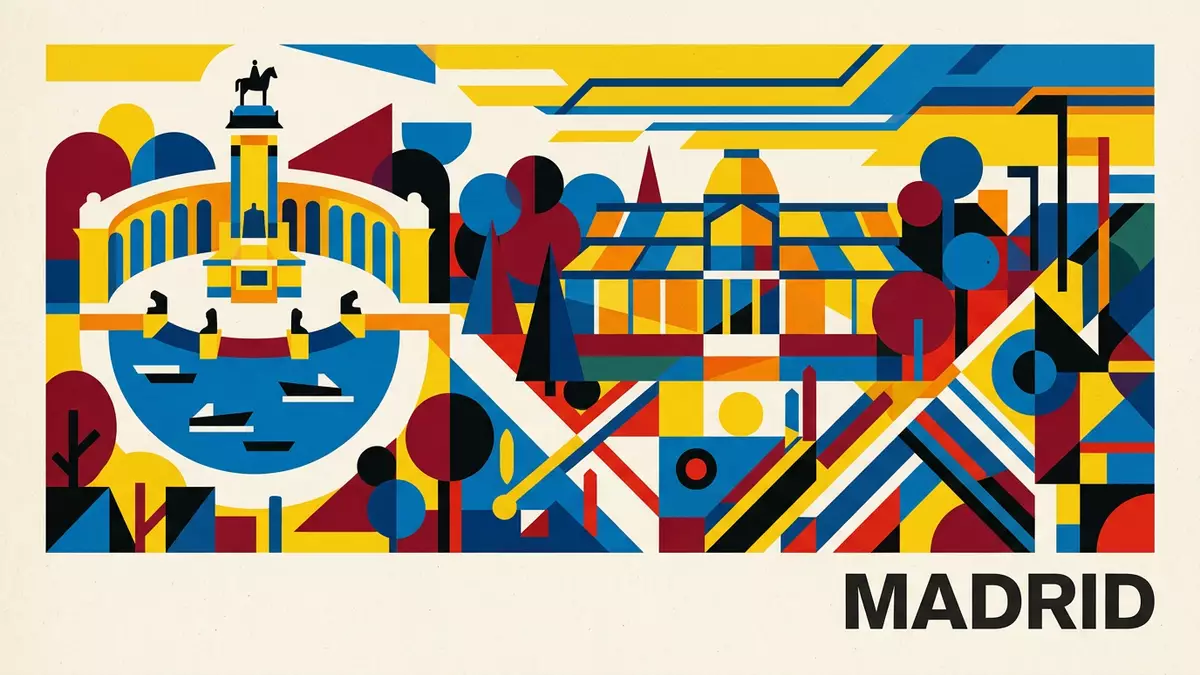
Parque del Retiro in Madrid is a former royal garden from the seventeenth century that has become a sprawling urban park, where baroque traces, grand promenades and water features sit among dense planting.
From royal enclave to public park
Parque del Retiro began as part of the gardens of the Palacio del Buen Retiro, created in the first half of the seventeenth century for King Felipe IV, with Gaspar de Guzmán, the powerful Conde-Duque de Olivares, playing a central role in assembling and shaping the estate around the Monasterio de los Jerónimos.the Conde-Duque de Olivares The complex combined palace buildings, formal gardens, a theatre and a large ornamental lake, forming a baroque landscape at the edge of the historic city.a baroque complex around the palace
Over the eighteenth century the palace lost prominence, suffered damage, and large parts were later demolished during the Peninsular War, leaving the gardens as the main legacy of the Buen Retiro residence.Peninsular War destruction of the palace In 1868, after the fall of Queen Isabel II during the Glorious Revolution, the grounds passed into municipal hands and were declared a public park, integrating this former royal domain into the everyday fabric of Madrid.ceded to the city as a public park in 1868
Water, promenades and monuments
One of the defining elements of Parque del Retiro is its large artificial lake, the Estanque Grande, originally laid out for ceremonial displays and entertainments and now bordered by terraces and the striking monument to King Alfonso XII.the Estanque Grande artificial lake From the lakeside, broad paths radiate through the park, lined with rows of trees and punctuated by statues that recall Spain’s dynastic history.
Among the built structures, the Palacio de Cristal stands out: a glass pavilion originally erected in the nineteenth century as an exhibition space, facing a smaller ornamental lake and backed by trees that frame its delicate structure.the Palacio de Cristal exhibition pavilion Elsewhere, visitors encounter the remains of historic buildings from the Buen Retiro complex, formal gardens laid out in geometric patterns, and more informal wooded areas that soften the transitions between monumental spaces and quieter corners.
A cultural landscape recognised by UNESCO
Parque del Retiro does not stand alone; it connects with the Paseo del Prado, forming a continuous axis of green space and cultural institutions in central Madrid that has been recognised as a World Heritage cultural landscape in the category “Landscape of Arts and Sciences”.World Heritage landscape of arts and sciences In 2021, this ensemble, including Retiro Park and the boulevard, was inscribed on UNESCO’s World Heritage List, highlighting the long interplay between urban planning, royal patronage and public life along this corridor.inscription on the UNESCO World Heritage List in 2021
This recognition underscores how Parque del Retiro has evolved from a secluded royal retreat into a landscape that brings together museums, fountains, commemorative monuments and dense vegetation at the edge of the historic core of Madrid.Retiro and Paseo del Prado as a unified cultural axis The park’s avenues and clearings offer long views towards surrounding districts, while its proximity to major institutions makes it a natural extension of the city’s cultural visits.
Visiting Parque del Retiro: what travellers from Western Europe should know
- Parque del Retiro lies to the east of Madrid’s historic centre, adjacent to the Paseo del Prado and close to the Museo del Prado and other major museums, and is easily reached by Madrid’s Metro and city buses.
- Inside the park, many areas are level, but some routes rise over gentle slopes and there are long straight promenades, so a visit can involve extended walking on paved paths and compacted earth surfaces.
- The gardens contain both open lawns and densely planted woodland, with formal parterres and water features, so paths can alternate between sun-exposed stretches and shaded sections under mature trees.
- Nearby streets carry steady urban traffic and link Parque del Retiro with districts such as Salamanca and the area around Atocha station, making it straightforward to combine time in the park with wider exploration of Madrid.
Searching for Parque del Retiro on social platforms
These links open searches for Parque del Retiro on each platform.Frequently asked questions about Parque del Retiro
Where is Parque del Retiro in Madrid?
Parque del Retiro stretches along the eastern side of central Madrid, next to the Paseo del Prado and close to major art museums.
What can visitors expect during a walk in Parque del Retiro?
A walk through Parque del Retiro brings together a large ornamental lake, formal gardens, wooded areas, historic pavilions and long promenades lined with trees and monuments.
What makes Parque del Retiro distinctive among city parks?
Parque del Retiro is distinctive for its origin as a seventeenth-century royal garden, its surviving baroque elements and its role within a UNESCO-recognised cultural landscape.


