
Parque del Retiro, Madrid’s historic green landscape of light
Published on 09/16/2026 at 08:19 | Editorial responsibility: Rafael Müller, Editor-in-Chief AD HOC NEWS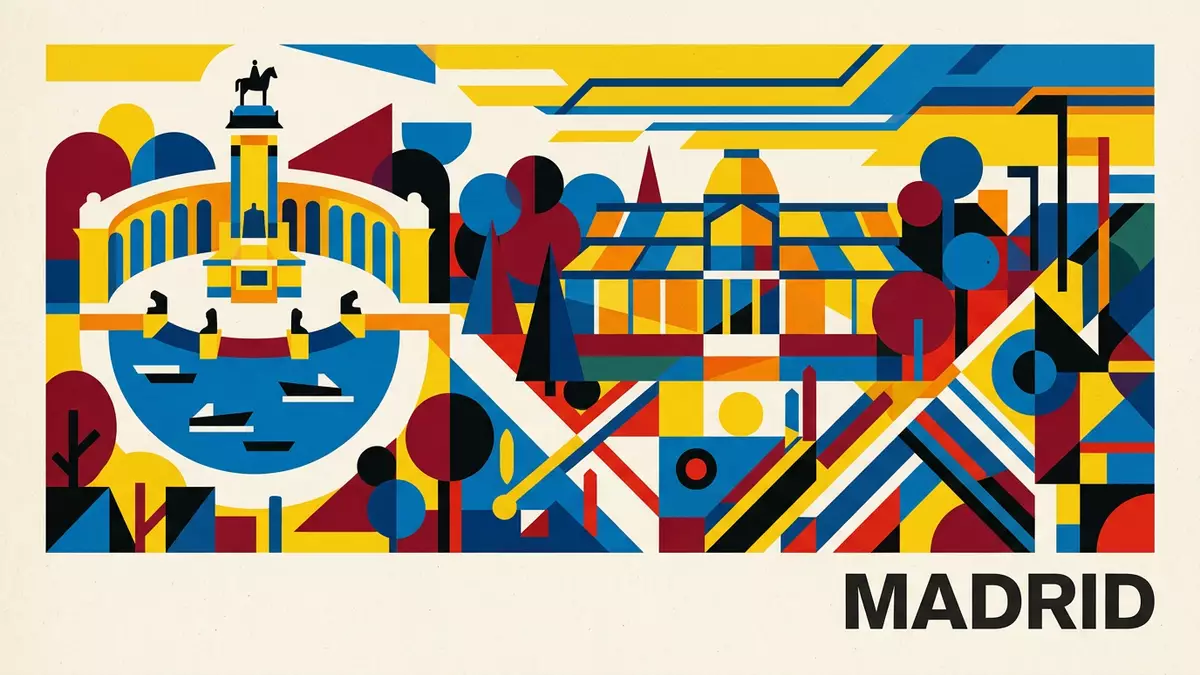
Parque del Retiro in Madrid began life as a royal garden for the Buen Retiro Palace in the seventeenth century and has grown into an urban park of water, trees and monuments recognised on the UNESCO World Heritage List as part of the Landscape of Light.
From royal retreat to public park
Parque del Retiro was created in the first half of the seventeenth century as the landscaped setting for the Palacio del Buen Retiro, a pleasure residence associated with King Felipe IV and his favourite, the Count-Duke of Olivares.first half of the seventeenth century The gardens formed part of a wider palace complex on the eastern edge of historic Madrid, laid out with avenues, ornamental planting and water features.
The park’s large ornamental lake, the Estanque Grande de El Retiro, dates to works carried out in the 1630s and soon became a centrepiece of court entertainment.Estanque Grande de El Retiro Over time, as the Buen Retiro Palace declined and much of the building complex disappeared, the gardens shifted from royal domain towards civic amenity. In the eighteenth century the public began to be admitted for recreation, and in 1868, after political change in Spain, Retiro passed fully into municipal hands and became a public park of Madrid.became a public park
Water, glass and stone: the park’s defining structures
At the heart of Parque del Retiro lies the broad artificial lake, the Estanque Grande, framed by balustrades, planted banks and a sweeping stone colonnade that supports the Monument to Alfonso XII.Monument to Alfonso XII The equestrian statue of the king stands above the water, with a semicircular arcade and stairways descending towards the shore. From the lakeside, rows of trees and lawns open out into the rest of the park, giving long views across water and foliage.
On one side of the lake stands the Palacio de Cristal, a glass pavilion built in 1887 for an exhibition about the Philippine Islands and inspired by earlier European iron-and-glass conservatories.glass pavilion built in 1887 Cast-iron ribs support its glass envelope, and the building rises beside a smaller pond surrounded by trees. Close by, the brick and stucco Palacio de Velázquez adds another exhibition hall from the same period, while elsewhere within the grounds the formal Parterre, historic gates and fountains mark different chapters of Madrid’s garden design.Parterre and historic gates
Landscape of Light: trees, paths and museums
Parque del Retiro covers more than 100 ha of central Madrid and forms, together with the Paseo del Prado, a cultural landscape known as the Landscape of Light.Landscape of Light In 2021 this ensemble of park and boulevard was inscribed on the UNESCO World Heritage List for its combination of urban greenery, scientific institutions and art museums in a single continuous corridor.UNESCO World Heritage List Within the park, long tree-lined paths lead to landmarks such as the Real Observatorio Astronómico, the Casón del Buen Retiro and gates facing towards the Prado Museum.
Botanically, the park is characterised by mature plane trees, pines and chestnuts, alongside ornamental plantings in the rose garden and around the formal beds of the Parterre.mature trees and Parterre Sculptures and fountains punctuate the greenery, including the Fuente de la Alcachofa and other nineteenth-century works. The proximity of major museums along the Paseo del Prado means that galleries and lawns sit within easy reach of one another, creating a setting where art collections, scientific buildings and shaded walks share the same urban space.
Visiting Parque del Retiro: what travellers from Western Europe should know
- Parque del Retiro stretches east of central Madrid, bordering the Paseo del Prado and districts such as Jerónimos; the nearest metro and suburban rail stations include stops around Atocha.
- The park’s terrain combines broad level avenues with some gentle slopes, long walking distances between features and several staircases around the lakeside terraces and monuments.
- Parque del Retiro lies within Spain; the official language is Spanish and the currency is the euro.
- Nearby landmarks include the Prado Museum, the Thyssen-Bornemisza Museum and the Real Jardín Botánico, all aligned along the Landscape of Light corridor.
Searching for Parque del Retiro on social platforms
These links open searches for Parque del Retiro on each platform.Frequently asked questions about Parque del Retiro
Where is Parque del Retiro located within Madrid?
Parque del Retiro lies to the east of Madrid’s historic centre, adjoining the Paseo del Prado and close to transport hubs around Atocha station.
What should visitors expect on a first walk through the park?
A walk through Parque del Retiro passes formal avenues, a large boating lake, historic pavilions such as the Crystal Palace and varied tree-lined paths and lawns.
What makes Parque del Retiro distinctive among urban parks?
Parque del Retiro is distinctive for its seventeenth-century origins as a royal garden, its monumental lake and its role within Madrid’s UNESCO-listed Landscape of Light.


