
Parque del Retiro and Madrid’s landscape of gardens, glass and water
Published on 09/23/2026 at 17:19 | Editorial responsibility: Rafael Müller, Editor-in-Chief AD HOC NEWS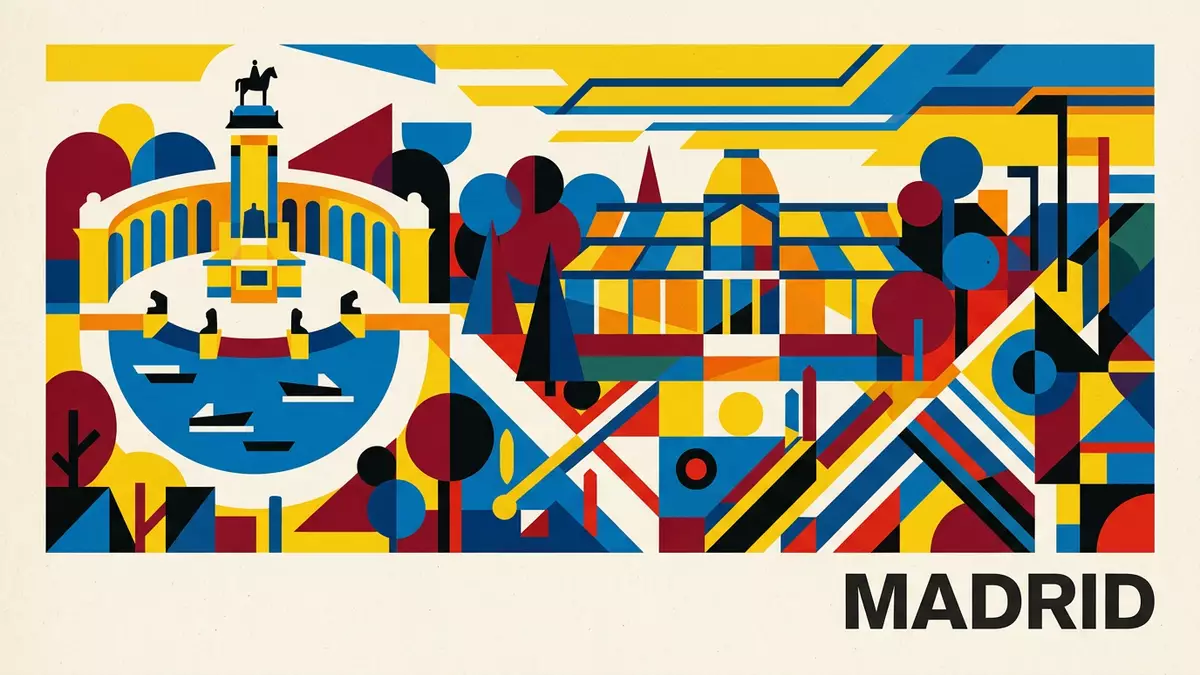
Parque del Retiro is a historic public park in Madrid where broad gardens, an artificial lake, monuments and exhibition buildings occupy the remains of a royal palace complex. Its visible character comes from the meeting of landscape and architecture, from the water of the Estanque Grande to the glass and iron of the Palacio de Cristal.
Parque del Retiro: a royal garden opened to the city
The park began as part of the Buen Retiro palace complex in the seventeenth century, during the reign of Philip IV of Spain. The Madrid city authority describes its construction as beginning in 1630, when the Count-Duke of Olivares developed the royal site associated with the king.
The royal connection remains legible in the name, avenues and surviving structures. The royal retreat’s history also belongs to a wider period of palace building, court theatre and formal gardens in Habsburg Madrid.
Parque del Retiro became a public park after the monarchy lost control of the grounds in the nineteenth century. The palace buildings suffered destruction, while the gardens, water features and selected architectural elements remained part of Madrid’s urban landscape.
The Estanque Grande and the Monument to Alfonso XII
The Estanque Grande forms one of the park’s clearest visual spaces. The artificial lake lies beside the Monument to Alfonso XII, whose semicircular colonnade and equestrian statue face the water.
The monument was designed by José Grases Riera and belongs to the early twentieth century. Its stone, bronze and colonnaded form creates a formal architectural edge along the lake, contrasting with the trees and open water around it.
Other fountains and monuments extend this sequence through the park. The Galápagos Fountain commemorates Isabella II, while the Fountain of the Fallen Angel stands near the Rosaleda rose garden.
Parque del Retiro also contains the Teatro de Títeres, a permanent puppet theatre, and the Casón del Buen Retiro, a surviving building associated with the former palace complex. These elements give the park several distinct architectural identities within one public garden.
Glass, iron and gardens beside the city centre
The Palacio de Cristal is the park’s most recognisable exhibition building. Completed in 1887, it was constructed from glass and iron for an exhibition connected with the Philippines, and its transparent walls stand beside a smaller artificial lake.
The building belongs to Spain’s nineteenth-century cast-iron architecture. Its structure, roof and glass surfaces form a contrast with the mature planting around the lake, while the interior is used for temporary exhibitions associated with the Reina Sofía Museum.
The Palacio de Velázquez serves a similar cultural role elsewhere in Parque del Retiro. Both exhibition buildings connect the park’s horticultural and architectural history with Madrid’s museum landscape.
Gardens supply another layer of variety. The Parterre Francés, the Rosaleda, the Jardines de Cecilio Rodríguez and the Jardín de Vivaces present different planting schemes, paths and formal arrangements. The park also contains the Ahuehuete, a Montezuma cypress traditionally dated to the seventeenth century.
Parque del Retiro forms part of the Paseo del Prado and Buen Retiro cultural landscape, inscribed on the UNESCO World Heritage List on 25 July 2021. The World Heritage landscape includes the park, the Paseo del Prado and the Royal Botanic Garden.
The protected landscape links nature, public space, art and science across central Madrid. Within Parque del Retiro itself, the combination is visible in the gardens, the lake, the monuments, the exhibition halls and the remains of the royal setting.
Visiting Parque del Retiro: what travellers from Western Europe should know
- Parque del Retiro lies beside Madrid’s city centre, with entrances around Plaza de la Independencia, Calle Alcalá and Avenida de Menéndez Pelayo. Metro stations include Retiro, Ibiza, Atocha and Estación del Arte.
- The park covers over 125 hectares, so routes between the lake, Palacio de Cristal, Rosaleda and northern gates involve substantial walking. Paths cross formal gardens, wooded areas and broad open avenues.
- The park contains paved avenues, planted garden paths, lakeside routes and several monumental stairways. The Palacio de Cristal stands beside a small lake in the southern part of the grounds.
- The official language is Spanish and the currency is the euro.
Searching for Parque del Retiro on social platforms
These links open searches for Parque del Retiro on each platform.
Frequently asked questions about Parque del Retiro
Where is Parque del Retiro?
Parque del Retiro is in central Madrid, beside the Retiro district and near the Paseo del Prado, the Prado Museum and Puerta de Alcalá.
What can visitors expect inside the park?
The grounds contain formal gardens, wooded paths, the Estanque Grande, monuments, fountains, the Palacio de Cristal and the Palacio de Velázquez.
What makes Parque del Retiro distinctive?
Its royal origins, public gardens, artificial lake and nineteenth-century exhibition buildings create a landscape where palace history and urban culture remain visible together.


