
Palia Poli Rodou, the walled medieval heart of Rhodos
Published on 08/28/2026 at 17:04 | Editorial responsibility: Rafael Müller, Editor-in-Chief AD HOC NEWS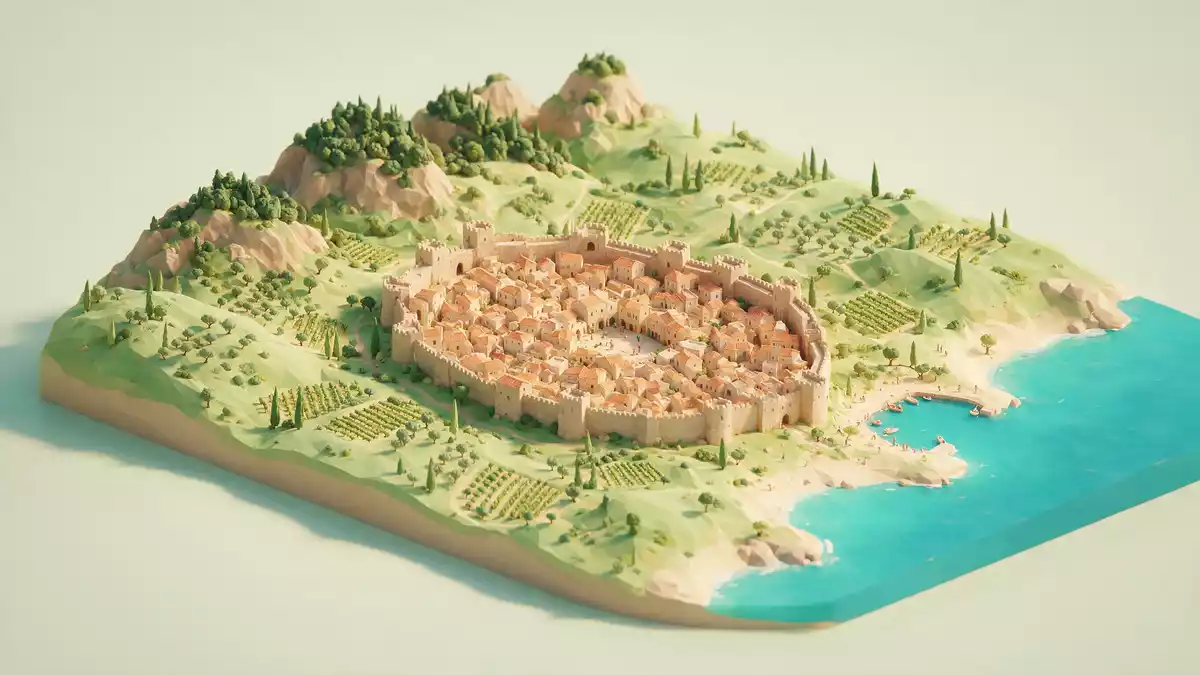
Palia Poli Rodou is the medieval old town of Rhodos, enclosed within massive fortification walls that still ring the historic core of the city on the island of Rhodes in Greece. Within these walls, streets, squares and houses from Crusader and Ottoman periods form a dense urban fabric recognised as the Medieval City of Rhodes on the UNESCO World Heritage List, a status it has held since 1988.
Stone walls and a fortified medieval city
Palia Poli Rodou occupies the historic centre of the modern city of Rhodes and is defined by a continuous circuit of stone fortifications that separate the old town from the newer quarters around it. The wall runs for around 4 km (2.5 mi), reinforced by bastions, towers and gates that once guarded access from land and sea and now mark the thresholds between the medieval streets and the surrounding city.the medieval city is located within a 4 km-long wall The fortifications incorporate earlier Byzantine elements and were substantially shaped by the Knights Hospitaller, also known as the Order of St John, who occupied Rhodes from 1309 to 1523 and turned the town into a stronghold.
Inside the walls, the city’s upper and lower quarters reflect this layered history. The high town to the north was largely built by the Knights and includes ensembles of Gothic architecture such as the Palace of the Grand Masters, the Great Hospital and the Street of the Knights.With the Palace of the Grand Masters, the Great Hospital and the Street of the Knights, the Upper Town is one of the most beautiful urban ensembles of the Gothic period The lower town to the south-southwest carries a mixture of Gothic, Byzantine and Islamic buildings, including mosques and public baths, reflecting the Ottoman period that followed the Knights.
Knights, Ottomans and a living neighbourhood
The medieval phase that gives Palia Poli Rodou its character began when the Knights Hospitaller established their headquarters on Rhodes in the early fourteenth century. They organised the high town around religious, administrative and military buildings, while commercial activities and later Ottoman structures took root in the lower quarters. This division between an upper city of Crusader institutions and a lower city of mixed residential and mercantile functions can still be traced in the street layout and building types.The Medieval City of Rhodes, built by the Christian military order Knights Hospitalers, is a historic town in the eastern Mediterranean
Over successive centuries, Palia Poli Rodou absorbed Ottoman elements such as minarets, mosques and hammams into the existing Crusader fabric, creating a visible juxtaposition of arches, façades and courtyards from different eras. UNESCO highlights this coexistence of Frankish and Ottoman buildings as a key reason for the site’s inscription, noting that the city forms an important ensemble of traditional human settlement shaped by complex acculturation.Criterion (v): With its Frankish and Ottoman buildings the old town of Rhodes is an important ensemble of traditional human settlement Despite its status as heritage, the district still functions as a lived-in neighbourhood, with houses, shops and small squares continuing to serve everyday life behind the fortifications.
Urban quarters, streets and landmarks
Within Palia Poli Rodou, the medieval city is traditionally divided into distinct quarters, including the Kollachium in the north and former Turkish and Jewish districts further south.the medieval city of Rhodes … teilt sich in das Kollachium, das türkische und das jüdische Viertel The Kollachium gathers many of the Knight-period monuments, among them the Grand Master’s Palace on one of the highest points within the walls and the inns of the various langues, or national groupings, that made up the order. South of this area, streets lined with houses, small workshops and religious buildings illustrate the Ottoman and later phases.
One of the most striking routes in Palia Poli Rodou is the Street of the Knights, a straight, gently sloping way bordered by substantial stone buildings associated with the order. Nearby, the Great Hospital, now used as a museum, and the Palace of the Grand Masters form a dense cluster of Gothic structures facing inward to courtyards and outward towards the harbour. Elsewhere in the old town, gates such as the D’Amboise Gate in the northwest punctuate the walls and connect the interior with the surrounding city and waterfront.Das D'Amboise Tor im Nordwesten erhielt 1522 seine endgültige Form
Visiting Palia Poli Rodou: what travellers from Western Europe should know
- Palia Poli Rodou forms the walled historic core of the city of Rhodes on the island’s northern side, adjacent to harbour basins including Mandraki, so the fortifications are visible from the waterfront.The Altstadt von Rhodos liegt im Norden von Rhodos-Stadt und schließt direkt an den Hafen von Mandraki
- Approaching the old town from the harbour or modern city involves passing through one of several gates in the fortification wall; within the walls the terrain consists of narrow cobbled streets and some steep stretches, and there are stairways in towers and around major monuments.
- Rhodes lies in the south-eastern Aegean Sea; the official language is Greek and the currency is the euro (EUR).
Searching for Palia Poli Rodou on social platforms
These links open searches for Palia Poli Rodou on each platform.
Frequently asked questions about Palia Poli Rodou
Where is Palia Poli Rodou located?
Palia Poli Rodou is the walled medieval old town at the historic core of the city of Rhodes, on the northern side of the island of Rhodes in Greece, close to harbour basins including Mandraki.
What should visitors expect on a first visit?
Visitors encounter a dense network of cobbled streets, stone houses and major monuments from the Crusader and Ottoman periods within a continuous fortification wall, with gates linking the medieval district to the surrounding harbour and modern city.
What makes Palia Poli Rodou distinctive among historic towns?
The old town brings together a Gothic upper quarter shaped by the Knights Hospitaller and lower quarters with Byzantine and Islamic monuments, all enclosed by medieval fortifications and recognised as the Medieval City of Rhodes on the UNESCO World Heritage List since 1988.


