
Palia Poli Rodou, the medieval walled heart of Rhodos
Published on 09/07/2026 at 22:06 | Editorial responsibility: Rafael Müller, Editor-in-Chief AD HOC NEWS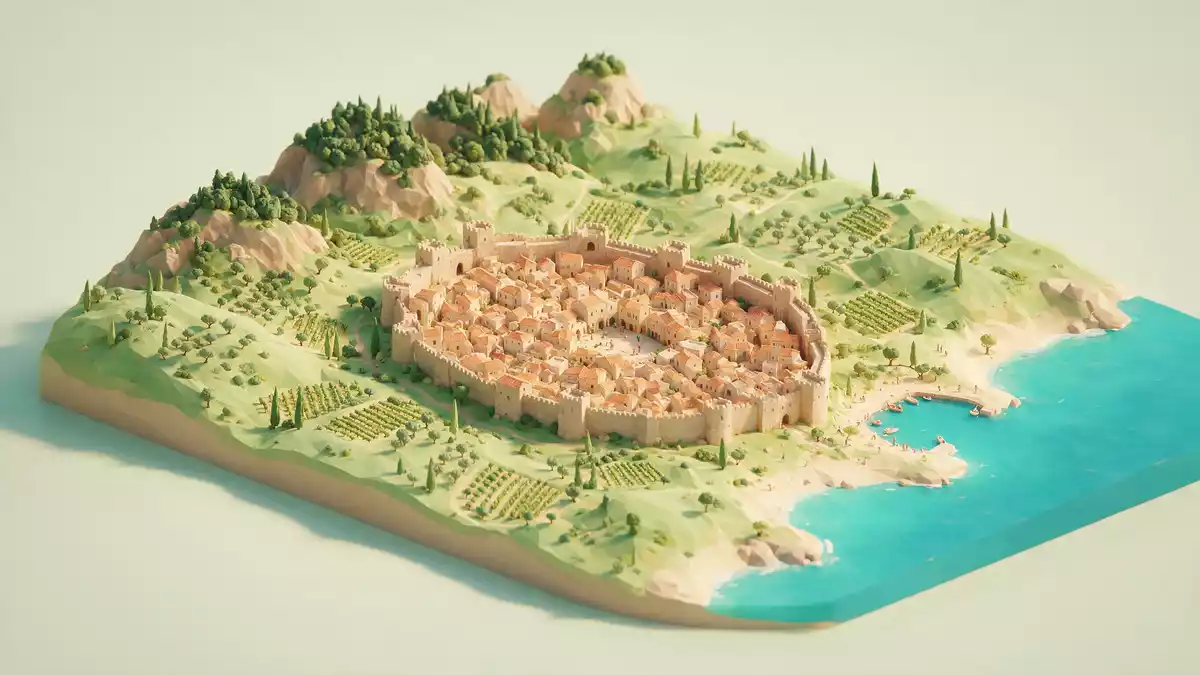
Palia Poli Rodou is the medieval old town of Rhodos, enclosed within fortification walls that still ring the historic core of the city on the island of Rhodes in Greece. Within these walls, the streets, squares and houses form a compact urban landscape shaped above all by the Knights Hospitaller between the fourteenth and early sixteenth centuries.
Knights, walls and a fortified city
The defining chapter in the story of Palia Poli Rodou began in 1309, when the Order of the Knights of Saint John of Jerusalem, also known as the Knights Hospitaller, established their headquarters in Rhodes after withdrawing from the Holy Land. From that point, the medieval city was developed as a Christian stronghold facing the eastern Mediterranean, and the fortified town that survives within the walls reflects this period of military and religious power.Order of the Knights of St John
For more than two centuries, the Knights oversaw the construction and reinforcement of the circuits of stone ramparts, bastions and towers that define Palia Poli Rodou, turning the medieval city into an impregnable base against attacks and sieges from the Ottoman Empire and other adversaries.walls of Rhodes Old Town The Knights’ rule ended in 1522, when an Ottoman force led by Sultan Suleiman the Magnificent took Rhodes after a prolonged siege and the city entered a new phase under Ottoman administration.
A UNESCO-listed medieval city that is still inhabited
Palia Poli Rodou forms the historic centre of the modern city of Rhodes and is recognised internationally as the Medieval City of Rhodes on the UNESCO World Heritage List. The old town was inscribed in 1988 as an exceptional example of a fortified medieval city whose layout and architecture preserve the mark of the Knights Hospitaller and later rulers.UNESCO World Heritage List The designation covers the whole walled quarter, where the high town with its grand public buildings lies to the north and the lower town stretches to the south and south-west.
Unlike archaeological sites that stand empty, Palia Poli Rodou remains an inhabited neighbourhood, with houses, small businesses and religious buildings occupying the same lanes as crusader-era inns and Ottoman-period structures. The medieval city occupies ground immediately inland from the harbour basins of Rhodes, and the fortifications form a clear edge between the old streets and the more modern quarters that surround them.walled medieval heart of Rhodos
Streets, squares and landmark buildings inside the walls
Inside Palia Poli Rodou, a network of paved lanes leads towards major medieval landmarks that carry the memory of the Knights’ headquarters. One of the most characteristic routes is the Street of the Knights, a straight ascent flanked by the stone-built inns of the different “tongues” of the Order, where groups from regions such as France, Aragon and Italy occupied residences dedicated to their language and origin.Street of the Knights At its upper end stands the Palace of the Grand Master, a monumental complex that served as the administrative centre of the Knights and later rulers, occupying the site of an earlier Byzantine fortification.
Beyond this formal axis, Palia Poli Rodou contains small squares, markets and residential streets that reveal the layers of Byzantine, Latin and Ottoman presence embedded in its urban fabric. Mosques dating from the Ottoman centuries stand near churches and the remains of medieval public buildings, while sections of the walls and gates show how access into the city was controlled and defended. The combination of fortified architecture, religious monuments and lived-in houses gives the old town its character as a complete medieval city rather than a single monument.exploring medieval Old Town of Rhodes
Visiting Palia Poli Rodou: what travellers from Western Europe should know
- Palia Poli Rodou occupies the historic centre of the city of Rhodes on the northern tip of the island, just inland from harbour basins including Mandraki, and can be reached on foot from the modern seafront districts.
- The old town is enclosed by continuous stone fortification walls with gates and a dry moat; exploring the interior involves walking over paved surfaces, moving through gateways and, on some routes, climbing short slopes or staircases.
- Rhodes lies in the south-eastern Aegean Sea and belongs to Greece, where the official language is Greek and the currency is the euro.
Searching for Palia Poli Rodou on social platforms
These links open searches for Palia Poli Rodou on each platform.
Frequently asked questions about Palia Poli Rodou
Where is Palia Poli Rodou located?
Palia Poli Rodou is the medieval walled old town at the historic core of the city of Rhodes on the island of Rhodes in Greece, immediately inland from the main harbour area.
What should visitors expect inside the old town?
Visitors encounter fortified walls, gates, a network of paved lanes, residential houses, religious buildings and major medieval landmarks including the Street of the Knights and the Palace of the Grand Master.
What makes Palia Poli Rodou distinctive among historic towns?
Palia Poli Rodou combines a complete medieval fortified city shaped by the Knights Hospitaller with continuous habitation and recognition as the Medieval City of Rhodes on the UNESCO World Heritage List.


