

Palenque and the stone language of the Maya
Published on 08/25/2026 at 21:07 | Editorial responsibility: Rafael Müller, Editor-in-Chief AD HOC NEWS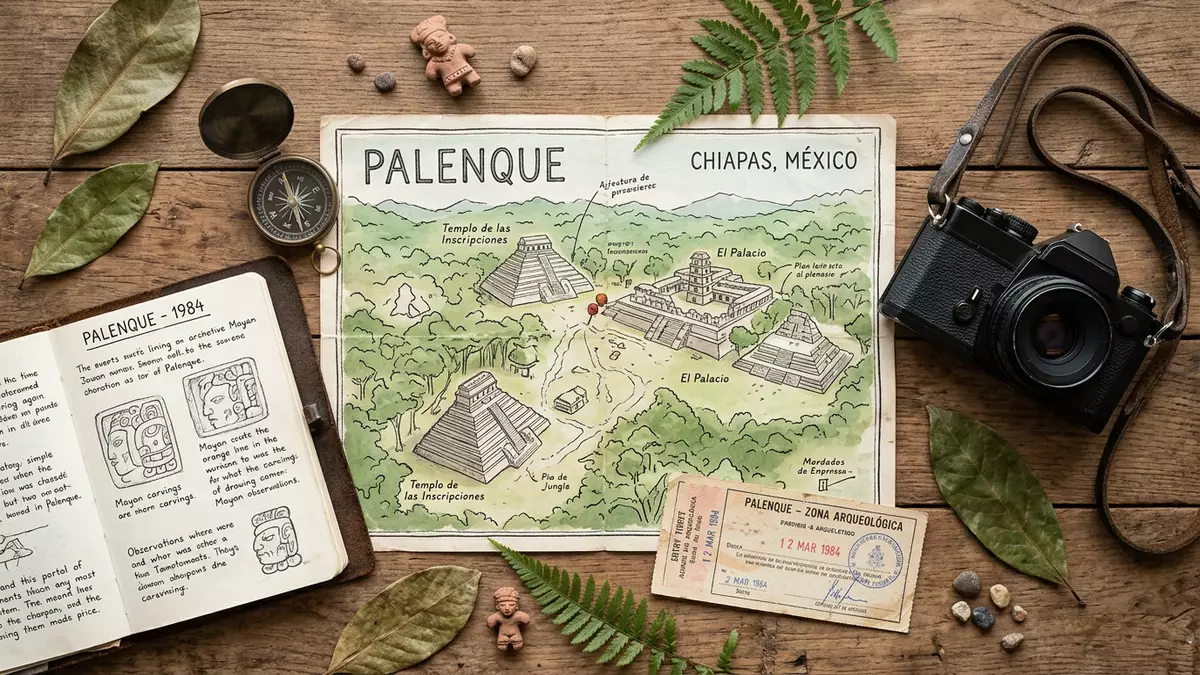
Palenque in Chiapas is a Classic Maya site where stone architecture, carved text and steep platforms come together in a compact ceremonial landscape. The UNESCO World Heritage inscription dates from 1987, and the place is tied above all to K'inich Janaab' Pakal and the Temple of the Inscriptions.
Palenque’s Classic Maya setting
The ruins belong to the Late Classic period, roughly the sixth to eighth centuries, when Palenque was one of the most accomplished cities in the Maya area. Britannica places the ancient city in what is now Chiapas, near the Usumacinta River, and UNESCO identifies it as a standout Classic-period site with exceptional architectural and sculptural remains.Late Classic period World Heritage inscription
The place is best known for masonry buildings, sculptural panels and hieroglyphic inscriptions that survive in unusually rich form. Its ancient name remains uncertain, which is why the modern name has carried the site into contemporary use.
The Temple of the Inscriptions and Pakal
The Temple of the Inscriptions is the most famous building at Palenque, and it is closely linked with K'inich Janaab' Pakal. Mesoweb describes it as a memorial to him, and UNESCO notes the quality of the sculptural work across the site.Temple of the Inscriptions
The temple rises above a stepped pyramid and carries long inscribed texts inside. Those tablets, together with the funerary associations of the monument, make the building the clearest single expression of Palenque’s royal and ritual character.
Stone work, reliefs and the wider site
Elsewhere in the site, the architecture combines vaulted rooms, sculpted panels and formal platforms. The result is a place where structure and ornament remain tightly bound, especially in the palace area and the temple groups.architectural and sculptural remains
That combination gives Palenque its particular clarity: the visitor sees building, inscription and image as parts of the same civic and ceremonial world. It is one of the clearest surviving statements of Classic Maya court culture.
Visiting Palenque: what travellers from Western Europe should know
- The site lies in Chiapas, Mexico, near the town of Palenque and the Usumacinta River. Entry requirements depend on your nationality; UK travellers can check the FCDO travel advice at gov.uk/foreign-travel-advice, Irish travellers the Department of Foreign Affairs at ireland.ie.
- The ruins include stepped platforms, stone stairways and elevated temple buildings. The terrain is uneven, and several major structures rise above the surrounding ground.
- The Temple of the Inscriptions contains long hieroglyphic panels. Other parts of the site preserve relief sculpture and vaulted chambers.
- The archaeological zone forms part of the Pre-Hispanic City and National Park of Palenque. The World Heritage designation covers both the ruins and the surrounding parkland.
Searching for Palenque on social platforms
These links open searches for Palenque on each platform.
Frequently asked questions about Palenque
Where is Palenque?
Palenque is in Chiapas, southern Mexico, near the Usumacinta River. The modern town shares the name of the ancient site.
What does a visit reveal?
The site shows stepped temples, carved panels and a palace complex set within a protected archaeological park. The most memorable single building is the Temple of the Inscriptions.
What makes Palenque distinctive?
Its combination of architecture, sculpture and hieroglyphic text is unusually coherent. K'inich Janaab' Pakal remains central to the site’s identity through the funerary temple associated with him.


