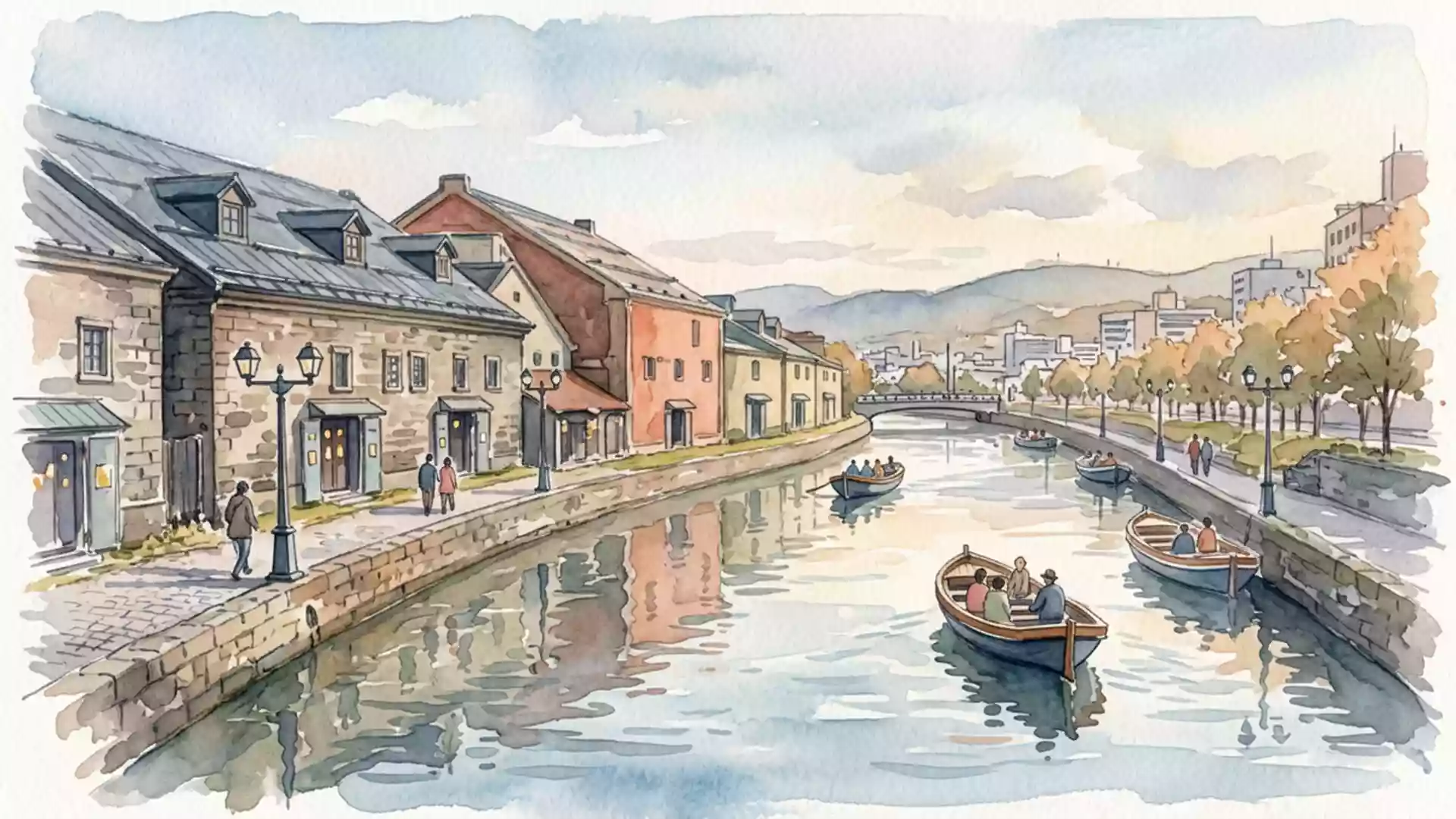
Otaru Unga, where stone warehouses meet the water
Published on 09/03/2026 at 06:50 | Editorial responsibility: Rafael Müller, Editor-in-Chief AD HOC NEWS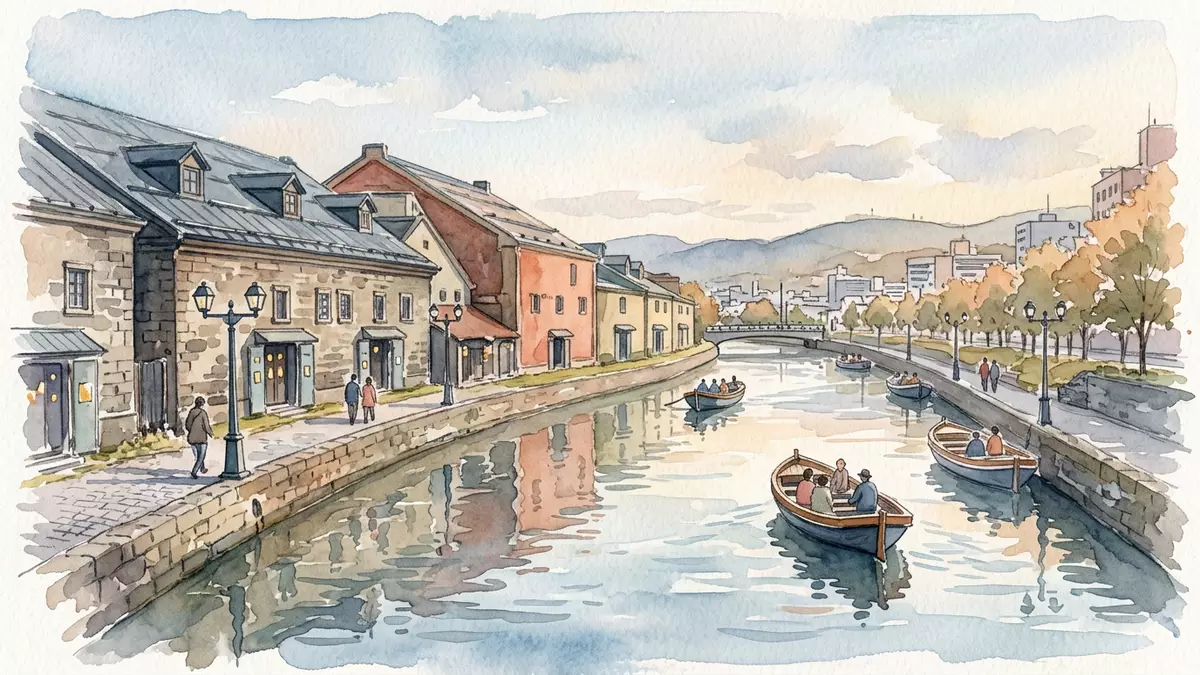
Otaru Unga in Otaru is the historic canal that threads water between rows of stone warehouses and the streets of Hokkaido’s port town, turning early twentieth-century infrastructure into a linear waterfront landscape. Completed in 1923, it preserves a slice of Japan’s maritime history where barges once linked ocean-going ships to storage buildings along a sheltered waterway.
A canal shaped by Otaru’s port history
Otaru Unga, known in English as the Otaru Canal, runs through the harbour district of Otaru on the coast of Hokkaido, parallel to the shoreline and close to streets such as Minatomachi.harbour district of Otaru The canal was constructed in the early twentieth century to serve small ships carrying cargo between larger vessels moored offshore and the warehouses lining the town’s shore, giving barges a sheltered inland route rather than relying solely on open docks.vital trading port in the early twentieth century
From 1914 to 1923, a series of narrow islands was reclaimed parallel to the shore, forming the canal as a waterway between the new land and the original coastline.reclaimed islands forming a 40-metre-wide waterway The completed canal became a central part of Otaru’s busy port in the first half of the twentieth century, linking the harbour to storage buildings that handled coal, grain and other cargoes associated with Hokkaido’s development.central part of the city's busy port Its alignment still follows the line of the historic quay, so walking along Otaru Unga today traces the same curve that once framed Japan’s trade with northern waters.curve of Hokkaido's historic port
Stone and brick warehouses along the water
One of the defining features of Otaru Unga is the sequence of stone and brick warehouses along its banks, built on reclaimed land after the canal was completed in 1923.warehouses built on reclaimed land after 1923 These sturdy masonry buildings face the water with walls and doors that once gave direct access from barges to storage floors, creating a continuous frontage where commercial architecture and the canal are closely intertwined.access for loading and unloading cargo
Several individual warehouses along Otaru Unga have documented dates and histories, adding detail to the canal’s industrial character. The former Shinoda Warehouse, completed in 1925, was used to store grain and imported goods, and stands as one of the few brick buildings along the canal.former Shinoda Warehouse completed in 1925 Next to it, the Shibusawa Warehouse also dates from 1925 and reflects the expansion of the Shibusawa-soko-bu company, which grew its warehousing operations from Tokyo to Otaru in 1915.Shibusawa Warehouse built the same year Together, these buildings contribute to the canal’s rhythm of stone and brick forms mirrored in the water.
From working waterway to restored promenade
Modern dock facilities were introduced in the 1930s, allowing large cargo ships to unload directly at new wharves and making the barge-based canal system less essential.new wharf in 1937 As shipping patterns shifted and Japan’s energy supply moved from coal to oil, Otaru’s role as a major port decreased and the canal fell into disuse.shift from coal to oil By the 1960s and 1970s many warehouses were standing empty, and plans were drawn up to reclaim large parts of the canal and clear neighbouring buildings for road projects.warehouses stood empty in the 1960s and 1970s
Local residents organised a canal preservation campaign, and their efforts led to a compromise in which part of the canal was landfilled but the remaining section was restored with a paved walkway and gas lamps, while historic warehouses were renovated instead of demolished.citizens' movement and restoration in the 1980s The waterfront thus became a public promenade with continuous historic facades, rather than a fragmented relic of port history.promenade constructed along the remaining section Walking along Otaru Unga today, the combination of paved quayside, gas lamps and repurposed warehouses gives clear visual cues to its industrial past while functioning as a contemporary urban space.
Visiting Otaru Unga: what travellers from Western Europe should know
- Otaru Unga runs through the harbour district of Otaru in Hokkaido, Japan, with its main section beside streets such as Minatomachi close to JR Otaru Station.
- The promenade along the canal is paved, with level quayside sections beside the water and steps linking the waterside path to adjacent streets and warehouse entrances.
- Otaru Unga lies within the urban fabric of Otaru, where Japanese is the official language and the currency is the yen.
Searching for Otaru Unga on social platforms
These links open searches for Otaru Unga on each platform.
Frequently asked questions about Otaru Unga
Where is Otaru Unga located?
Otaru Unga runs through the harbour district of Otaru in Hokkaido, Japan, close to JR Otaru Station and streets such as Minatomachi.
What can visitors expect when walking along the canal?
The canal is accompanied by a paved promenade, gas lamps and rows of historic stone and brick warehouses that have been restored for contemporary use.
What makes Otaru Unga distinctive among Japanese port landscapes?
Otaru Unga combines an early twentieth-century working waterway, masonry warehouses and a restored quayside promenade, preserving the form of a historic trading port within a modern city.