
Odaiba, Tokyo Bay’s engineered island cityscape
Published on 09/19/2026 at 10:52 | Editorial responsibility: Rafael Müller, Editor-in-Chief AD HOC NEWS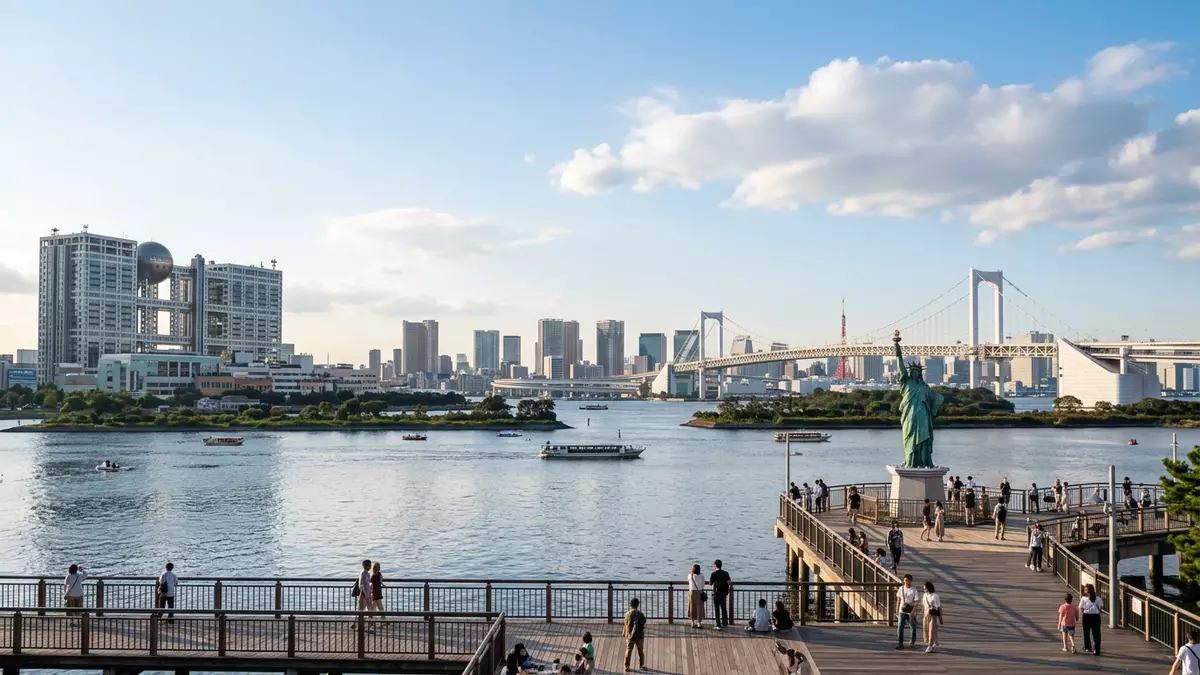
Odaiba in Tokio is a large artificial island in Tokyo Bay, where nineteenth-century defensive fort islands and late twentieth-century urban reclamation combine into a waterfront district of housing, offices and leisure spaces.
From Edo-period fort islands to an engineered bay
The story of Odaiba begins in the late Edo period, when the Tokugawa shogunate ordered coastal batteries on man-made islands to guard Edo, the city now known as Tokyo, against attack from the sea.late Edo Period fort islands The Japanese term “daiba” refers to these gun emplacements, and the name Odaiba grew out of this military landscape of low islands ringed by earthworks and cannon positions.name derived from the daiba batteries
Egawa Hidetatsu, an engineer serving the Tokugawa regime, oversaw the construction of multiple batteries off Shinagawa in 1853 after Commodore Matthew Perry’s American warships entered Edo Bay, fixing Odaiba firmly in the history of Japan’s encounter with Western naval power.Egawa Hidetatsu’s 1850s batteries Only part of the original chain of fort islands survived twentieth-century changes to the harbour, and one of the remaining sites, Daiba Park, occupies a low grassy island where the outlines of the old earthworks still recall the bay’s defensive past.
Late twentieth-century reclamation and city-making
The modern island of Odaiba began to take shape when the Port of Tokyo opened in 1941, launching extensive infill that joined earlier fort sites into much larger platforms for harbour and industrial uses.Port of Tokyo opening in 1941 In the late twentieth century, this reclaimed land was further consolidated and planned as a waterfront extension of the city, with straight embankments and engineered shorelines forming a continuous artificial island in Tokyo Bay.artificial island in Tokyo Bay
During the 1980s economic boom, Odaiba was chosen as a showcase for futuristic urban living, and large-scale investment laid out wide roads, elevated transport lines and serviced plots for offices, residential towers and commercial complexes.showcase for futuristic living When the speculative bubble ended in the early 1990s many sites remained underused, but rezoning later in that decade encouraged entertainment and retail development, turning Odaiba into a bayside district where shopping centres, hotels and event venues stand beside promenades facing the water.
Bridges, waterfront promenades and landmark structures
Seen from Tokyo Bay, Odaiba reads as a man-made extension of the metropolis, with the graceful sweep of the Rainbow Bridge carrying road and rail traffic across the water and linking the island back to the older city.Rainbow Bridge connection Along the waterfront, broad promenades give long views over the bay, while parks such as the grassy Daiba Park preserve fragments of the nineteenth-century fort landscape inside a district otherwise dominated by modern infrastructure and glass-fronted buildings.Daiba Park fort island
Odaiba’s skyline includes striking contemporary structures such as the headquarters of Fuji Television, with its spherical observation element, and large exhibition and convention halls known collectively as Tokyo Big Sight, which contribute to the perception of the island as a centre of media, business and events.Fuji TV Building and Tokyo Big Sight Against this backdrop, wide roads, elevated rail lines and open plazas make the district feel distinctly planned, in contrast with the denser, more irregular street patterns of many older Tokyo neighbourhoods.
Visiting Odaiba: what travellers from Western Europe should know
- Odaiba lies in Tokyo Bay south-east of central Tokyo, linked to the city by the Rainbow Bridge and served by urban rail lines that cross the water onto the island.
- The district stands entirely on reclaimed land, so approaches and internal streets are level, with long walks possible along waterfront promenades and through large-scale plazas.
- Odaiba faces the bay, and several parks and open spaces line the water, offering clear views across Tokyo Bay and exposure to maritime weather.
- The official language is Japanese and the currency is the yen.
- Entry requirements depend on your nationality; UK travellers can check the FCDO travel advice at gov.uk/foreign-travel-advice, Irish travellers the Department of Foreign Affairs at ireland.ie.
Searching for Odaiba on social platforms
These links open searches for Odaiba on each platform.Frequently asked questions about Odaiba
Where is Odaiba and what kind of place is it?
Odaiba is a large artificial island district in Tokyo Bay, forming part of Tokyo and linked to the older city by major bridges and rail lines.
What can visitors expect when exploring Odaiba?
Visitors encounter a planned waterfront landscape of wide streets, promenades, parks and contemporary buildings, all built on reclaimed land projecting into Tokyo Bay.
What makes Odaiba distinctive among Tokyo districts?
Odaiba stands out for its origin as Edo-period fort islands, its continuous reclaimed platform in the bay and landmark structures such as the Rainbow Bridge and Fuji TV headquarters.


