

Odaiba, Tokyo’s artificial island of fortresses and fun
Published on 08/20/2026 at 18:41 | Editorial responsibility: Rafael Müller, Editor-in-Chief AD HOC NEWS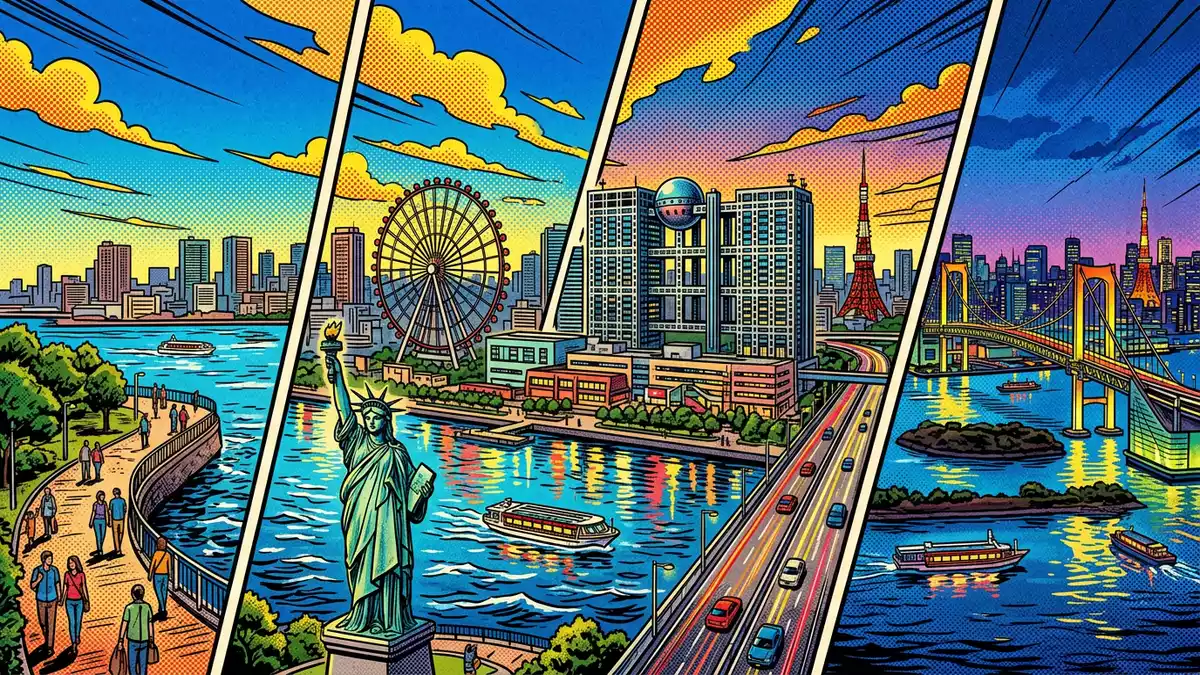
Odaiba is a large artificial island in Tokyo Bay, linked to central Tokio and transformed from nineteenth-century sea fortifications into a waterfront district of striking architecture, parks and leisure spaces.Artificial island in Tokyo Bay
From Edo’s cannon batteries to a reclaimed island
The story of Odaiba begins in the late Edo period, when the Tokugawa shogunate ordered a series of manmade fort islands in Tokyo Bay to guard Edo against attack from the sea.Late Edo Period fort islands In 1853, Egawa Hidetatsu oversaw the construction of multiple cannon batteries off Shinagawa after the arrival of Commodore Matthew Perry’s American “Black Ships”, creating a defensive chain that gave the area its name, since “daiba” refers to these batteries.Egawa Hidetatsu’s batteries
The original plan called for more batteries than were ultimately completed, and only part of the system survived into the twentieth century.Artificial defensive islands One of these historic sites, Daiba Park, occupies a low, grassy island linked by a narrow causeway, where earthworks and gun emplacements recall Odaiba’s origin as a maritime fort rather than a pleasure district.Daiba Park island
Redevelopment into Tokyo’s bayside district
The modern island of Odaiba began to take shape when the Port of Tokyo opened in the mid twentieth century and extensive land reclamation joined earlier fort sites into larger platforms.Port of Tokyo and reclamation During the 1980s “bubble economy”, Odaiba was selected as a showcase for futuristic urban living, and large-scale investment turned reclaimed land into a planned district of offices, housing, transport links and waterfront promenades.
After economic conditions changed in the early 1990s, development slowed and many plots stood empty, but rezoning in 1996 allowed commercial and entertainment uses that reshaped Odaiba into a mixed-use area with hotels, malls and leisure attractions.Rezoning for entertainment Today the island combines business districts with seafront parks, residential towers and elevated transport lines, giving it a distinctly planned feel compared with older parts of Tokio.
Landmarks, waterfront views and city beach
One of the most recognisable structures associated with Odaiba is the Rainbow Bridge, a road and rail bridge whose white towers carry traffic between central Tokio and the island across the upper reaches of Tokyo Bay.Rainbow Bridge connection Beside the water, Odaiba Seaside Park features an artificial sandy shoreline and an observation deck facing the bridge and the city skyline, giving the district the atmosphere of a bayside promenade rather than a purely industrial port.Odaiba Seaside Park
Near the park, a replica Statue of Liberty rises above the promenade, a gift from France associated with an exhibition in the late 1990s and now a frequent reference point in photographs of the area.Replica Statue of Liberty Further inland, the Fuji TV headquarters by architect Kenzo Tange introduces a different character, with a grid of interlocking blocks and a large sphere forming one of Tokio’s most distinctive late twentieth-century office buildings.Fuji TV headquarters
Visiting Odaiba: what travellers from Western Europe should know
- Odaiba lies in Tokyo Bay south-east of central Tokio and is connected to the mainland by the Rainbow Bridge as well as the Yurikamome elevated train line.
- The district includes long waterfront promenades and park paths; reaching viewpoints in Odaiba Seaside Park involves walking on level paved surfaces and sandy areas.
- Road access uses inner-city expressways and bridge ramps, and drivers cross the Rainbow Bridge to reach parking areas and commercial complexes on the island.
- The official language is Japanese and the currency is the yen.
- Entry requirements depend on your nationality; UK travellers can check the FCDO travel advice at gov.uk/foreign-travel-advice, Irish travellers the Department of Foreign Affairs at ireland.ie.
Searching for Odaiba on social platforms
These links open searches for Odaiba on each platform.Frequently asked questions about Odaiba
Where is Odaiba in relation to central Tokio?
Odaiba occupies reclaimed land in Tokyo Bay south-east of central Tokio, linked by the Rainbow Bridge and by rail via the Yurikamome line.
What can visitors expect when exploring Odaiba?
Visitors encounter seafront parks, shopping and entertainment complexes, office towers and transport infrastructure set on a planned artificial island facing the inner bay.
What makes Odaiba distinctive among Tokyo districts?
Its origin as Edo’s cannon battery line, its reclaimed-island layout and the combination of Rainbow Bridge views, city beach and bold contemporary architecture give it a particular character.


