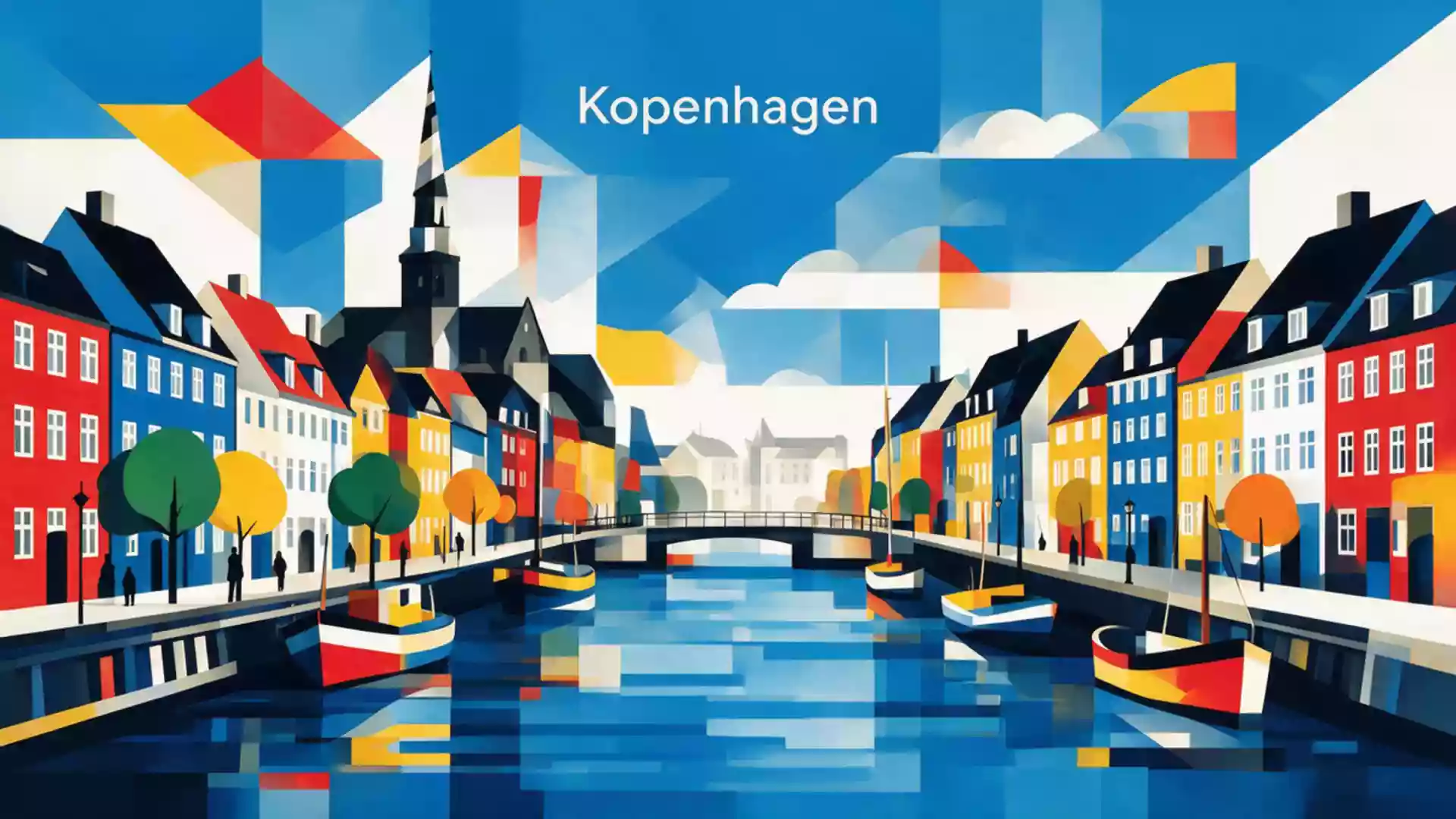
Nyhavn’s seventeenth-century canal frontage in Kopenhagen
Published on 09/07/2026 at 14:46 | Editorial responsibility: Rafael Müller, Editor-in-Chief AD HOC NEWS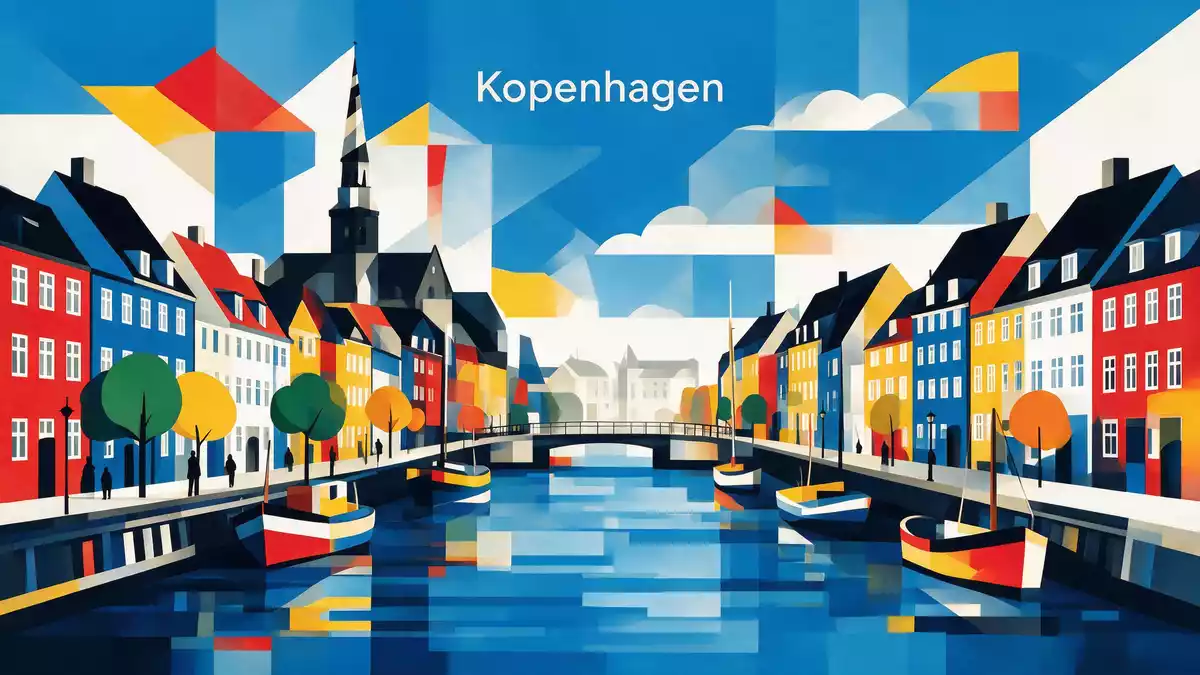
Nyhavn in Kopenhagen is the historic canal-side quarter where a seventeenth-century waterway runs straight towards Kongens Nytorv, framed by rows of painted townhouses on both quays. Dug under King Christian V in the early 1670s as a “new harbour” leading into the inner city, it still reads at a glance as a working port reshaped into a pleasure waterfront.
A straight canal between harbour and city square
Nyhavn takes the form of a man-made canal cut into the eastern edge of Kopenhagen as an additional harbour entrance to the commercial centre at Kongens Nytorv. The waterway was laid out under King Christian V between about 1670 and 1675, during a phase when the city’s rulers were strengthening its maritime connections and reshaping the waterfront.constructed by King Christian V The channel runs inland from the outer harbour as a straight basin, long enough to host continuous lines of buildings and short enough that the mouth and the landward square remain visually linked.a direct waterway between the Baltic approaches and the inner city
The excavation of Nyhavn in the early 1670s drew on labour from Danish soldiers and Swedish prisoners of war captured in the Dano–Swedish conflicts of 1658–1660.dug by Danish soldiers and Swedish prisoners of war The new harbour took over part of the role of the older city wharf at Gammel Strand, which had become constrained by the expansion of the royal castle at Christiansborg.replaced the old city wharf at Gammel Strand From the outset Nyhavn was a gateway: ships entered from the sea, followed the canal inland and unloaded cargo and fish within sight of the city’s principal square.
Painted canal-front townhouses and harbour life
What meets the eye most strongly at Nyhavn today are the tall, narrow townhouses lining both sides of the canal, many of them dating back to the seventeenth and eighteenth centuries.tall, narrow townhouses that line the canal Their facades are painted in strong colours such as yellow, red and orange, forming uninterrupted rows of colour above ground-floor premises that open directly to the quay. The plots behind these frontages tend to be long and narrow, a typical pattern of merchants’ houses in harbour districts.
Several buildings on Nyhavn have become historical anchors in their own right. The oldest known house along the canal stands at number 9 on the north side and dates from 1681, placing it within a decade of the harbour’s completion.No 9 is the oldest building along Nyhavn Canal, built in 1681 Many of the townhouses were originally constructed for merchants, ship captains and craftsmen whose work centred on the canal, with storage and workshops arranged along the plots behind the street frontage.originally constructed for merchants, sailors and craftsmen The same buildings now house restaurants, bars and apartments, but the relationship between doorways and quay still reveals their origins in harbour trade.
From seventeenth-century harbour to waterfront promenade
For roughly three centuries after its opening, Nyhavn functioned as one of Kopenhagen’s principal commercial harbours, filled with ships that brought cargo and fish straight into the urban core.commercial harbour for Christian V Tavern life, boarding houses and workshops grew around this traffic, giving the quarter a reputation as a sailors’ district with strong ties to the maritime trades.a working commercial harbour for the better part of 300 years The Danish writer Hans Christian Andersen lived at several different addresses on Nyhavn during the nineteenth century, tying the canal not only to shipping but also to Kopenhagen’s literary history.Hans Christian Andersen lived at three different addresses on Nyhavn
As vessels increased in size during the twentieth century, heavy cargo traffic shifted to deeper harbour basins, and the canal’s commercial role declined. The last phase of Nyhavn as a working port ended in the later 1960s, when regular commercial shipping stopped using the basin.the canal was closed to commercial shipping in 1967 In the decades that followed, local initiatives and planning decisions reshaped the quays into pedestrian waterfronts, particularly once sections of the north side were closed to cars around 1980.pedestrianisation began in 1980 The canal today reads as a promenade with historic shipping preserved in the basin, rather than an active cargo harbour.
Visiting Nyhavn: what travellers from Western Europe should know
- Nyhavn lies on the eastern side of central Kopenhagen, with the canal running inland from the waterfront towards Kongens Nytorv; city buses and the Metrorail network serve the nearby square.
- The quays are paved and largely level, but the canal-front houses often have steps up from the quay to their entrances, and the area can involve walking over cobbles.
- Nyhavn sits within the Danish capital Kopenhagen in Denmark; the official language is Danish and the currency is the Danish krone.
- Canal tour boats depart from the basin at Nyhavn, using the waterway itself as a starting point for harbour and city-centre cruises.
Searching for Nyhavn on social platforms
These links open searches for Nyhavn on each platform.Frequently asked questions about Nyhavn
Where is Nyhavn in Kopenhagen?
Nyhavn is a historic harbour canal on the eastern side of central Kopenhagen, running inland from the waterfront towards the city square at Kongens Nytorv.
What can visitors expect when walking along Nyhavn?
Visitors encounter a straight canal lined with seventeenth- and eighteenth-century townhouses, restaurant terraces on the quays and moored vessels in the basin.
What makes Nyhavn distinctive among Kopenhagen’s waterfronts?
Nyhavn combines a seventeenth-century harbour channel dug under King Christian V with continuous painted canal-front houses and a direct visual link to Kongens Nytorv.