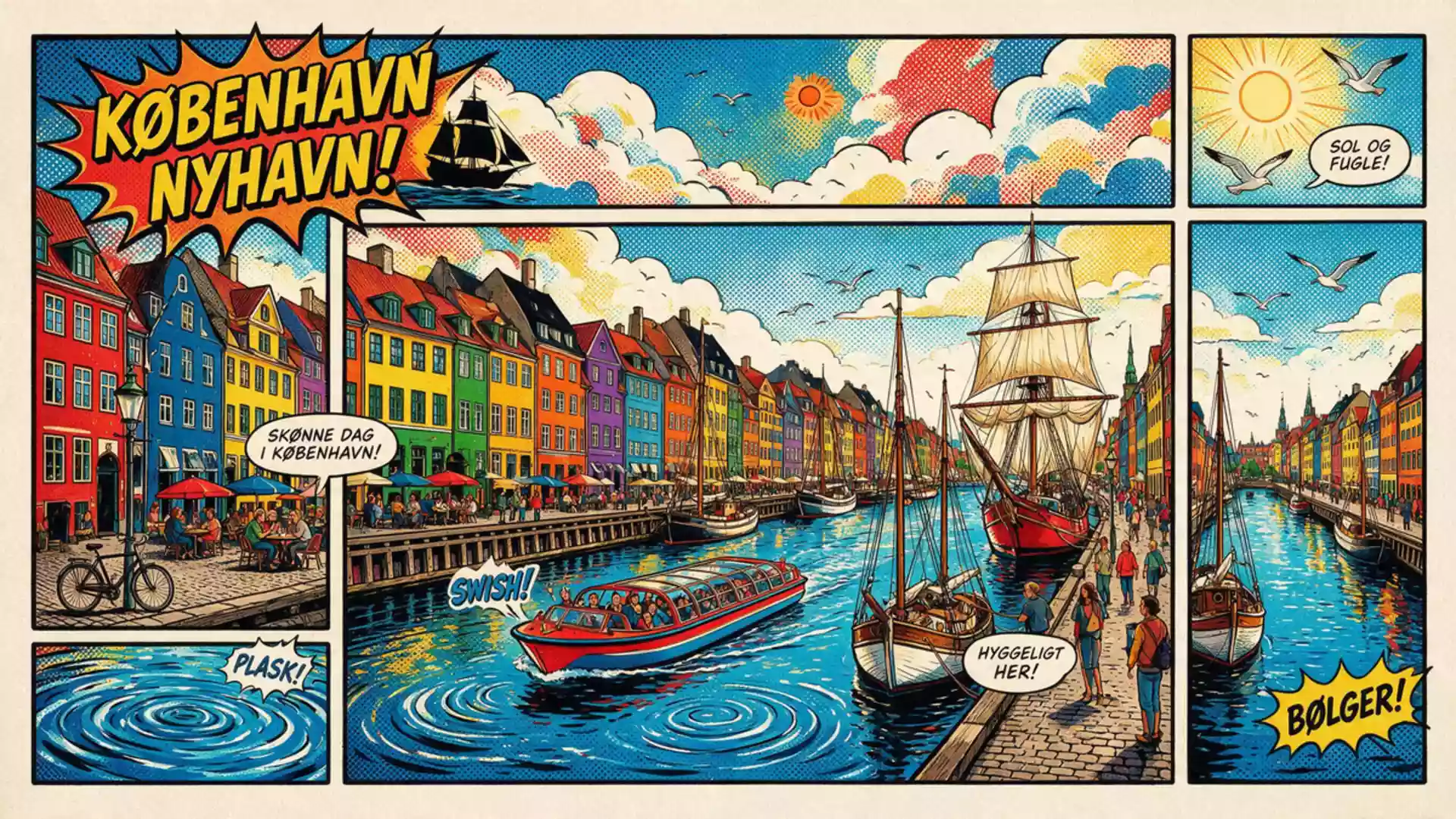
Nyhavn’s painted canal-front houses of Kopenhagen
Published on 08/23/2026 at 07:43 | Editorial responsibility: Rafael Müller, Editor-in-Chief AD HOC NEWS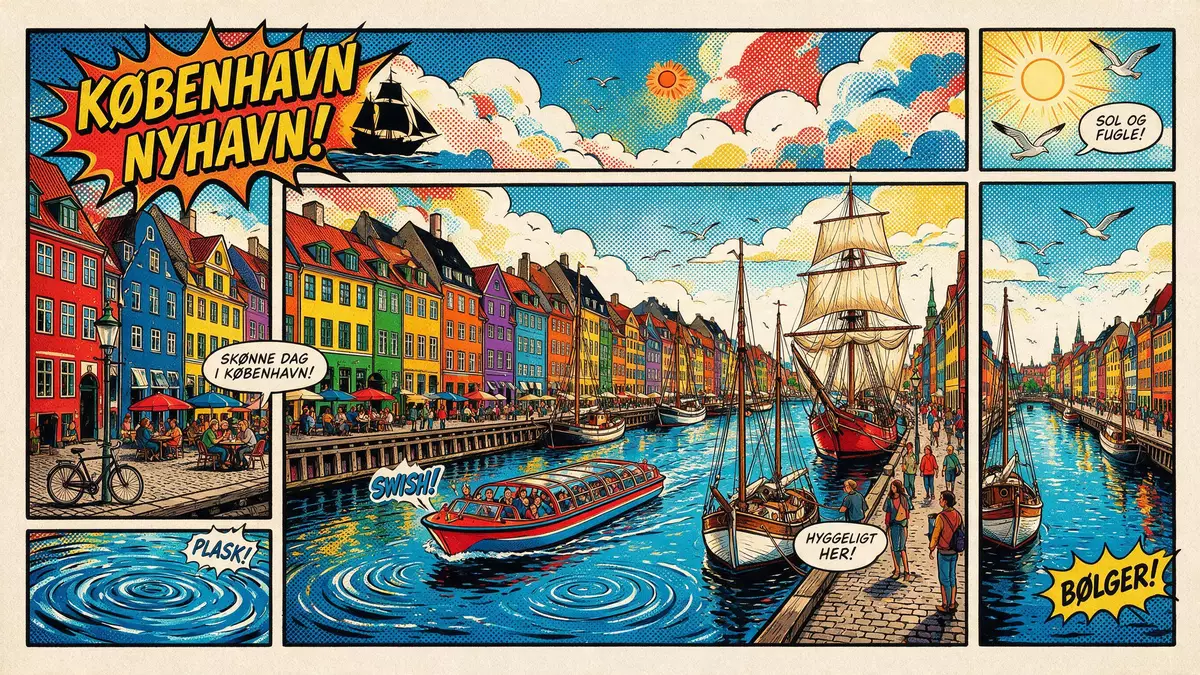
Nyhavn in Kopenhagen is a seventeenth-century canal quarter where rows of painted townhouses face a narrow harbour basin in the historic centre of Denmark’s capital. Dug in the 1670s under King Christian V as a “new harbour” leading towards Kongens Nytorv, it remains one of the clearest places in the city where the old working port and the later pleasure waterfront sit in the same view.
A seventeenth-century canal harbour cut into the city
Nyhavn began as a man-made waterway opened in the late seventeenth century to connect the outer harbour with Kongens Nytorv, the city square at the landward end of the canal.constructed under King Christian V The basin runs as a straight channel with quays on both sides, long enough for a line of merchants’ houses and short enough that the mouth and the square feel visually linked. The water itself is edged by stone and timber, with moorings for historic vessels that recall its maritime origin.Nyhavn meaning “New Harbor”
The canal was excavated in the early 1670s by labour drawn from Danish soldiers and Swedish prisoners of war, tying its origin directly to the aftermath of the Dano–Swedish conflicts.excavated between 1671 and 1673 For centuries, ships arrived here to unload cargo and fish, and the waterway functioned as one of Copenhagen’s main commercial harbours. The long quays provided space for workshops, warehouses and taverns, creating a dense band of port-related activity between the water and the city streets.
Painted townhouses and a working waterfront streetscape
What most visitors notice first at Nyhavn are the tall, narrow townhouses that line the canal, many dating from the seventeenth and eighteenth centuries.coloured houses on the north side Their facades are painted in strong hues such as yellow, red and orange, forming an uninterrupted row of colour above ground-floor premises. Windows rise in regular grids across three or more storeys, and steep roofs often carry dormers that emphasise the vertical rhythm of the streetscape. The oldest house, at number 9 on the north side, dates from 1681, anchoring the canal’s domestic architecture in the very early years of the district.house number 9 from 1681
Many of these buildings were originally constructed for merchants, sailors and craftsmen whose work centred on the harbour.merchants’ houses along both sides Ground floors opened directly onto the quay, while long plots stretched back from the canal, giving room for storage and workshops behind the street frontage. The canal’s reputation as a rough sailor’s quarter in the eighteenth and nineteenth centuries grew out of this working character, with taverns and alehouses occupying parts of the row. The writer Hans Christian Andersen lived in Nyhavn for around eighteen years at different addresses, placing one of Denmark’s most celebrated literary figures inside what was then a bustling harbour environment.Hans Christian Andersen lived at Nyhavn
From commercial harbour to heritage waterfront
Nyhavn’s role as a working port diminished in the twentieth century as ocean-going ships outgrew the canal and new harbour facilities were developed elsewhere in Copenhagen.decline of small-vessel traffic Land transport took over much of the freight movement, and the basin fell quiet. By the middle of that century the area was regarded as run down, with fewer ships and ageing buildings that reflected a long history of hard use rather than civic display.
In the mid-1960s, locals formed the Nyhavn Society to promote the revitalisation of the canal, and in the 1970s the municipality inaugurated Nyhavn as a harbour museum with restored houses and historic wooden ships moored along the quay.restoration and harbour museum The north quay became a pedestrian zone at the start of the 1980s, consolidating its role as a promenade lined with cafes and restaurants in former port buildings.pedestrianisation of the north quay in 1980 Historic ships now moor permanently along parts of the canal, turning the working harbour into a streetscape where maritime heritage, painted architecture and urban leisure occupy the same narrow band.
Visiting Nyhavn: what travellers from Western Europe should know
- Nyhavn lies in central Kopenhagen, running between the outer harbour and Kongens Nytorv, and is easily reached on foot from the city’s main shopping streets and squares.
- The quays are paved and level, but much of the canal edge is lined with moored vessels and outdoor seating, so moving along the waterfront involves weaving through narrow gaps and stepping around low bollards and mooring lines.
- The townhouses and quay buildings rise several storeys above the canal, and some viewing points involve staircases or elevated terraces that give higher perspectives over the water and roofs.
- Opposite Nyhavn across the water lies the modern Royal Danish Playhouse, and the larger inner harbour of Kopenhagen extends beyond the canal mouth with further quays and waterfront buildings.
Searching for Nyhavn on social platforms
These links open searches for Nyhavn on each platform.Frequently asked questions about Nyhavn
Where is Nyhavn located within Kopenhagen?
Nyhavn sits in central Kopenhagen, running inland from the city’s outer harbour towards the square of Kongens Nytorv, surrounded by historic streets and major public buildings.
What should visitors expect when walking along Nyhavn?
Visitors encounter a straight canal lined with painted seventeenth- and eighteenth-century townhouses, moored historic ships, outdoor seating along the quays and a lively waterfront atmosphere.
What makes Nyhavn distinctive among Kopenhagen’s waterfront areas?
Nyhavn combines a seventeenth-century man-made canal, long rows of colourful merchants’ houses and preserved wooden vessels, creating a compact harbour streetscape that shows several centuries of maritime and urban history in one place.