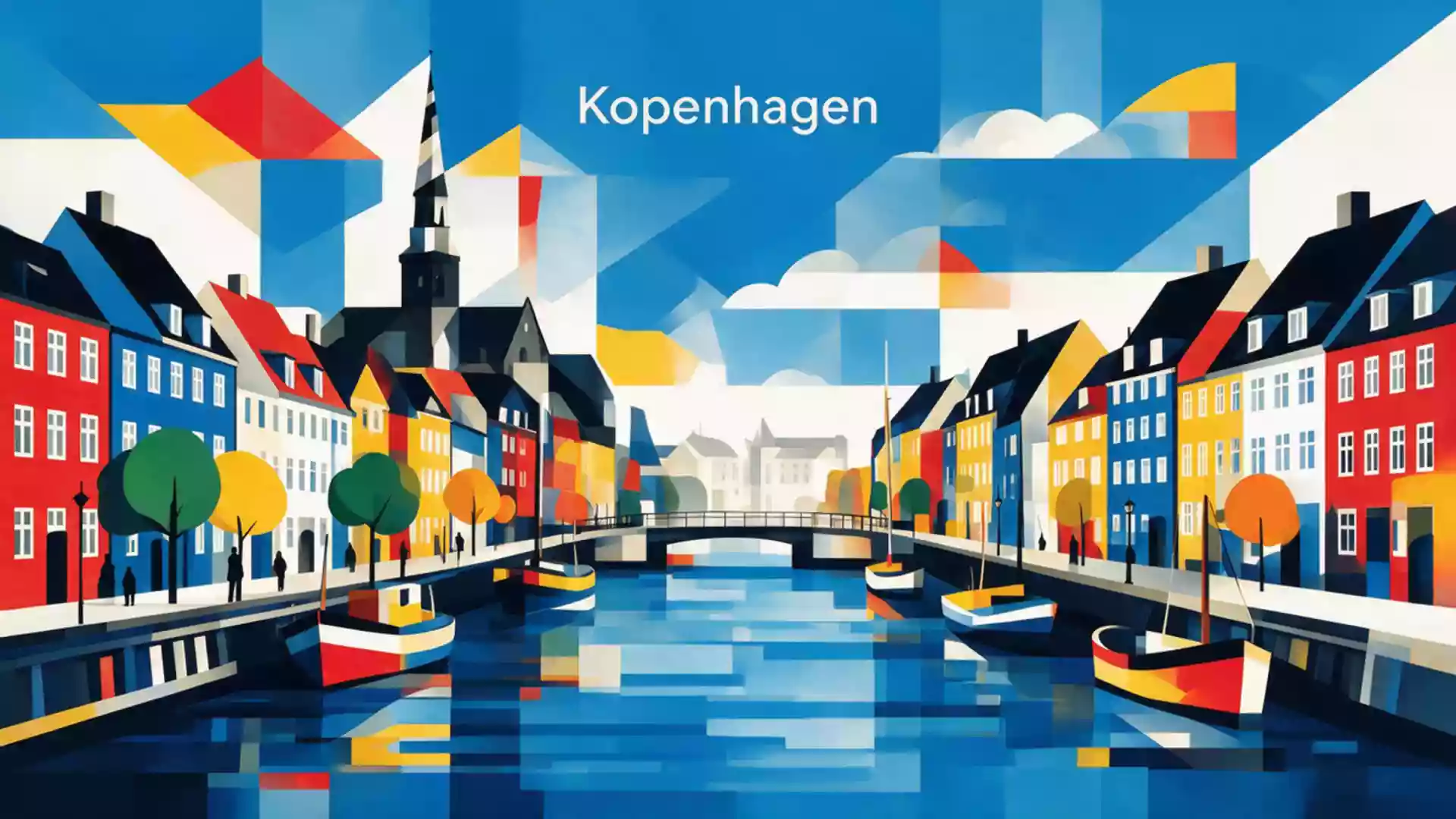
Nyhavn’s seventeenth?century canal and painted houses
Published on 09/05/2026 at 21:31 | Editorial responsibility: Rafael Müller, Editor-in-Chief AD HOC NEWS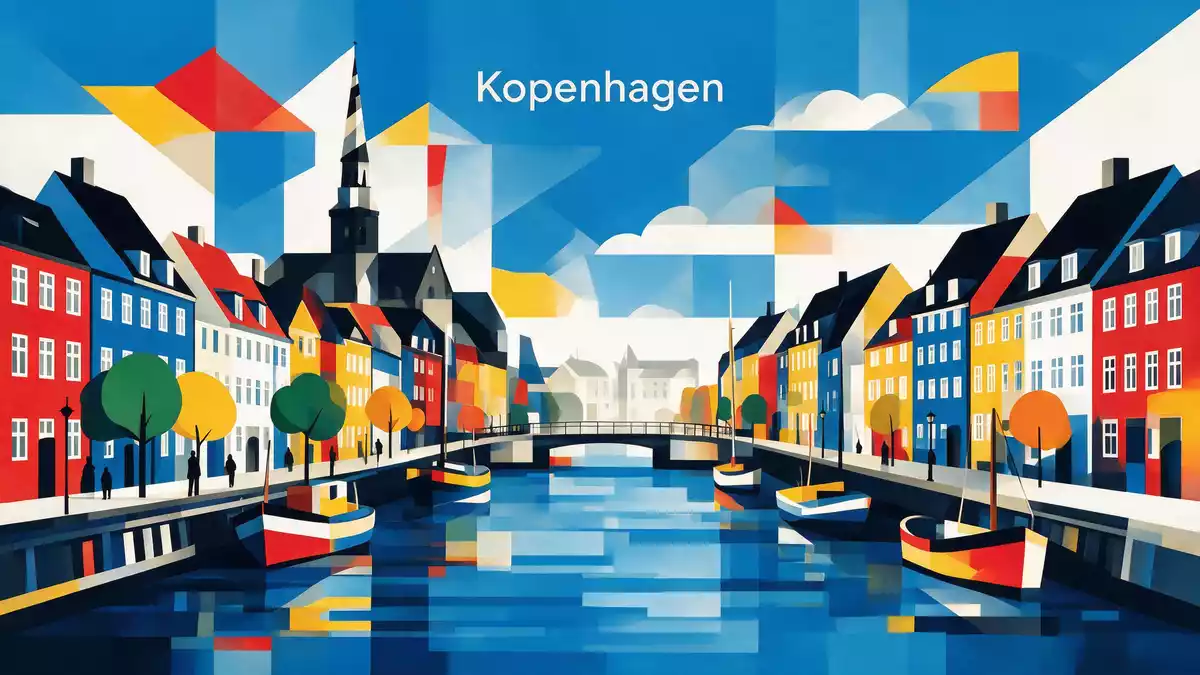
Nyhavn is the waterfront canal district in central Kopenhagen where seventeenth?century houses face a straight harbour basin and the city’s maritime past remains visibly close to the water. Dug in the early 1670s under King Christian V as a “new harbour” leading towards Kongens Nytorv, it links Denmark’s capital directly to the inner harbour while preserving one of its clearest historic port streets.
A straight canal cut into the old city
The defining feature of Nyhavn is its narrow, straight canal, excavated in the early 1670s to connect the sea with Kongens Nytorv at the landward end of the waterway.excavated in the early 1670s The basin runs as a man?made channel with quays on both sides, long enough for continuous frontages and short enough that the mouth towards the harbour and the square inland feel linked in a single line of sight.straight channel with quays on both sides
Nyhavn was established between 1670 and 1673 under Christian V as a gateway from the sea directly into the inner city, shifting a portion of Copenhagen’s harbour life into this new cut.established by King Christian V in 1670–1673 Labour for the canal included Swedish prisoners of war and Danish soldiers, tying the earthwork to the aftermath of seventeenth?century conflicts between Denmark and Sweden.excavated by Swedish prisoners of war From its opening in the seventeenth century the waterway functioned as a commercial harbour, bringing cargo and fish directly into the city centre.
Painted townhouses along the north and south quays
What stands out visually at Nyhavn are the tall, narrow townhouses lining both sides of the canal, many dating from the late seventeenth and eighteenth centuries.late 17th and early 18th centuries Their facades are painted in strong hues such as yellow, red and blue, forming uninterrupted rows of colour that rise above ground?floor premises along the water.painted townhouses in strong hues The long, narrow plots face directly onto the quay, so that the canal, the boats and the built front all read as one composition.
Among these houses is at least one older structure dating from 1681, illustrating how early Nyhavn’s domestic frontages grew along the harbour.house dating from 1681 Over time the buildings housed merchants, sailors and craftspeople linked to the port, with living quarters above and work at street level. In the nineteenth century the district acquired a reputation as a sailors’ quarter, with taverns, lodgings and other waterfront venues concentrated along the canal. Danish writer Hans Christian Andersen spent years living at Nyhavn, with documented addresses along the canal front, placing his everyday life within this harbour setting.Hans Christian Andersen lived along the canal
From working harbour to pleasure waterfront
For roughly three centuries Nyhavn functioned as a working commercial harbour, receiving merchant ships that unloaded cargo such as fish, coal and timber directly into the city.working commercial harbour for centuries As vessels grew larger in the twentieth century, heavy shipping shifted to other facilities around Copenhagen, and the canal’s role as a freight port declined.ocean?going ships grew larger and traffic moved Commercial cargo traffic ceased in the late 1960s, leaving the basin quieter and opening the way for a different waterfront character.canal closed to commercial shipping in 1967
In the later twentieth century civic and local initiatives began to restore Nyhavn’s harbour atmosphere while shifting its use towards promenading and hospitality. The north quay became pedestrian?focused, with pavements running alongside the canal, and the south quay developed as a line of bars and restaurants using the waterfront setting. Historic wooden ships moor along the canal, reinforcing the impression of a preserved harbour street even as its daily activity centres on cafés, terraces and canal tours rather than freight.
Visiting Nyhavn: what travellers from Western Europe should know
- Nyhavn lies in central Kopenhagen, extending from the city square Kongens Nytorv towards the inner harbour, and is reached on foot or by city public transport.
- The canal is flanked by stone quays and paved walkways; moving between the north and south sides involves crossing at designated bridge points and walking along level surfaces.
- Boat tours on the harbour depart from the Nyhavn quays, using low vessels that pass under several bridges and offer views back towards the painted houses and the wider waterfront.
- The official language is Danish and the currency is the Danish krone.
- Entry requirements depend on your nationality; UK travellers can check the FCDO travel advice at gov.uk/foreign-travel-advice, Irish travellers the Department of Foreign Affairs at ireland.ie.
Searching for Nyhavn on social platforms
These links open searches for Nyhavn on each platform.
Frequently asked questions about Nyhavn
Where is Nyhavn in Kopenhagen?
Nyhavn is in central Kopenhagen, running as a canal between Kongens Nytorv and the inner harbour, close to other historic districts and waterfront landmarks.
What should visitors expect at Nyhavn?
Visitors encounter a straight harbour canal lined with painted seventeenth? and eighteenth?century townhouses, stone quays, moored ships and terraces that emphasise the waterfront setting.
What makes Nyhavn distinctive among harbour districts?
Nyhavn combines a seventeenth?century man?made canal cut under King Christian V with continuous rows of historic painted houses, preserving a visible link between Copenhagen’s former working harbour and its present waterfront promenade.