
National Museum of Cambodia and its terracotta Khmer courtyards
Published on 09/14/2026 at 09:15 | Editorial responsibility: Rafael Müller, Editor-in-Chief AD HOC NEWS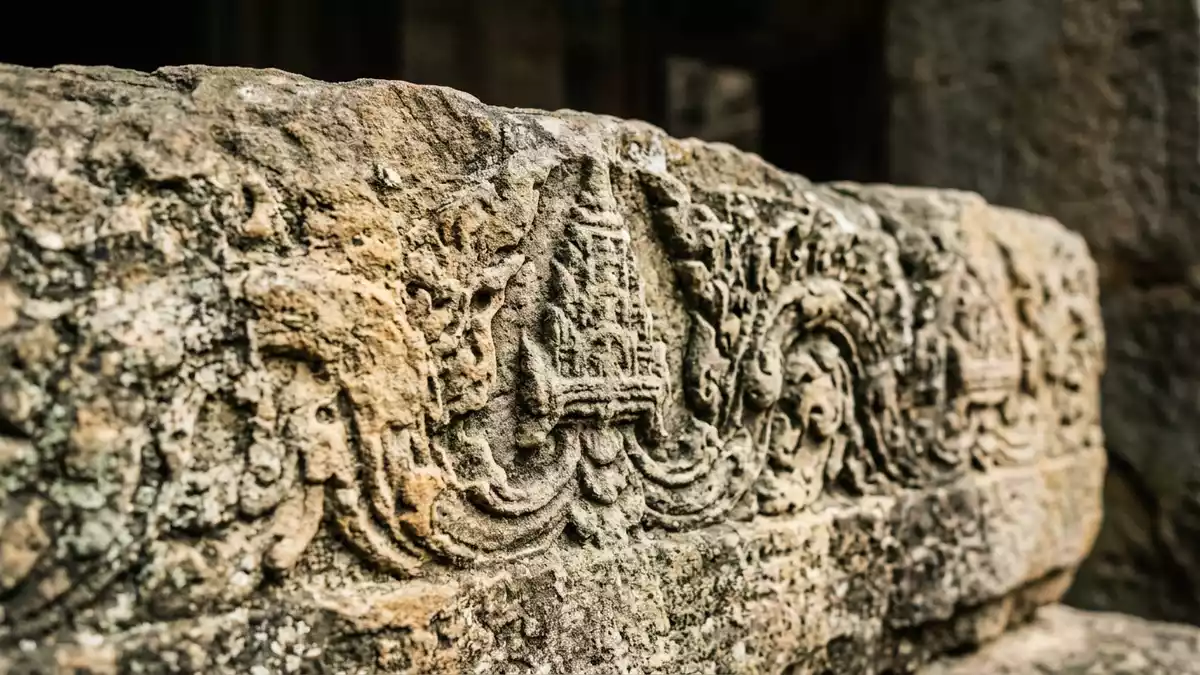
National Museum of Cambodia in Phnom Penh gathers centuries of Khmer art inside a terracotta-red complex of pavilions arranged around planted courtyards. Conceived under French colonial administration and inaugurated on 13 April 1920, it presents Cambodia’s artistic history in buildings that themselves echo classical Khmer temple forms.
Khmer temple architecture translated into a museum
The museum occupies a red-roofed ensemble in central Phnom Penh, a short distance north of the Royal Palace and facing the open expanse of Veal Preah Man square. Its buildings were designed in the late 1910s by George Groslier, a historian and curator born in Phnom Penh in 1887, who developed an architectural language that draws directly from traditional Khmer temple motifs.red-roofed, ochre-walled building Tiered roofs rise above the low brick volumes, with steeply layered profiles and prominent spires that recall the silhouettes of Angkor-period sanctuaries.tiered roofs and spires
The complex was constructed between 1917 and 1924, with its foundation stone laid in August 1917 and its initial group of pavilions completed in time for inauguration in 1920.foundation stone was laid on 15 August 1917 The buildings are arranged around a principal courtyard, with subsidiary gardens and smaller courtyard spaces extending from the central axis, so that galleries open directly onto planted quadrangles framed by colonnades.arranged around one principal courtyard Red brick and terracotta surfaces, colonnetted window frames and sculpted pediments give the ensemble a distinctive profile against the streets around Street 13.
A twentieth-century institution for Khmer art
The museum was conceived in the early twentieth century when Cambodia formed part of French Indochina, in an era when administrators sought formal homes for archaeological and artistic collections. George Groslier prepared the design and became the museum’s first curator, linking the architecture directly with the development of its holdings.conceived under French colonial administration Construction began in 1917, and the institution opened its doors during Khmer New Year in 1920 in the presence of King Sisowath, marking its formal entry into Phnom Penh’s cultural landscape.inauguration ceremony took place on 13 April 1920
The museum is recognised as Cambodia’s largest museum of cultural history and serves as the country’s principal historical and archaeological institution.Cambodia's largest museum of cultural history Its early years coincided with wider efforts to document and preserve Khmer heritage, with the museum’s galleries offering a central space in which material from temple sites, excavations and collections across the country could be brought together. The building’s classical Khmer architectural style reinforces this cultural role, so that the complex reads as part of the same tradition as the sculptures and artefacts displayed inside.
Collections spanning millennia of Khmer creativity
Inside the terracotta courtyards and pavilions, National Museum of Cambodia houses an extensive collection of Khmer art and related material from multiple historical periods. The holdings include stone sculpture, metalwork, wood carving and ceramics from prehistoric contexts, pre-Angkorian kingdoms such as Funan and Chenla, the Angkorian era between the ninth and fifteenth centuries, and post-Angkorian developments.collection covers the full span Galleries are broadly organised by period and material, with stone, metal, wood and ceramics forming core categories in which visitors encounter royal statues, temple reliefs, bronzes, inscriptions and everyday objects.sculpture, ceramics and ethnographic objects
The museum’s collections number well over ten thousand items, with a significant concentration of Angkor-period sculpture, including sandstone images and reliefs originally associated with Hindu and Buddhist temples.collection of more than 5,000 pieces Earlier material from the Funan and Chenla eras, together with bronzes and pottery, helps trace the development of Khmer artistic forms before the rise of Angkor, while later works from the post-Angkorian period show how motifs and techniques continued to evolve. Ethnographic objects and ritual items broaden the picture beyond monumental sculpture, presenting aspects of everyday and ceremonial life alongside the stone figures associated with major temple complexes.
Visiting National Museum of Cambodia: what travellers from Western Europe should know
- National Museum of Cambodia stands in central Phnom Penh on Street 13, just north of the Royal Palace and beside Veal Preah Man square, and is reached easily by city transport.
- The museum building forms a low-rise complex around courtyards, with covered walkways and interior galleries connected by flights of steps and passages that require steady walking.
- The official language in Cambodia is Khmer and the currency is the Cambodian riel.
- Entry requirements depend on your nationality; UK travellers can check the FCDO travel advice at gov.uk/foreign-travel-advice, Irish travellers the Department of Foreign Affairs at ireland.ie.
Searching for National Museum of Cambodia on social platforms
These links open searches for National Museum of Cambodia on each platform.
Frequently asked questions about National Museum of Cambodia
Where is National Museum of Cambodia located in Phnom Penh?
National Museum of Cambodia stands in central Phnom Penh on Street 13, just north of the Royal Palace and beside Veal Preah Man square.
What can visitors expect to see inside the museum?
Visitors encounter Khmer sculpture, ceramics, bronzes, inscriptions and ethnographic objects arranged in galleries that span periods from prehistoric material through the Angkorian era to later works.
What makes National Museum of Cambodia distinctive among Cambodian museums?
Its terracotta-red complex of Khmer-style pavilions and courtyards, designed by George Groslier and inaugurated in 1920, houses Cambodia’s largest museum collection of cultural history and Khmer art.


