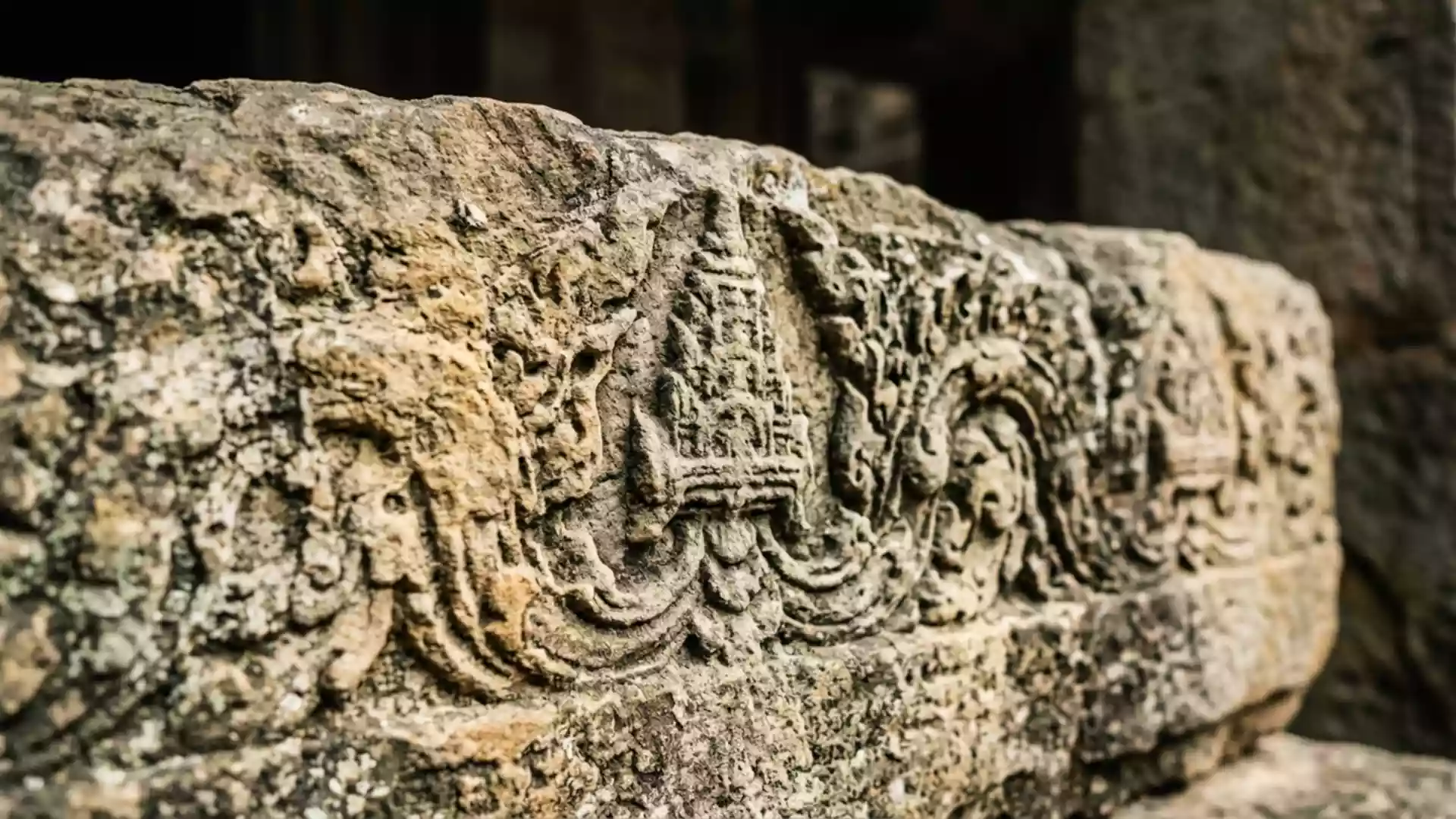
National Museum of Cambodia and its red Khmer courtyard ensemble
Published on 09/11/2026 at 21:42 | Editorial responsibility: Rafael Müller, Editor-in-Chief AD HOC NEWS
National Museum of Cambodia in Phnom Penh is a purpose-built complex of red pavilions organised around a planted courtyard, conceived in the early twentieth century as a home for Khmer art and archaeology. Designed by French historian and architect George Groslier and inaugurated on 13 April 1920 during Khmer New Year, it anchors Cambodia’s national collection in a building that itself echoes classical temple forms of the Angkorian period.
A red Khmer revival museum beside the Royal Palace
The museum stands on Street 13 in central Phnom Penh, just north of the Royal Palace complex, and forms one of the most distinctive ensembles in the city’s older grid of streets.National Museum of Cambodia Street 13 From the outside, visitors encounter a sequence of terracotta and red-painted pavilions whose tiered roofs and projecting spires draw directly from Khmer temple architecture, bringing motifs familiar from Angkor into an urban museum setting. The foundation stone of the complex was laid on 15 August 1917, and construction extended into the early 1920s as further wings were added to the eastern façade.foundation stone laid in 1917
George Groslier, born in Phnom Penh in 1887, developed the design as an enlarged version of Cambodian temple prototypes seen on ancient bas-reliefs, translated into a museum scale so that galleries, verandas and roofs all speak the same architectural language.traditional Khmer architecture The complex is arranged so that four principal galleries frame a central open courtyard planted with lotus ponds and tropical shrubs, creating a sequence in which visitors move between shaded interior halls and an outdoor core that retains the calm of a cloister. Roof lines feature ornamental ridges and sculpted pediments adapted from classical Khmer forms, with colonnetted window frames and decorative lintels giving the façades a layered profile along the street.
From colonial Musée Albert Sarraut to national institution
The institution that became National Museum of Cambodia was conceived under French colonial administration in the years before the First World War, when Cambodia formed part of French Indochina.founded at the initiative of Albert Sarraut Governor General Albert Sarraut supported the creation of a museum dedicated to Khmer antiquities, and George Groslier became its first curator, directing both the early collections and the architecture. The museum opened partially in 1918 and was inaugurated under the name Musée Albert Sarraut on 13 April 1920 in the presence of King Sisowath, marking its formal entry into Phnom Penh’s cultural landscape.inaugurated on 13 April 1920
In the years leading up to Cambodian independence in 1953, control of the museum shifted from French to Cambodian authorities, and the institution was renamed National Museum of Cambodia to reflect its role in the country’s own heritage policy.renamed National Museum of Cambodge In 1968 the central section of the east façade was renovated under the supervision of Cambodian architect Vann Molyvann, a leading figure in New Khmer Architecture, in a project that refreshed the building fabric while retaining the courtyard plan and temple-inspired silhouette.renovation under Vann Molyvann in 1968 After the disruptions of the Khmer Rouge period, the museum reopened in 1979, once again on Khmer New Year, and continued to develop its collections and exhibitions under Cambodian management.
Collections spanning a millennium of Khmer art
National Museum of Cambodia is Cambodia’s largest museum of cultural history and houses one of the world’s richest collections of Khmer sculpture, ceramics and ethnographic objects.great collections of Khmer cultural material The collection, numbering well over ten thousand objects, spans periods from prehistoric finds through the pre-Angkorian Funan and Chenla kingdoms, the Angkorian era from the ninth to the fifteenth century, and post-Angkorian works that trace later developments in Cambodian art.four main categories Galleries are broadly organised by period and material, with stone, metal, wood and ceramics forming the core categories in which visitors encounter royal statues, temple reliefs, bronzes, inscriptions and everyday artefacts.
Many of the most important sculptures removed from Angkor’s temples are displayed here, including sandstone figures from Angkor Wat and Angkor Thom that show Hindu and Buddhist iconography at monumental scale.sculptures from Angkor Wat and Angkor Thom Pre-Angkorian pieces introduce earlier stylistic phases from the first to the eighth century, while later galleries present post-Angkorian works that reveal how religious and artistic traditions continued to evolve. Together the objects trace a long arc of Khmer craftsmanship and belief, and the courtyard layout offers regular pauses between dense sequences of sculpture, with lotus ponds and planting providing a contrasting setting to the stone and bronze works inside.
Visiting National Museum of Cambodia: what travellers from Western Europe should know
- National Museum of Cambodia stands on Street 13 in Phnom Penh’s Daun Penh district, just north of the Royal Palace and Silver Pagoda complex near the Tonle Sap riverfront.
- The museum complex is low-rise and arranged around a central courtyard; visiting involves walking between several pavilions connected by covered galleries and crossing open garden spaces on level ground.
- The official language is Khmer and the currency is the Cambodian riel.
- Entry requirements depend on your nationality; UK travellers can check the FCDO travel advice at gov.uk/foreign-travel-advice, Irish travellers the Department of Foreign Affairs at ireland.ie.
Searching for National Museum of Cambodia on social platforms
These links open searches for National Museum of Cambodia on each platform.
Frequently asked questions about National Museum of Cambodia
Where is National Museum of Cambodia located in Phnom Penh?
National Museum of Cambodia stands on Street 13 in the Daun Penh district of Phnom Penh, just north of the Royal Palace and close to the Tonle Sap riverfront.
What should visitors expect on a visit to the museum?
Visitors move through a sequence of Khmer-style pavilions around a central courtyard, viewing stone, metal, wood and ceramic works that trace Cambodian art from prehistoric periods through Angkor to later centuries.
What makes National Museum of Cambodia distinctive among museums in Cambodia?
The museum combines a purpose-built early twentieth-century complex designed by George Groslier in temple-inspired Khmer style with the country’s leading collection of Khmer sculpture and cultural material.