
Muttrah Souq and the harbour market of Maskat
Published on 09/15/2026 at 19:17 | Editorial responsibility: Rafael Müller, Editor-in-Chief AD HOC NEWS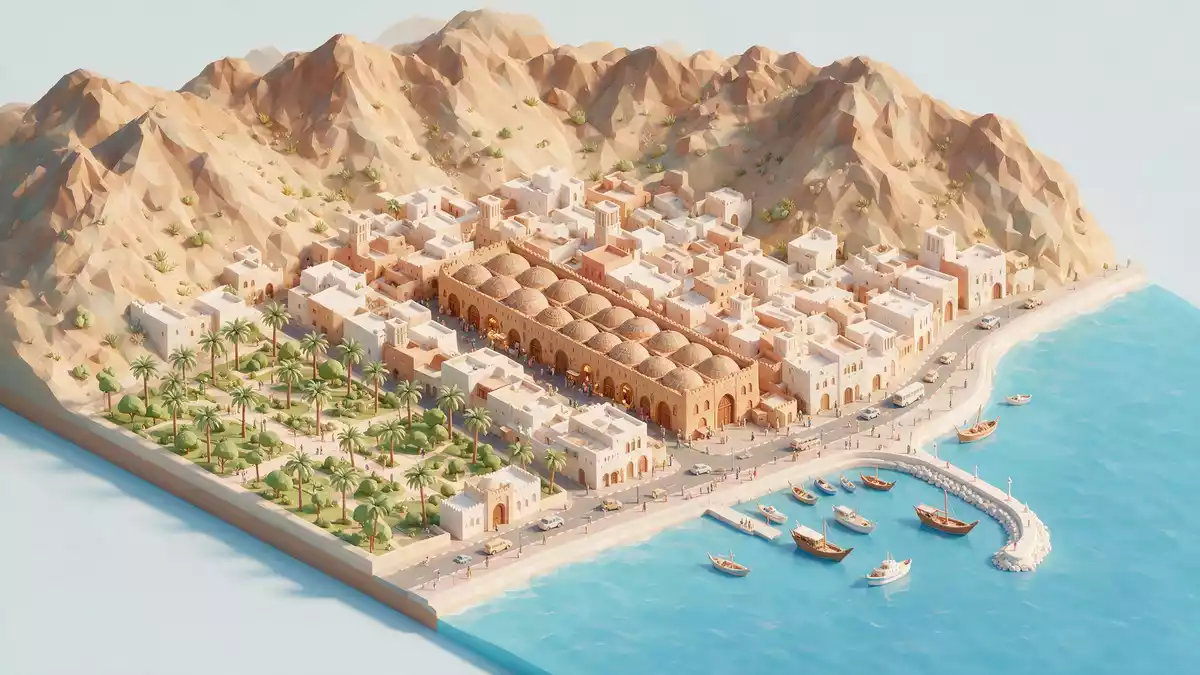
Muttrah Souq in Maskat is a covered market beside the harbour, set just inland from the Corniche. Its timber-roofed alleys and compact lanes give the place a clear shape from the first steps inside.
Harbourfront lanes beneath timber roofs
The souq sits in the Muttrah district, one of the oldest port quarters in the capital, and its market streets keep close to the waterfront. Muttrah district and the Corniche frame the approach, with the bay and harbour activity nearby.
Inside, the passageways branch into a dense network of stalls and small shops. Timber roofing over the alleys and closely packed units give the market its enclosed character, while the main walkways remain busy with goods that range from household items to perfume, silver and textiles.
Muttrah Souq and Oman’s trading memory
Muttrah Souq is linked to the port history of Maskat and to Oman’s wider maritime world. The market belongs to a harbour district long connected with Indian Ocean trade, and its commercial life reflects that setting. goods that passed through the Muscat harbour help explain why the souq remains tied to the city’s older mercantile identity.
The market is also part of the everyday urban fabric of the district, not a detached monument. Its covered alleys, shop fronts and narrow runs between units create a place that works as market space first and heritage setting second.
Materials, merchandise and the market plan
The architecture is modest rather than monumental. Timber, plastered walls and close-set roofs shape the interior, and the passages turn between a sequence of small retail spaces.
That arrangement leaves room for a broad mix of goods associated with Omani life and travel trade. Incense, spices, jewellery, fabrics, sandals and household wares appear alongside souvenirs, making the souq a working commercial quarter with a recognisable local character.
Visiting Muttrah Souq: what travellers from Western Europe should know
- Muttrah Souq stands in the Muttrah district of Maskat, beside the Corniche and close to the harbour. Taxis and local buses reach the area from the city centre.
- The interior has covered alleys, turning passages and a tight plan. Comfortable footwear helps on the uneven walks between the stalls.
- The official language is Arabic and the currency is the Omani rial.
- Entry requirements depend on your nationality; UK travellers can check the FCDO travel advice at gov.uk/foreign-travel-advice, Irish travellers the Department of Foreign Affairs at ireland.ie.
- The market links naturally with the Corniche, where the waterfront promenade follows the bay beside old Muttrah.
Searching for Muttrah Souq on social platforms
These links open searches for Muttrah Souq on each platform.
Frequently asked questions about Muttrah Souq
Where is Muttrah Souq?
It stands in the Muttrah district of Maskat, close to the harbour and the Corniche waterfront. The setting places the market within one of the city’s older commercial quarters.
What does a visit involve?
Expect covered lanes, small shops and a compact plan that turns and branches between stalls. The market combines retail trade with a strong sense of place.
What makes it distinctive?
Its harbourfront setting and timber-roofed alleys define it. Muttrah Souq links everyday market life with the maritime history of Maskat.


