
Museo Nacional Centro de Arte Reina Sofia and the art of modern Spain
Published on 09/04/2026 at 14:08 | Editorial responsibility: Rafael Müller, Editor-in-Chief AD HOC NEWS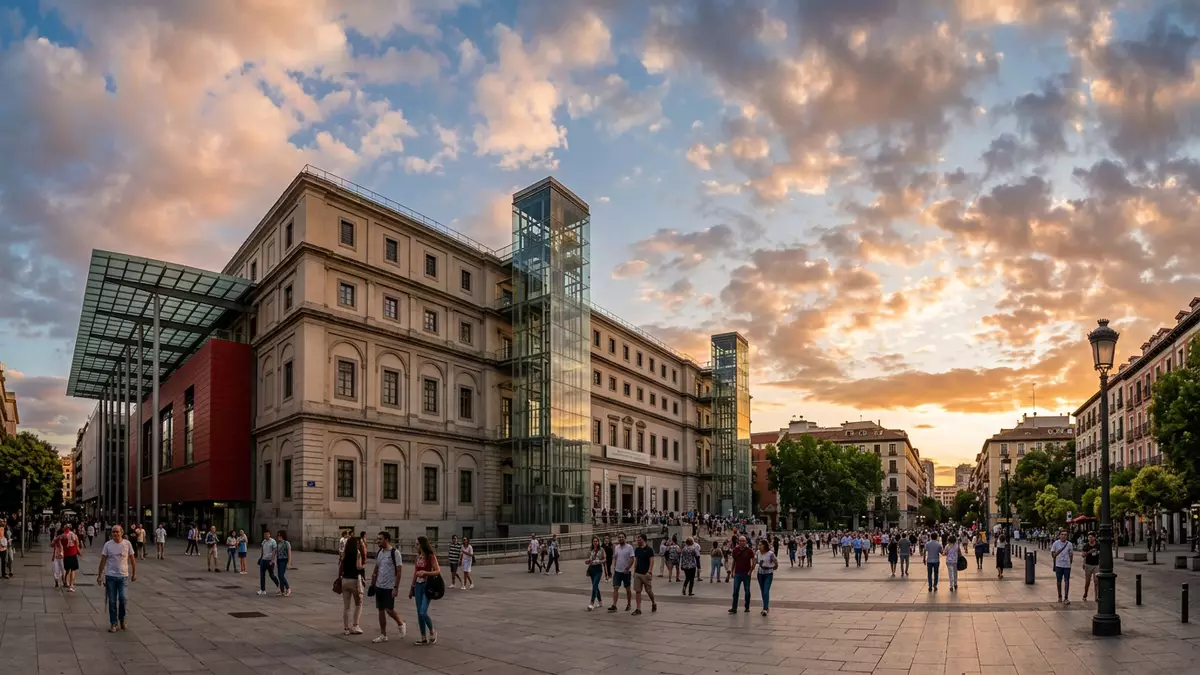
Museo Nacional Centro de Arte Reina Sofia in Madrid brings twentieth?century Spanish art into a former hospital complex, with Pablo Picasso’s “Guernica” at the heart of its collection. Opened as a national museum in 1992, it stands on Calle Santa Isabel in the Atocha district, forming one corner of Madrid’s so?called Golden Triangle of Art.
From eighteenth?century hospital to national art museum
The main building of Museo Nacional Centro de Arte Reina Sofia occupies an eighteenth?century hospital structure whose austere masonry and long wings give the museum a sober, institutional outline. In the twentieth century this complex was adapted and extended to house Spain’s national museum of twentieth?century art, an institution officially inaugurated in 1992 and named in honour of Queen Sofía.Spain's national museum of 20th-century art The address, Calle Santa Isabel 52, places the museum within easy reach of Estación del Arte and Madrid Atocha railway stations, on the southern side of the Prado axis.Calle Santa Isabel 52 in Madrid
Once inside, the hospital layout gives way to galleries, courtyards and circulation spaces adapted to modern exhibition use. The historic masonry is punctuated by large panes of glass and metal additions, and the ensemble extends beyond the original block to include later wings and external towers that hold lifts and stairs. The reuse of a medical complex as an art museum creates a clear contrast: long, regular corridors now display paintings and sculpture, and former wards form white?walled rooms devoted to avant?garde movements.
Modern and contemporary Spanish art, centred on “Guernica”
Museo Nacional Centro de Arte Reina Sofia is best known for its role as the principal museum for twentieth?century and contemporary art in Spain, with a collection that foregrounds the country’s own artists. The most famous single work on display is Pablo Picasso’s “Guernica”, the vast anti?war painting created in 1937 in response to the bombing of the Basque town of the same name, which occupies a dedicated gallery and acts as a focal point for related material from the Spanish Civil War era.Picasso's Guernica gallery Works by Salvador Dalí and Joan Miró appear alongside other Spanish and international figures of the twentieth century, giving the museum’s collection a strong modernist and surrealist thread.
The galleries are organised thematically and chronologically, tracing the development of modern art across the decades and its relationship with Spain’s political and social history. One strand follows the emergence of avant?garde movements before the Civil War, another examines art under dictatorship, and later rooms focus on contemporary practice from the late twentieth century onwards. Beyond painting and sculpture, Museo Nacional Centro de Arte Reina Sofia holds photography, film, installations and archival material, supported by a substantial art library and documentation centre.twentieth and twenty-first-century art collection
A place within Madrid’s Golden Triangle of Art
Geographically, Museo Nacional Centro de Arte Reina Sofia forms the southern vertex of Madrid’s Golden Triangle of Art, a cluster of major museums along the Paseo del Prado. Together with Museo Nacional del Prado and Museo Nacional Thyssen?Bornemisza, it creates a dense concentration of art institutions within walking distance of one another.part of Madrid's Art Triangle The Reina Sofia’s focus on twentieth?century and contemporary work complements the Prado’s collections of older masters and the Thyssen?Bornemisza’s broad historical range, making the trio a natural sequence for anyone mapping out Madrid’s art landscape.
The museum stands near busy transport infrastructure, bordered by the Atocha railway complex and arterial streets carrying traffic towards the historic centre. Despite this, the museum’s interior courtyards and enclosed galleries create a distinct environment defined by artworks and architectural forms rather than the surrounding roads. Terraces and open spaces between wings offer glimpses of Madrid’s skyline and connections to the neighbouring Lavapiés and Letras districts, whose streets provide cafés, bookshops and smaller cultural venues that echo the museum’s emphasis on contemporary creativity.location near Atocha
Visiting Museo Nacional Centro de Arte Reina Sofia: what travellers from Western Europe should know
- Museo Nacional Centro de Arte Reina Sofia stands on Calle Santa Isabel in central Madrid, close to Estación del Arte and Madrid Atocha railway and metro stations, with city buses serving the surrounding streets.
- The museum complex occupies an adapted hospital with several storeys, connected by lifts and staircases; visits involve substantial walking through long corridors and galleries.
- Madrid is the capital of Spain; the official language is Spanish and the currency is the euro.
- Museo Nacional Centro de Arte Reina Sofia sits within easy walking distance of Museo del Prado and Museo Nacional Thyssen?Bornemisza, making it straightforward to combine visits to the three institutions.
Searching for Museo Nacional Centro de Arte Reina Sofia on social platforms
These links open searches for Museo Nacional Centro de Arte Reina Sofia on each platform.Frequently asked questions about Museo Nacional Centro de Arte Reina Sofia
Where is Museo Nacional Centro de Arte Reina Sofia located in Madrid?
Museo Nacional Centro de Arte Reina Sofia stands at Calle Santa Isabel 52 in central Madrid, close to Estación del Arte and Madrid Atocha railway and metro stations.
What can visitors expect inside Museo Nacional Centro de Arte Reina Sofia?
Visitors encounter galleries of twentieth?century and contemporary art, including Picasso’s “Guernica”, works by Dalí and Miró, and spaces for film, installations and research collections.
What makes Museo Nacional Centro de Arte Reina Sofia distinctive among Madrid’s museums?
Its setting in a former hospital building, its status as Spain’s national museum of twentieth?century art, and its dedicated “Guernica” gallery distinguish it within Madrid’s Golden Triangle of Art.


