
Museo del Prado and Madrid’s neoclassical long galleries
Published on 08/28/2026 at 14:06 | Editorial responsibility: Rafael Müller, Editor-in-Chief AD HOC NEWS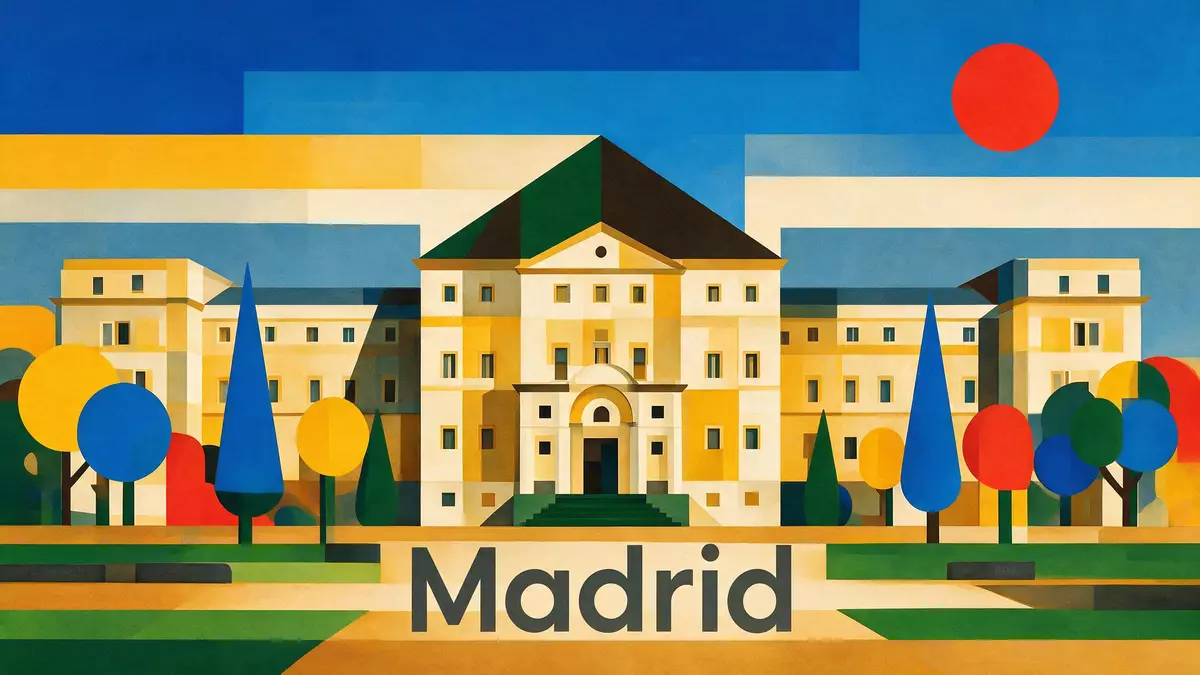
Museo del Prado in Madrid is a neoclassical art museum housed in Juan de Villanueva’s building, opened in 1819. Its long galleries and restrained stone exterior give the place a calm, formal presence in the city.
Juan de Villanueva’s building in Madrid
The building that houses Museo del Prado was designed by Juan de Villanueva in 1785, under Charles III. It opened to the public in 1819, and the museum remains tied to that late eighteenth-century architectural frame.
The building’s plain geometry and long, measured facade belong to Spanish neoclassicism. Inside, the museum’s rooms hold a collection that ranges across European art, with a particularly strong focus on Spanish painting.
From royal collections to public museum
Museo del Prado grew out of the Spanish royal collections gathered under the Habsburg and Bourbon monarchies. The institution’s history is tied to Spanish monarchs of the sixteenth and seventeenth centuries, whose collecting shaped the museum’s core holdings.
The museum’s identity is therefore not only architectural but also historical. It preserves a public view of court taste, court portraiture and religious painting, while the building itself keeps the institutional memory of an earlier Madrid shaped by monarchy and ceremony.
The collection inside the Prado galleries
The Prado is best known for painting, especially works by Spanish masters and major European schools. Visitors encounter large canvases, devotional images and portraits arranged in rooms that suit the scale of the works.
The museum also holds drawings, prints and other works on paper, adding depth to the more famous galleries. That breadth makes the Prado more than a single-room destination: it is a layered museum whose collection reflects centuries of collecting and display.
Visiting Museo del Prado: what travellers from Western Europe should know
- The museum stands on Paseo del Prado in central Madrid. Metro and rail connections serve the area, including Estación del Arte and Atocha.
- The building is large and linear, with long galleries rather than compact rooms. A visit involves a substantial amount of walking through successive spaces.
- Madrid is the capital of Spain, and the official language is Spanish and the currency is the euro.
- The museum is near the city’s art axis, with the Thyssen-Bornemisza and Reina Sofía museums in the same cultural district.
Searching for Museo del Prado on social platforms
These links open searches for Museo del Prado on each platform.
Frequently asked questions about Museo del Prado
Where is Museo del Prado?
Museo del Prado is in central Madrid on Paseo del Prado. It sits within the city’s main museum district.
What does a visit involve?
The museum means long galleries, large paintings and a strong emphasis on Spanish art. The building’s scale makes the visit more extensive than a single-room museum stop.
What makes Museo del Prado distinctive?
Its identity lies in the combination of Juan de Villanueva’s neoclassical building, the 1819 opening and the royal collections behind the museum. That mix gives the place a clear historical and artistic continuity.


