
Murano, Venice’s island of glass and quiet canals
Published on 09/15/2026 at 18:14 | Editorial responsibility: Rafael Müller, Editor-in-Chief AD HOC NEWS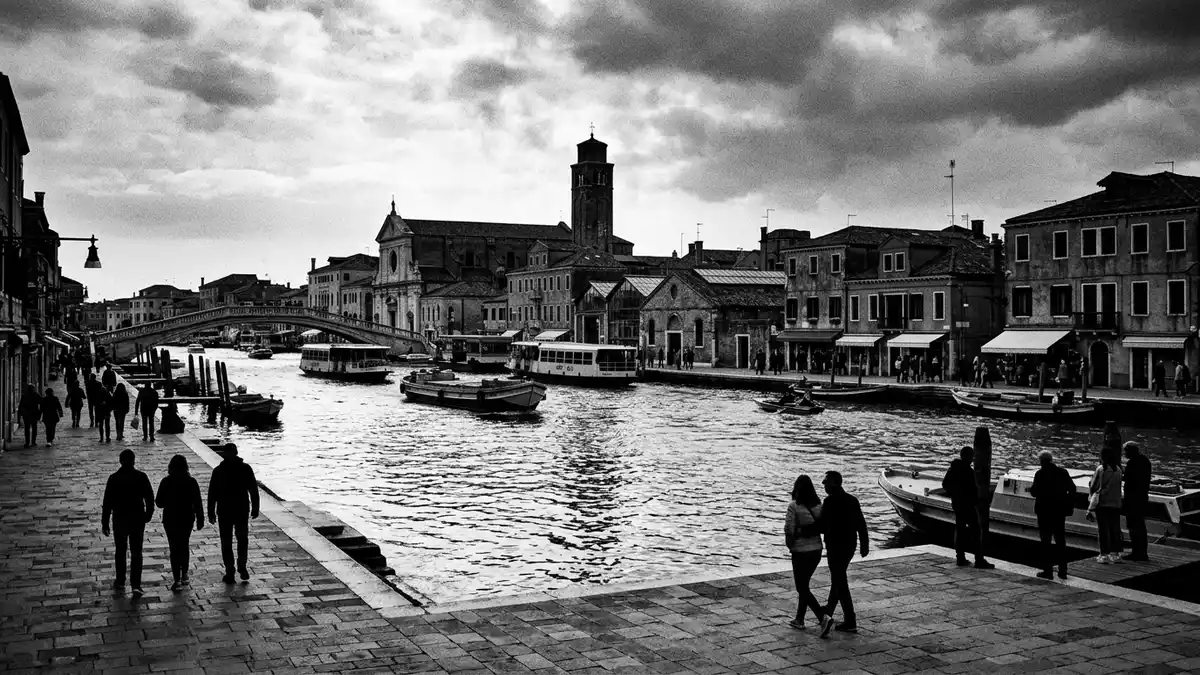
Murano is a compact island cluster in the Venice Lagoon, just north of Venedig, where canals, low brick houses and tall glass furnaces share the same narrow streets. Since 1291, when the Venetian Republic ordered its glassmakers to relocate their furnaces here, the island has been closely linked with precious glassware that still carries its name across Europe.
Island of furnaces in the Venice Lagoon
Murano sits in the northern part of the Venetian Lagoon, separated from the historic centre of Venedig by open water and reached across the lagoon rather than on foot.Murano is actually a cluster of low-lying islands linked by bridges, with canals running between the blocks of houses and workshops.Murano consists of several small islands divided by waterways and united by stone bridges.
The island group lies north-east of the historic core of Venedig, with boat routes connecting its quays to the city’s waterfronts and to other lagoon islands. Murano’s canals have paved embankments lined with houses, warehouses and glass workshops, so the water is never far away when walking between furnaces, churches and small squares.
Seven islands shaped by glassmaking
Murano’s present layout reflects its origin as several separate islets that were gradually tied together by bridges and embankments. Sources describe seven main islands under the Murano name, each separated by canals that function as both streets and working waterways.Murano is described as a group of seven islands connected by bridges, with boat traffic serving as the main means of moving goods between workshops.
The built fabric is low and horizontal, with brick houses, simple palaces and church towers rising only a few storeys above the quays. Along the principal canal, façades mix plain stucco with more ornate fronts that once belonged to merchant families, while side canals feel closer to a working village, with sheds and chimneys revealing where furnaces stand behind the street walls.
From medieval decree to glassmaking powerhouse
Murano’s decisive historical moment came in 1291, when the government of the Republic of Venice confined most of the city’s glassmaking industry to this island group.A law in 1291 ordered glassmakers to move their furnaces to Murano, creating a concentration of workshops in what had previously been a lagoon settlement.
In the centuries that followed, glass from Murano became closely identified with Venetian luxury goods and long-distance trade. Angelo Barovier, active in the fifteenth century, is credited with developing a clear glass known as cristallo, which gave Murano workshops a reputation for refined, colourless glass suitable for mirrors and fine vessels.Angelo Barovier’s discovery of cristallo in the fifteenth century turned Murano into a leading producer of mirrors for European markets.
Murano glass techniques and the Glass Museum
The term “Murano glass” refers to glassware made on the island using techniques developed over many generations. Furnaces on Murano specialise in hot-working methods such as blowing, casting and shaping molten glass, followed by decorative processes including enamel painting, gilding and engraving.Venetian glass is typically made on Murano and encompasses both clear cristallo and vividly coloured pieces with patterns in the glass itself.
Murano’s glass heritage is documented in the Glass Museum, housed in the historic Palazzo Giustinian de Mula near one of the main canals.The Glass Museum traces the history of Murano’s glass production through furnaces, guilds and export trade. Exhibits cover early medieval lagoon glass, the development of cristallo in the fifteenth century and later specialities such as filigree and aventurine, showing how a lagoon settlement grew into a centre of glassmaking.
Visiting Murano: what travellers from Western Europe should know
- Murano lies north-east of the historic centre of Venedig in the Venice Lagoon and is reached by public waterbuses and private boats that link its quays to the city.
- Canals replace streets across the island cluster, so walking routes follow paved embankments and bridges, some with steps, between landing stages, workshops and churches.
- Murano is part of Italy, where the official language is Italian and the currency is the euro.
- Entry requirements depend on your nationality; UK travellers can check the FCDO travel advice at gov.uk/foreign-travel-advice, Irish travellers the Department of Foreign Affairs at ireland.ie.
Searching for Murano on social platforms
These links open searches for Murano on each platform.
Frequently asked questions about Murano
Where is Murano?
Murano is a group of small islands in the Venice Lagoon, north of Venedig’s historic centre and connected to the city by boat routes.
What can visitors expect on Murano?
Visitors find canals lined with low houses and workshops, active glass furnaces, a glass museum and churches and squares that reflect the island’s long history.
What makes Murano distinctive compared with other lagoon islands?
Murano stands out for its concentration of glass workshops, its formal role in Venetian glassmaking since the 1291 decree and the way furnaces sit beside everyday island life.


