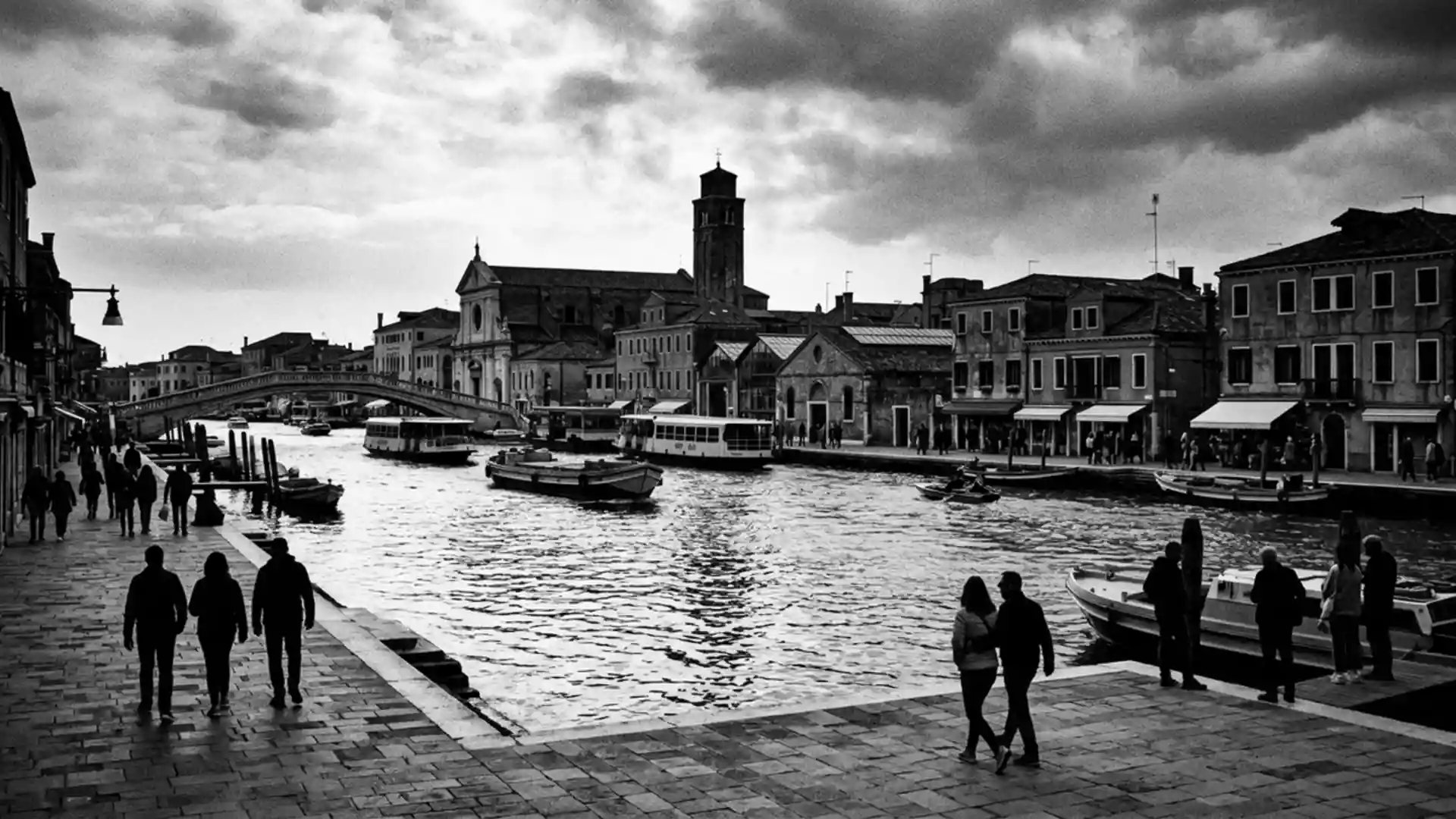
Murano’s glass island in the Venetian lagoon
Published on 08/30/2026 at 12:02 | Editorial responsibility: Rafael Müller, Editor-in-Chief AD HOC NEWS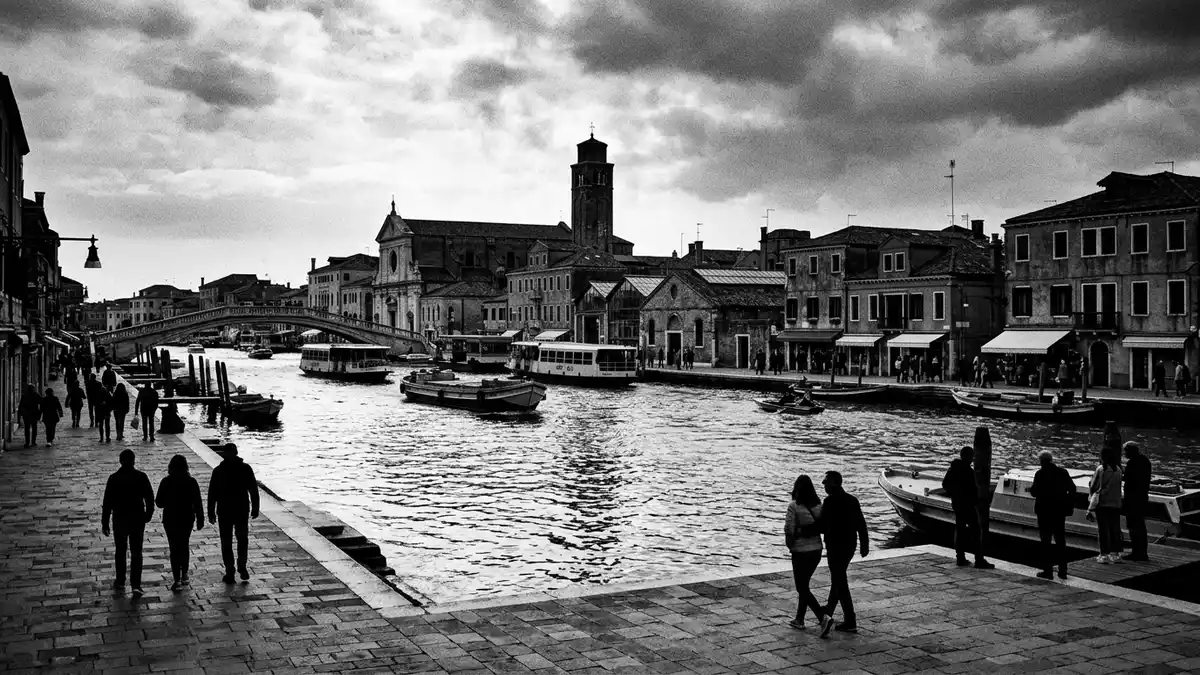
Murano is a low-lying island group in the Venetian lagoon, a short boat ride north of Venedig, known above all for its long tradition of glassmaking anchored in medieval Venice. In 1291 the government of the Republic of Venice ordered glass furnaces to be moved from the main city to Murano, concentrating a craft that had already been present in the lagoon for centuries and turning the island into a specialist settlement of glassmakers.In 1291, all the glassmakers in Venice were required to move to Murano
Glass furnaces in a small lagoon island
Murano occupies a cluster of islands in the northern part of the Venetian lagoon, linked by bridges and cut by straight canals that give it a compact, almost small-town layout distinct from the denser quarters of Venedig.Murano island near Venice is the lagoon's glassmaking hub Rows of masonry houses line the principal canal, where boat landings bring visitors directly into streets shared by workshops, houses and small parish churches. Bell towers rise above the roofs and mark the main churches, while industrial chimneys from glasshouses punctuate the skyline at a lower level.
The island’s role within the lagoon tightened when the Great Council of Venice confined glass furnaces to Murano in 1291, reducing the risk of fire to wooden buildings in the centre of the city and creating a controlled district for a technical craft.the Great Council of Venice ordered all of the furnaces used for glassworking be moved to the island of Murano That decision gave Murano a civic identity distinct from the other islands of the lagoon: a place where almost every lane connects in some way to furnaces, kilns or the houses of craftspeople. Over the centuries the island remained part of the fabric of the Republic of Venice, sharing its political history while specialising in a single craft.
A timeline of Murano glass
Glassmaking in the Venetian area predates the move to Murano, with archaeological evidence and documents showing activity by the tenth century under the government of la Serenissima.The first evidence of glassmaking activities in Venice dates back to 982 A.D. In 1291 the relocation of furnaces formalised Murano as the centre of the craft, and in the centuries that followed, its workshops developed glass technologies that spread the island’s name across Europe. By the fifteenth and sixteenth centuries Murano glassmakers produced cristallo, an optically clear glass valued for tableware and mirrors, and exported their work along Mediterranean and northern European trade routes.During the 15th century, Murano glassmakers created cristallo
Murano workshops also refined coloured and decorated glass, from enamelled smalto to gold-flecked aventurine and multicoloured millefiori.Murano's glassmakers held a monopoly on high-quality glassmaking for centuries, developing or refining many technologies including optically clear glass, enamelled glass, glass with threads of gold, multicolored glass, milk glass and imitation gemstones Figures such as Angelo Barovier, active in the fifteenth century, are associated with innovations in clear glass that altered what could be achieved in both everyday objects and luxury pieces.Around 1450 master Angelo Barovier discovered the process for producing clear glass The industry faced competition and decline in the eighteenth century, yet glassmaking survived as the island’s principal industry, connecting contemporary workshops with a technical tradition that stretches back to medieval statutes regulating furnaces and guilds.
Visiting glasshouses and a lagoon basilica
On a walk through Murano, the craft and the island’s religious architecture sit side by side. Small furnaces and showrooms occupy buildings along the canals, where furnaces have operated in various forms since the Middle Ages.Glassmaking was already widespread in Venice around the year 1000 and the production of vases, decorated glass and fiole had become a source of pride for the city Many workshops present finished chandeliers, vases and sculptural pieces in street-level rooms opening directly onto the pavement, so that the line between workplace and public street can appear thin.
Murano also preserves one of the most important religious buildings in the lagoon, the Basilica of Santa Maria e San Donato, whose fabric includes elements of Byzantine and Romanesque architecture and a nave lined with marble and mosaic decoration.The church of Santa Maria e San Donato is one of the oldest churches in the Venetian lagoon Its campanile stands as a vertical counterpoint to the low houses and workshops, and its floor mosaics echo the long-standing connections between Venice and the eastern Mediterranean. The combination of this basilica, parish churches and the working buildings of the glass trade makes Murano a compact summary of the wider lagoon’s mixture of worship, commerce and craft.
Visiting Murano: what travellers from Western Europe should know
- Murano lies to the north of Venedig in the Venetian lagoon and is reached by public boats that stop at landing stages along the island’s main canal.
- Walking on Murano involves bridges over canals and pavements with occasional steps, as well as narrow lanes between workshop buildings.
- The terrain is flat and close to sea level, and the built-up area sits directly on the lagoon, with quayside paths beside the water.
- The official language is Italian and the currency is the euro.
Searching for Murano on social platforms
These links open searches for Murano on each platform.
Frequently asked questions about Murano
Where is Murano in relation to Venedig?
Murano stands in the northern part of the Venetian lagoon, separated from Venedig by open water and linked by regular boat services.
What can a visitor expect when walking around Murano?
A visitor encounters canals lined with houses and glass workshops, paved quays, small squares and churches, with furnaces and showrooms woven into the street layout.
What makes Murano distinctive among lagoon islands?
Murano is distinctive for its concentration of glass furnaces and showrooms combined with historic churches, reflecting a rare continuity of craft on a compact island setting.